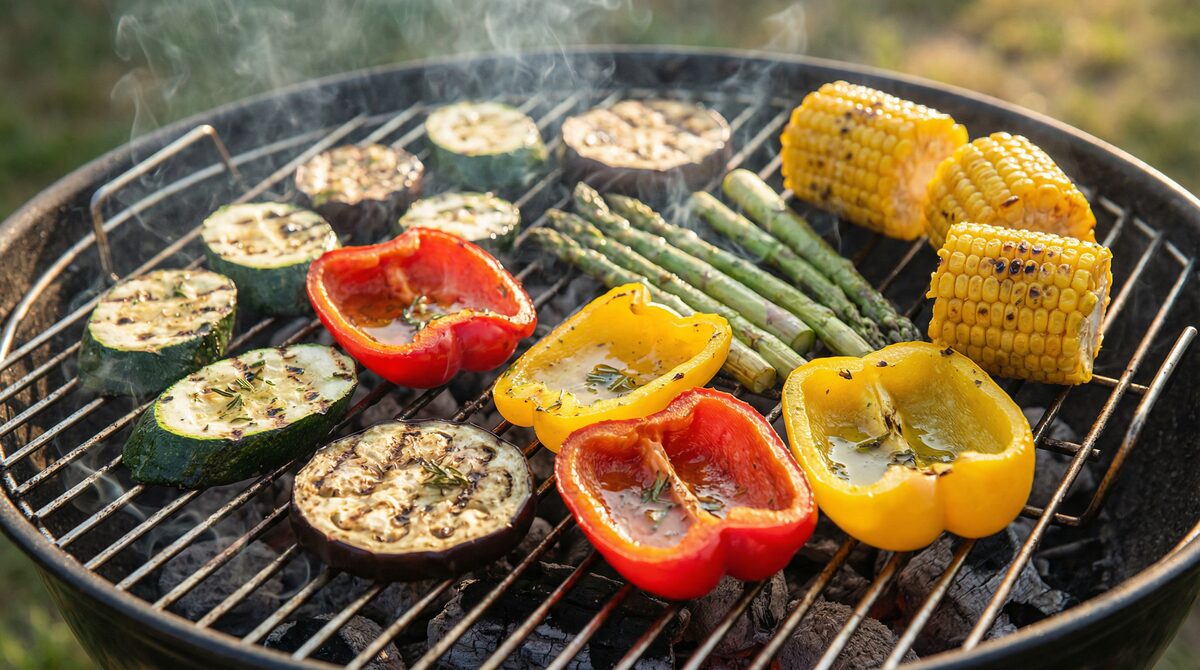
Grilled vegetables can make a summer meal feel generous without needing a heavy sauce. They work best when they support the whole plate rather than standing in for the whole meal.
Quick summary
CDC’s plate method places nonstarchy vegetables on half the plate and still leaves room for protein and a planned carb. Grilled vegetables can fit that pattern, but marinades, sauces, sodium, and food safety deserve attention.
Key takeaways
- Nonstarchy vegetables can anchor a plate, but they do not replace protein or planned carbs.
- Marinades and bottled sauces may add sodium, sugar, or saturated fat.
- Outdoor cooking needs clean, separate, cook, and chill food-safety steps.
- Kidney disease may change vegetable and seasoning choices.
Build the plate
Try grilled zucchini, peppers, mushrooms, onions, asparagus, eggplant, or tomatoes with fish, chicken, tofu, beans, eggs, or lean meat. Add a planned carb if it fits your meal plan, such as corn, beans, whole grains, fruit, or a small potato. The plate method is a guide, not a rigid rule.
Make flavor without too much sodium
Use olive oil in modest amounts, vinegar, lemon, herbs, garlic, onion, pepper, smoked paprika, or salt-free seasoning blends. Watch commercial marinades, barbecue sauces, soy sauce, dressings, and cheese toppings. AHA notes that reducing sodium can support blood pressure goals.
Kidney caveats
For many people, vegetables are encouraged. For chronic kidney disease, dialysis, or potassium restrictions, the details change. CDC says people with diabetes and kidney disease may need individualized guidance about sodium, potassium, phosphorus, protein, and fluids.
Outdoor food safety
Use clean utensils, keep raw meat separate from vegetables, cook proteins to safe temperatures, and refrigerate leftovers promptly. Vegetables can still pick up germs from cutting boards, hands, or marinades used on raw meat.
What to ask your care team
- Which vegetables fit my kidney and potassium plan?
- What carb side should I plan with this meal?
- Are my sauces or marinades adding more sodium or sugar than I realize?
- How should I handle food safety at outdoor meals?
Practical takeaway
Grilled vegetables are a strong diabetes-friendly side when they are paired with protein, planned carbs, lower-sodium flavor, and safe food handling.
Safety note
Seek urgent care for severe low glucose, confusion, allergic reaction symptoms, severe vomiting or diarrhea, dehydration, fever with food poisoning symptoms, or high glucose with vomiting, ketones, dehydration, confusion, or trouble breathing. This information is general education and is not a substitute for medical care.
Source summary
- CDC: Diabetes meal planning. Explains the plate method, carb counting, portions, and individualized meal planning. Source
- CDC: Choosing healthy carbs. Explains carbohydrate quality, whole grains, fruit, fiber, and pairing carbs with protein, fat, or fiber. Source
- NIDDK: Healthy living with diabetes. Patient guidance on meals, snacks, activity, medicines, alcohol, sleep, and individualized care. Source
- CDC: Diabetes and kidney disease food. Explains why chronic kidney disease may change sodium, potassium, phosphorus, protein, and fluid advice. Source
- CDC: Preventing food poisoning. Food safety guidance built around clean, separate, cook, and chill. Source
- AHA: Sodium and salt. Explains sodium, blood pressure, and ways to reduce sodium in a heart-health pattern. Source