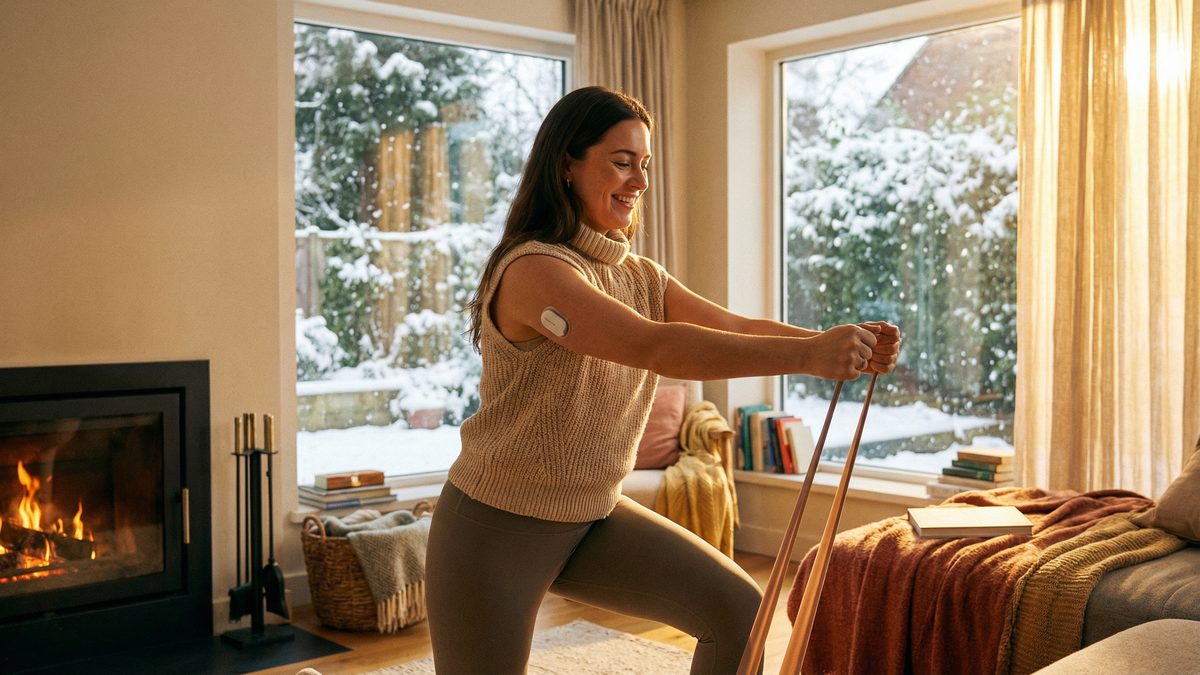
Indoor exercise can help when heat, cold, rain, air quality, or safety concerns make outdoor activity difficult. It can also make exercise more convenient.
Quick summary
The best indoor plan is safe, simple, and repeatable.
Key takeaways
- Walking indoors, chair exercises, resistance bands, stairs, dancing, or light weights can all count if safe.
- People using insulin or sulfonylureas still need low-blood-sugar planning.
- Footwear and fall risk matter indoors too.
- Chest pain, fainting, or severe shortness of breath should stop activity.
Low-barrier options
- Walk indoors for 5 to 10 minutes.
- Use resistance bands or light hand weights.
- Try chair-based movements if balance or joints are a concern.
- Do gentle stretching or mobility work.
- Break activity into shorter sessions across the day.
Make it safer
Keep fast-acting carbohydrate nearby if you are at risk for lows. Use stable furniture, clear the floor, and wear safe shoes if neuropathy or foot risk is present.
If an exercise video or app pushes beyond your limits, modify it. The goal is consistency, not proving toughness.
If you are returning after illness, surgery, a foot problem, chest symptoms, or repeated lows, ask what level of indoor exercise is safe before increasing intensity.
Practical takeaway
Indoor exercise counts. Start small, keep the low treatment nearby, and choose movements that fit your body today.
Safety note
This article is not a substitute for medical care. Seek urgent care for chest pain, fainting, severe shortness of breath, severe low blood sugar, injury, or symptoms that feel unsafe.
What to ask your care team
- Which indoor options are safe for my balance, feet, and joints?
- Could my medicines cause lows?
- How can I make exercise easier to repeat?
Related reading
Source summary
- Physical Activity and Diabetes, Centers for Disease Control and Prevention. Patient guidance. Accessed June 5, 2026. Source
- Low Blood Sugar, Centers for Disease Control and Prevention. Patient guidance. Accessed June 5, 2026. Source
- Managing Diabetes, National Institute of Diabetes and Digestive and Kidney Diseases. Patient guidance. Accessed June 5, 2026. Source
- Diabetes Testing, Centers for Disease Control and Prevention. Patient guidance. Accessed June 5, 2026. Source