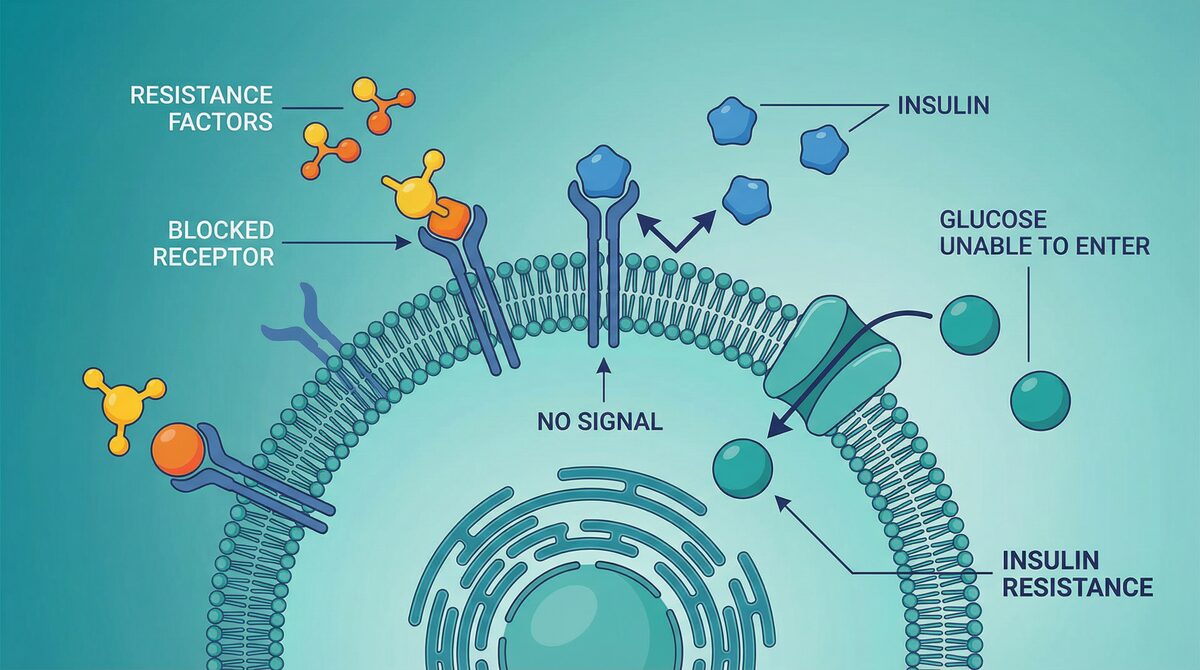
Insulin resistance means the body’s cells do not respond to insulin as well as they should. The pancreas may make more insulin to keep glucose in range, but over time that extra demand can lead to prediabetes or type 2 diabetes.
Quick summary
CDC describes insulin as a key that helps blood sugar enter cells. When cells resist insulin, glucose can build up in the blood. Insulin resistance can improve for some people with weight, activity, food, sleep, and treatment changes, but it is not always fully reversible and should not be treated with miracle claims.
Key takeaways
- Insulin resistance often has no obvious symptoms until glucose rises.
- Risk factors include family history, weight around the waist, inactivity, age, pregnancy history, some conditions, and some medicines.
- Testing may include A1C, fasting glucose, oral glucose tolerance testing, and related risk checks.
- Lifestyle can help, but medicines or insulin may still be needed for some people.
What it can feel like
Many people do not feel insulin resistance. Some notice fatigue, hunger, weight changes, skin changes such as acanthosis nigricans, or symptoms of high glucose such as thirst and frequent urination. Symptoms alone cannot diagnose it.
What raises risk
CDC and NIDDK describe several risks for type 2 diabetes and insulin resistance, including family history, weight, physical inactivity, age, history of gestational diabetes, and certain health conditions. Risk is not a moral label. It is information for prevention and treatment.
How it is checked
Clinicians usually evaluate glucose patterns and risk rather than ordering a single insulin-resistance test for everyone. A1C, fasting glucose, oral glucose tolerance testing, lipids, blood pressure, kidney tests, and waist or weight patterns may all be part of the discussion.
What helps
Regular activity, enough sleep, balanced meals, fiber-rich foods, weight loss when appropriate, not smoking, and medicines can all play a role. The plan should fit the person’s health conditions, food access, medicines, pregnancy plans, and risk for low glucose.
What to ask your care team
- Which tests show whether I have prediabetes, diabetes, or another condition?
- What risk factors can I realistically change?
- Do my medicines, sleep, stress, or other conditions affect insulin resistance?
- Do I need lifestyle support, medicines, or both?
Practical takeaway
Insulin resistance is a treatable risk pattern, not a personal failure. The safest plan is source-based, realistic, and reviewed with a clinician.
Safety note
Seek urgent care for ketones, repeated vomiting, dehydration, trouble breathing, confusion, severe low glucose, chest pain, or high glucose with vomiting, ketones, dehydration, confusion, or breathing problems. This information is general education and is not a substitute for medical care.
Source summary
- CDC: Insulin resistance and type 2 diabetes. Explains insulin, insulin resistance, prediabetes, type 2 diabetes, and lifestyle approaches. Source
- CDC: Type 2 diabetes. Explains insulin resistance, pancreatic insulin production, symptoms, testing, and risk factors. Source
- NIDDK: Type 2 diabetes. Patient overview of type 2 diabetes, insulin resistance, symptoms, tests, treatment, and complications. Source
- NIDDK: Preventing type 2 diabetes. Guidance on prevention, weight, food, activity, and risk reduction for people at high risk. Source