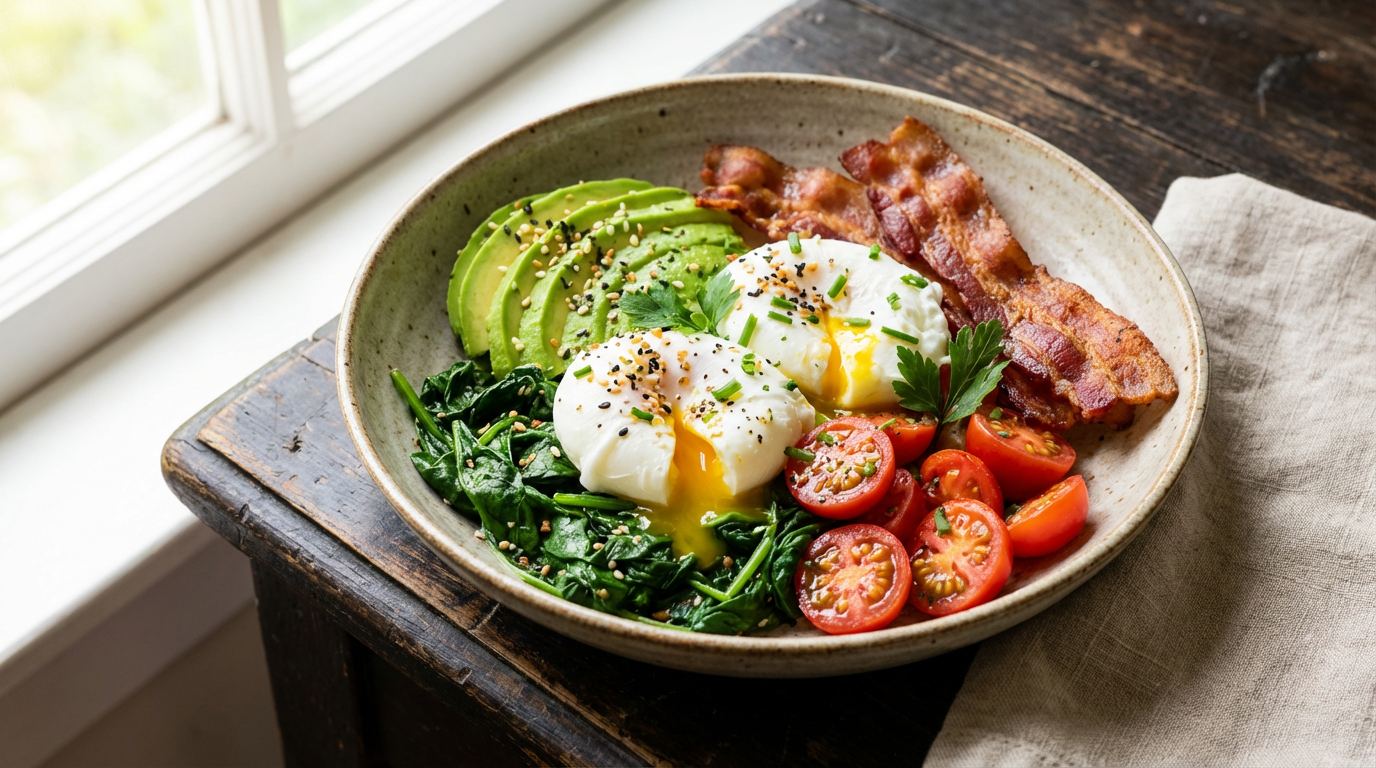
This breakfast bowl combines eggs, avocado, and vegetables for a filling lower-carb start to the day. The nutrition numbers below are estimates from the original recipe listing, so use them as a planning guide rather than a personal prescription.
Quick summary
Low-Carb Breakfast Bowl with Eggs and Avocado is a breakfast idea with an estimated 5g net carbs, 18g protein, 280 calories, and 2g sugar per serving.
Key takeaways
- This recipe uses protein, vegetables, or lower-carb swaps to make meal planning easier.
- The listed nutrition is an estimate and can change with brands, portions, sauces, and added sides.
- People who count carbohydrates should include any toppings, drinks, fruit, bread, rice, or dessert eaten with the meal.
Recipe snapshot
- Meal type: breakfast
- Estimated net carbs: 5g per serving
- Estimated protein: 18g per serving
- Estimated calories: 280 per serving
- Estimated sugar: 2g per serving
Ingredients
- eggs
- avocado
- spinach or salad greens
- tomato
- olive oil
- black pepper
- fresh herbs
- optional pumpkin seeds
Method
- Cook eggs to your preferred doneness.
- Arrange greens, tomato, and avocado in a bowl.
- Add the eggs on top.
- Season with pepper and herbs.
- Add seeds if using and serve promptly.
How to fit this into a diabetes meal plan
CDC meal-planning guidance emphasizes carb awareness, portion size, and the plate method. For many meals, that means filling much of the plate with nonstarchy vegetables, including a protein source, and keeping carbohydrate foods consistent with your plan. This recipe can be used as one option within that broader approach.
If you monitor glucose, look at your own pattern after meals rather than assuming one recipe works the same way for everyone. Food, activity, stress, sleep, medicines, and timing can all affect glucose readings.
What can change the nutrition numbers
Carb and calorie totals can shift with brand choices, serving size, sauces, cheese, oil, and any side dishes. A larger portion, sweetened sauce, bread, rice, fruit, or dessert can change the meal more than the main recipe itself. If you use a glucose meter or CGM, compare patterns over several meals instead of judging by one reading.
Simple prep tips
Read labels before cooking, especially for sauces, dairy products, packaged vegetables, and seasoning blends. Choose reduced-sodium options when possible, taste before adding extra salt, and keep the finished serving size consistent if you plan to compare glucose readings after meals.
Practical takeaway
Avocado adds healthy fat but also calories, so use a portion that fits your goals.
Safety note
This recipe is for general education only and is not individualized medical advice. If you use insulin or medicines that can cause low blood sugar, have kidney disease, heart disease, pregnancy, food allergies, eating-disorder history, or a prescribed nutrition plan, use your care team’s advice for portions and carbohydrate counting.
Source summary
- CDC: Diabetes Meal Planning. Explains the plate method, carb counting, portions, and asking for diabetes education support. Source
- CDC: Carb Choices. Lists common carbohydrate foods and serving-size examples for meal planning. Source
- NIDDK: Healthy Living with Diabetes. Reviews healthy eating, activity, medicines, monitoring, and working with a diabetes care team. Source