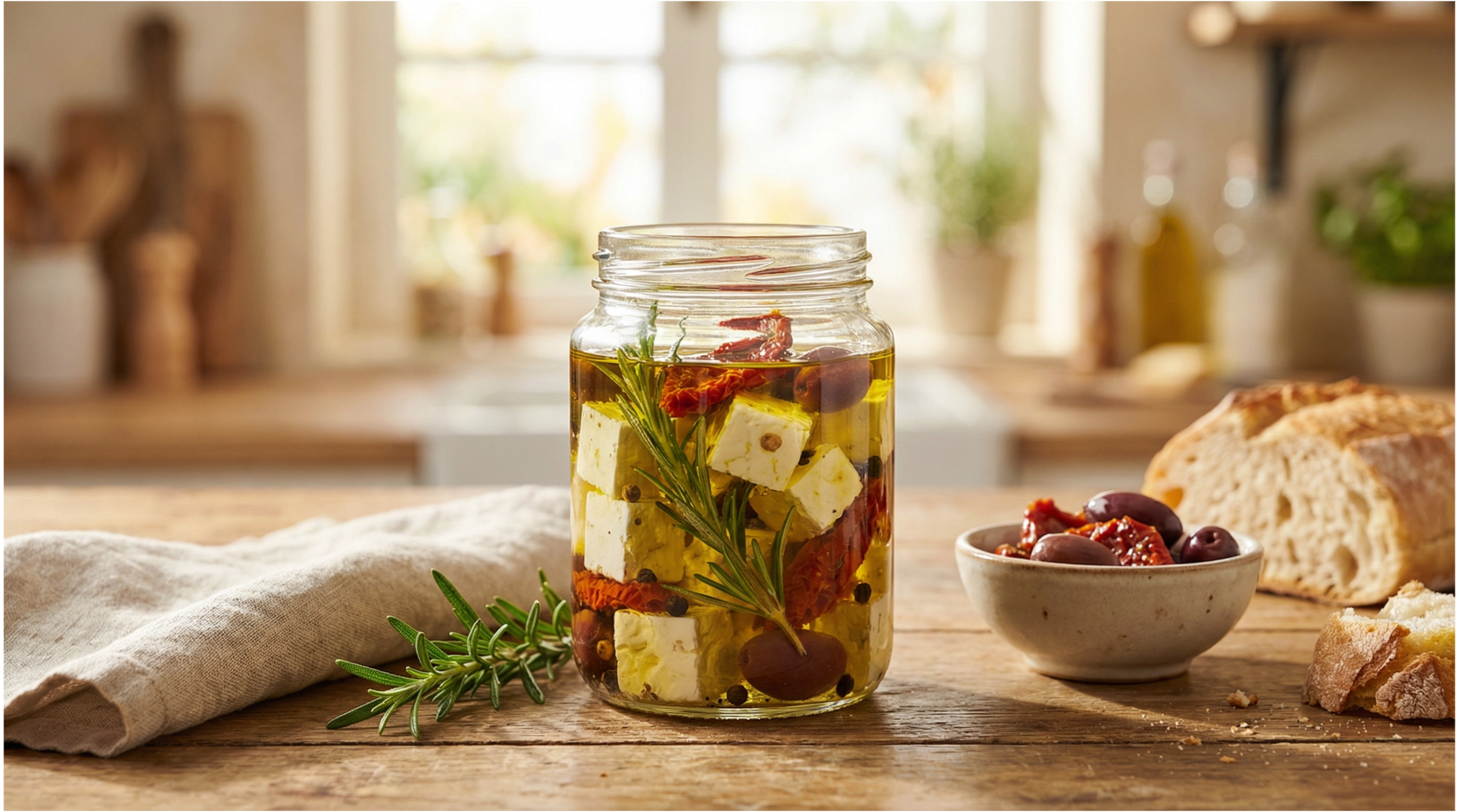
Mediterranean marinated cheese rounds can be a flavorful appetizer, but they need portion control. Cheese is low in carbohydrate, yet it can be high in saturated fat, sodium, and calories depending on the type and serving size.
Quick summary
This version uses a small portion of cheese with herbs, olive oil, vegetables, and serving ideas that keep it from becoming a large, salty snack.
Key takeaways
- Cheese has little carbohydrate, but that does not make it unlimited.
- Use strong flavors so a small portion feels satisfying.
- Serve with vegetables first, then add whole grain crackers if they fit your plan.
- Choose lower-sodium cheese when needed.
Ingredients
- 6 ounces fresh mozzarella, feta, or goat cheese, sliced or cubed
- 1 tablespoon olive oil
- 1 tablespoon lemon juice or red wine vinegar
- 1 teaspoon dried oregano or Italian herbs
- 1 small roasted red pepper, sliced
- 1 tablespoon chopped parsley or basil
- Black pepper to taste
- Optional: olives, cucumber rounds, cherry tomatoes, or whole grain crackers
Instructions
- Place cheese in a shallow dish.
- Whisk olive oil, lemon juice or vinegar, herbs, and pepper.
- Spoon over the cheese and add roasted pepper.
- Marinate for at least 30 minutes in the refrigerator.
- Serve in small portions with vegetables and optional crackers.
Nutrition note
Estimated per appetizer serving: about 90 to 130 calories, 1 to 4 grams total carbohydrate, and 5 to 8 grams protein. Sodium and saturated fat vary widely by cheese type.
Better pairings
Pair cheese rounds with cucumber, tomatoes, peppers, salad greens, or roasted vegetables. If using crackers, choose a measured portion and count the carbohydrate.
For a lighter version, use part-skim mozzarella, smaller feta pieces, or more vegetables than cheese.
Practical takeaway
Use this as a small flavor-forward appetizer, not the whole meal. The diabetes-friendly part is the portion, the vegetables, and the balance.
Safety note
If you have high blood pressure, heart disease, kidney disease, or a sodium restriction, choose cheese carefully and keep portions small. Avoid dairy if allergic or intolerant.
Related Livingdiabetes guides
Sources
- Healthy Eating for Diabetes, Centers for Disease Control and Prevention. Patient guidance. Accessed May 30, 2026. Source
- Food and Nutrition, American Diabetes Association. Patient guidance. Accessed May 30, 2026. Source
- Healthy Living With Diabetes, National Institute of Diabetes and Digestive and Kidney Diseases. Patient guidance. Accessed May 30, 2026. Source