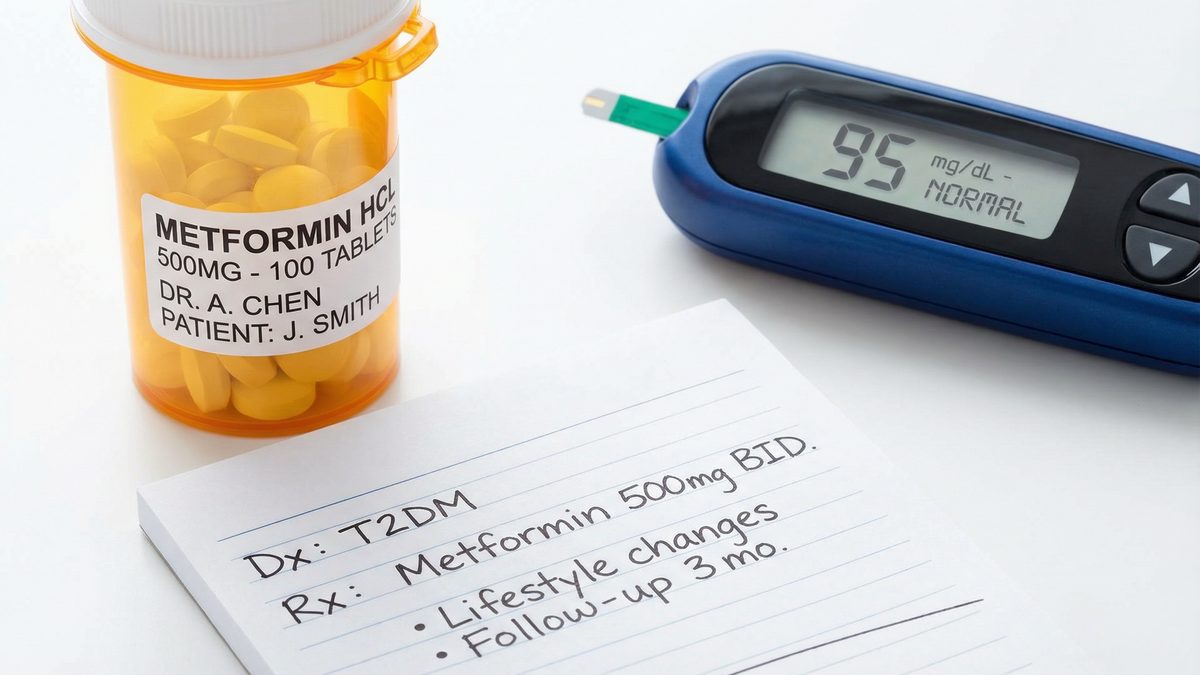
Metformin remains a common, useful, and affordable medicine for type 2 diabetes. But modern diabetes care is more risk-based than a simple one-medicine ladder.
Quick summary
For some people with heart disease, heart failure, chronic kidney disease, or high cardiovascular risk, medicines such as SGLT2 inhibitors or GLP-1 receptor agonists may be considered early, sometimes independent of A1C or metformin use.
Key takeaways
- Metformin is still important for many people with type 2 diabetes.
- It is not the best or only first step for every person.
- Kidney function affects metformin decisions.
- Vitamin B12, stomach side effects, and medicine tolerance should be reviewed.
Why the old question is too simple
Asking whether metformin is still first-line misses the bigger point: what risk are we treating first? A person with newly diagnosed type 2 diabetes and no major complications may have a different first plan than someone with kidney disease, heart failure, or established ASCVD.
Metformin can be used alone or with other medicines. It should not be stopped just because a newer medicine is added unless your clinician gives a reason.
What to review
- A1C goal and current A1C.
- eGFR and kidney safety.
- Heart disease, heart failure, or CKD history.
- Gastrointestinal side effects.
- B12 testing if long-term use or symptoms suggest deficiency.
Practical takeaway
Metformin is still a major tool, but the best type 2 diabetes plan starts with the person, not a rigid sequence.
Safety note
This article is not a substitute for medical care. Do not stop or restart metformin without medical advice, especially if you have kidney disease, dehydration, surgery, severe illness, or contrast imaging planned.
What to ask your care team
- Is metformin right for my kidney function?
- Do my heart or kidney risks mean another medicine should be prioritized?
- Should we check vitamin B12?
Related reading
Source summary
- Pharmacologic Approaches to Glycemic Treatment: Standards of Care in Diabetes 2026, American Diabetes Association. Clinical guideline. Accessed June 5, 2026. Source
- Cardiovascular Disease and Risk Management: Standards of Care in Diabetes 2026, American Diabetes Association. Clinical guideline. Accessed June 5, 2026. Source
- Chronic Kidney Disease and Risk Management: Standards of Care in Diabetes 2026, American Diabetes Association. Clinical guideline. Accessed June 5, 2026. Source
- Drug Trials Snapshot: Mounjaro, U.S. Food and Drug Administration. Regulatory summary. Accessed June 5, 2026. Source