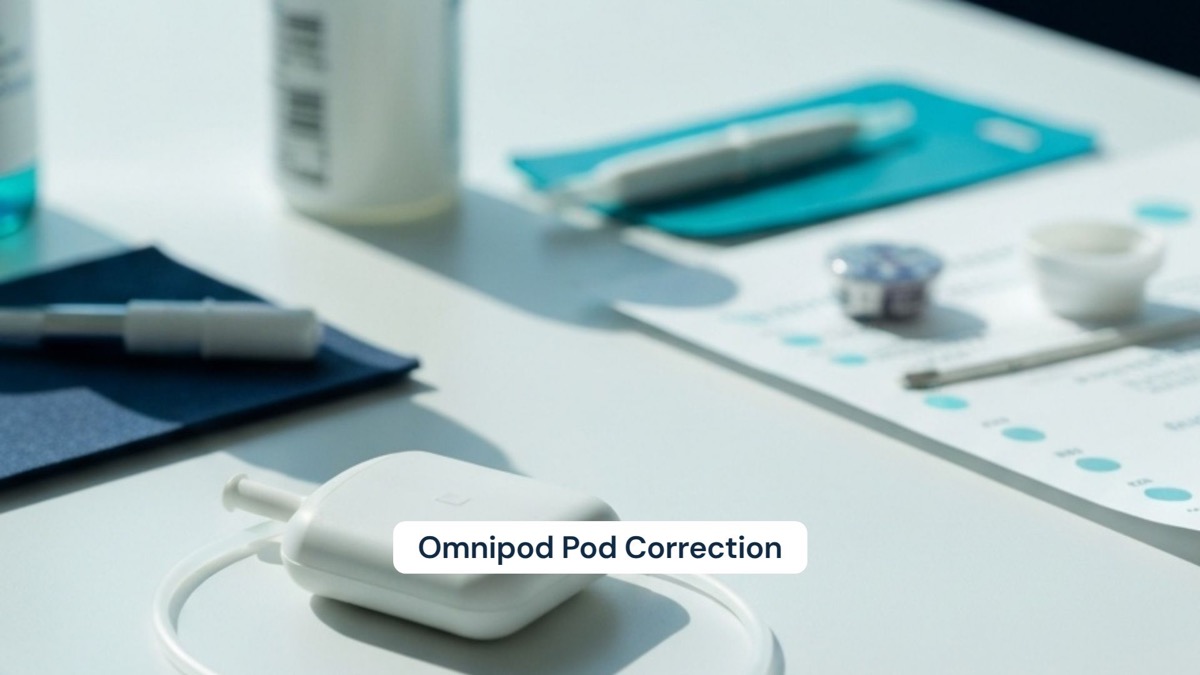
Insulet announced a voluntary medical device correction for certain Omnipod pods because of a manufacturing issue that could lead to insulin under-delivery.
Quick summary
The FDA-posted notice says specific lots of Omnipod 5, Omnipod DASH, and Omnipod Eros pods may be affected. Under-delivery can cause high glucose and, in severe cases, diabetic ketoacidosis. Users should follow Insulet’s official instructions.
Key takeaways
- The May 2026 correction involves specific lots of Omnipod 5, Omnipod DASH, and Omnipod Eros pods.
- The concern is insulin under-delivery from a manufacturing issue.
- High glucose that does not respond as expected should prompt checking the pod, insulin delivery, ketones, and the user’s backup plan.
- Use official Insulet or FDA instructions rather than social media lists.
What happened
FDA posted Insulet’s announcement of a voluntary medical device correction for certain pod lots. The company said a manufacturing issue may cause a small tear in tubing near the cannula, which can lead to insulin not being fully delivered.
Why under-delivery is serious
People using insulin pumps rely on steady insulin delivery. If insulin is under-delivered, glucose can rise. If high glucose persists, especially with little or no insulin, ketones and diabetic ketoacidosis can develop. Persistent hyperglycemia after a correction dose should not be ignored, especially if the user feels unwell or has symptoms of dehydration.
What users should do
Check official Insulet instructions to see whether your lot is affected. If a pod is affected, follow the replacement and return instructions. Keep backup insulin supplies and know how to give insulin if the pod cannot be used. Save affected packaging or pod information if requested, and report suspected device problems through official support or FDA MedWatch.
When to suspect a problem
Repeated high glucose, unexpected ketones, insulin smell, wetness near the pod, or glucose not responding to correction doses should prompt action. Follow your pump-failure plan and contact the diabetes team if you are unsure. Do not keep trying repeated pod corrections without checking ketones and backup insulin instructions when glucose remains high.
What to ask your care team
- Are my pod lots affected by the correction?
- What is my backup insulin plan if a pod fails?
- When should I check ketones?
- How should I report an adverse event or device problem?
Practical takeaway
Check official lot information, keep a pump-failure backup plan, and treat unexplained high glucose or ketones promptly.
Safety note
Seek urgent care for ketones, vomiting, rapid breathing, dehydration, confusion, severe abdominal pain, or high glucose that stays dangerous despite correction and backup insulin instructions. This information is general education and is not a substitute for medical care.
Source summary
- FDA: Insulet Omnipod pod correction. FDA-posted company announcement on the May 2026 correction. Source
- FDA: Omnipod 5 pod recall. FDA recall page explaining insulin leakage and under-delivery risk. Source
- Insulet SEC filing: correction press release. Insulet filing with the correction press release and issue description. Source
- FDA: MedWatch reporting. FDA pathway for reporting device problems or adverse events. Source