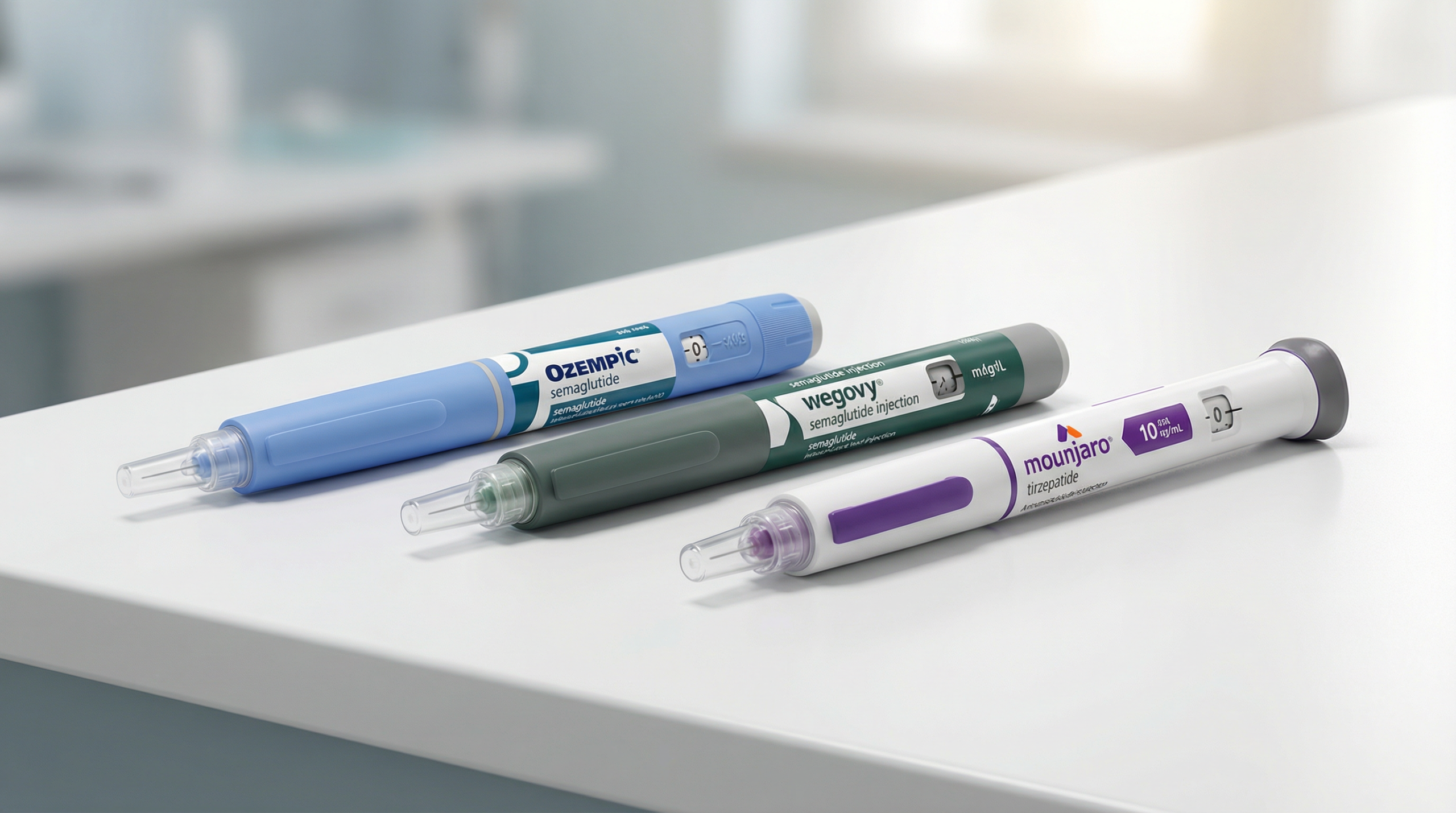
Ozempic, Wegovy, and Mounjaro are often discussed together because they affect appetite, weight, and glucose. They are not the same medicine and should not be used interchangeably without a prescriber.
Quick summary
Ozempic and Wegovy contain semaglutide but have different labels, doses, and uses. Mounjaro contains tirzepatide, which works through GIP and GLP-1 receptor pathways. Labels can change, so the current prescribing information matters.
Key takeaways
- Ozempic is a semaglutide product used for type 2 diabetes and other labeled risk-reduction uses.
- Wegovy is a semaglutide product labeled for chronic weight management and certain cardiovascular risk-reduction uses in people who meet label criteria.
- Mounjaro is a tirzepatide product used for type 2 diabetes.
- Common safety issues include nausea, vomiting, diarrhea, gallbladder problems, pancreatitis warnings, and boxed thyroid C-cell tumor warnings in the labels.
Why the names cause confusion
The same active ingredient can appear under different brand names for different uses. That does not mean the pens, dosing, insurance rules, side-effect instructions, or label criteria are the same.
A person taking insulin or sulfonylureas may need extra monitoring because glucose can fall when these medicines improve blood sugar. People with a history of pancreatitis, severe digestive disease, kidney problems from dehydration, pregnancy plans, or certain thyroid cancer syndromes need careful review.
What to avoid
- Do not combine these medicines unless your prescriber specifically directs it.
- Do not use compounded products without understanding FDA concerns.
- Do not share pens or use someone else’s prescription.
- Do not judge success by weight alone; glucose, side effects, nutrition, cost, and quality of life matter too.
Practical takeaway
A good comparison starts with the label, your diagnosis, your other medicines, and what benefit you are actually trying to achieve.
Safety note
This article is not a substitute for medical care. Seek medical advice promptly for severe abdominal pain, repeated vomiting, dehydration, signs of allergic reaction, or symptoms of low blood sugar if you use glucose-lowering medicines.
What to ask your care team
- Which diagnosis and label criteria do I meet?
- How will this medicine interact with insulin, sulfonylureas, or other drugs?
- What side effects should make me stop and call for help?
Related reading
Source summary
- OZEMPIC semaglutide injection prescribing information, DailyMed, National Library of Medicine. FDA label repository. Accessed June 5, 2026. Source
- WEGOVY semaglutide prescribing information, DailyMed, National Library of Medicine. FDA label repository. Accessed June 5, 2026. Source
- MOUNJARO tirzepatide prescribing information, DailyMed, National Library of Medicine. FDA label repository. Accessed June 5, 2026. Source
- FDA’s Concerns with Unapproved GLP-1 Drugs Used for Weight Loss, U.S. Food and Drug Administration. Safety information. Accessed June 5, 2026. Source