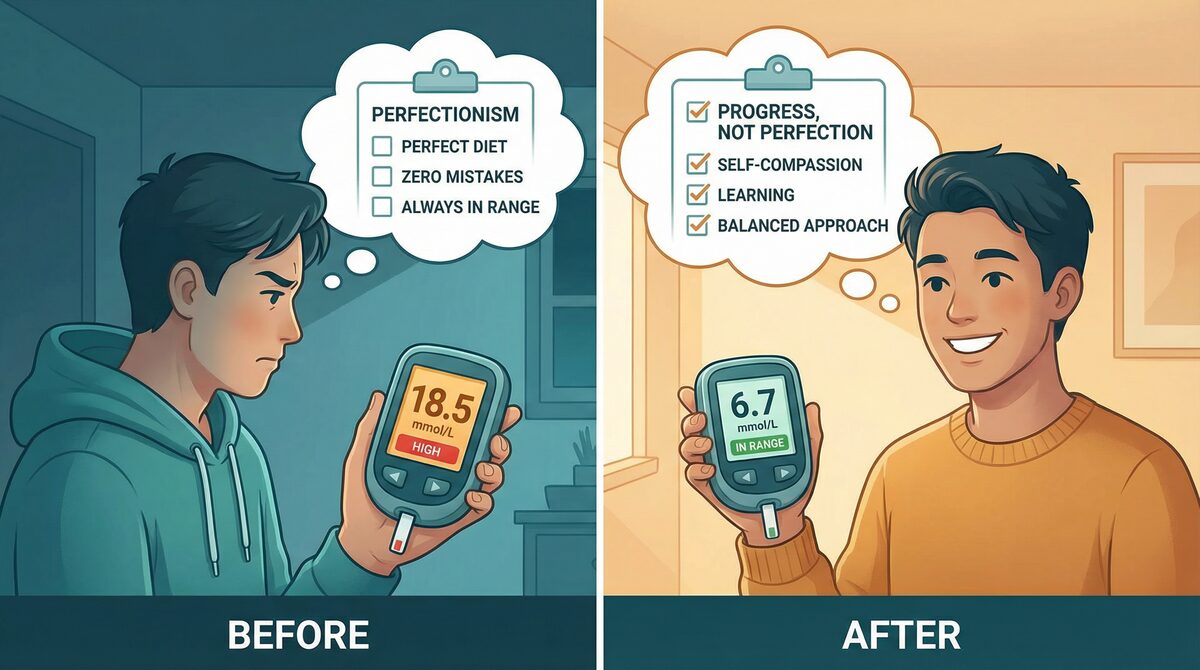
Perfectionism can make diabetes care feel like a test you are always failing. Numbers, food choices, exercise, weight, and appointments can become proof of worth instead of information.
Quick summary
Diabetes care works better when numbers are used for learning, not punishment.
Key takeaways
- Glucose numbers are data, not character scores.
- Rigid goals can increase distress and avoidance.
- Some people need individualized targets that reduce low-blood-sugar risk.
- Support can help when perfectionism turns into shame, anxiety, disordered eating, or burnout.
A safer goal style
- Choose one pattern to work on at a time.
- Review what happened before the number.
- Track lows as seriously as highs.
- Use ranges and trends, not single readings alone.
- Ask whether goals are realistic for your life and risk level.
When perfectionism becomes risky
If strict rules lead to skipped meals, insulin misuse, over-exercising, avoiding checks, or feeling hopeless, ask for help. Perfectionism can overlap with eating disorders, anxiety, depression, or diabetes distress.
Care teams can help set targets that are safer and more humane. A less perfect plan that you can follow is often safer than a perfect plan you cannot live with.
This is especially important for people with frequent lows, hypoglycemia unawareness, older age, frailty, pregnancy, complex schedules, or limited access to supplies. Safe targets are individualized.
Practical takeaway
A good diabetes goal should make care safer, not make life smaller.
Safety note
This article is not a substitute for medical care. Seek urgent help for self-harm thoughts, insulin misuse, severe lows, DKA symptoms, or symptoms that feel unsafe.
What to ask your care team
- Are my goals increasing safety or shame?
- Should my targets be adjusted?
- Could anxiety or disordered eating be part of this?
Related reading
Source summary
- 10 Tips for Coping With Diabetes Distress, Centers for Disease Control and Prevention. Patient guidance. Accessed June 5, 2026. Source
- Diabetes and Mental Health, Centers for Disease Control and Prevention. Patient guidance. Accessed June 5, 2026. Source
- Psychosocial Care for People With Diabetes, American Diabetes Association. Position statement. Accessed June 5, 2026. Source
- Eating Disorders: What You Need to Know, National Institute of Mental Health. Patient guidance. Accessed June 5, 2026. Source