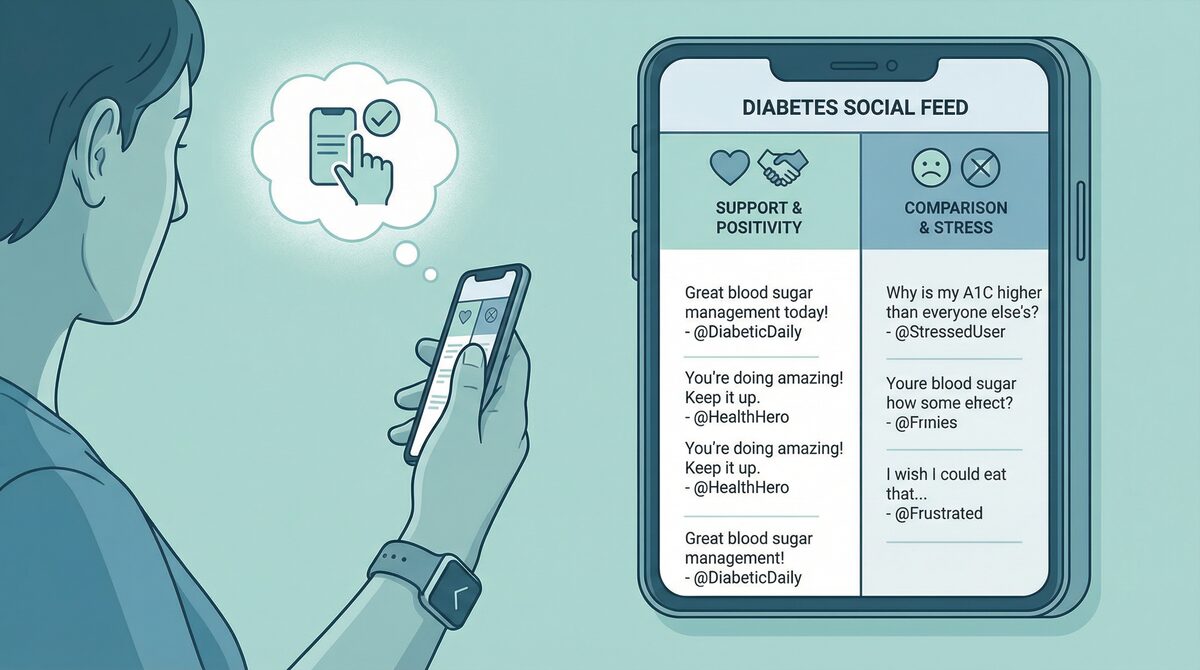
Diabetes social media can be comforting, funny, practical, and lifesaving when it helps people feel less alone. It can also spread dangerous advice, fake cures, unsafe dosing ideas, and shame.
Quick summary
The safest approach is not to avoid every online community. It is to separate emotional support from medical advice and verify health claims with trusted sources before changing food, medicine, insulin, supplements, devices, or monitoring.
Key takeaways
- Peer support can reduce isolation, but personal stories are not the same as medical evidence.
- Be cautious with posts that promise to cure diabetes, replace insulin, reverse complications, or sell secret protocols.
- Check who is speaking, what evidence is cited, whether conflicts of interest are clear, and whether the advice fits your diabetes type.
- Do not change prescribed medicines because of a post, reel, podcast, or ad.
What social media can do well
Online communities can help people find language for diabetes distress, device frustrations, food challenges, pregnancy questions, school issues, and stigma. Seeing others handle similar problems can make a person feel less alone. That emotional support is valuable, especially when it encourages safer conversations with the care team.
Where it gets risky
Risk rises when a post gives one-size-fits-all medical instructions, sells a product, discourages proven care, or claims that diabetes can be cured with a supplement, detox, device, or diet. FDA warns that health fraud products claim to treat or cure diseases without being proven safe and effective. FTC and FDA have also acted against questionable diabetes treatment claims.
A quick source check
Before acting on a claim, ask: who wrote it, what are their credentials, are they selling something, do they cite official sources, is the information current, and does it match your diabetes type? MedlinePlus recommends checking the source, purpose, quality, and date of online health information. For social media, it also helps to look for links to full guidance, not just screenshots or dramatic captions.
How to use online advice safely
Save useful questions from posts and bring them to appointments. Ask whether a claim applies to your medications, kidney function, pregnancy status, eating pattern, insulin use, and risk of lows. If a post makes you feel ashamed, panicked, or tempted to stop treatment, step away and check with a trusted clinician or diabetes educator.
What to ask your care team
- Does this online advice apply to my diabetes type and medicines?
- Could this supplement, diet, device, or dosing idea interact with my treatment plan?
- Is the person making money from the advice?
- What trusted source can I use to verify this claim before I change anything?
Practical takeaway
Use diabetes social media for support and questions, but use trusted sources and your care team for treatment decisions.
Safety note
Seek urgent medical help for severe low glucose, ketones, vomiting, dehydration, chest pain, confusion, or dangerously high glucose after following online advice. Do not stop insulin or prescribed medicine because of social media content. This information is general education and is not a substitute for medical care.
Source summary
- MedlinePlus: Evaluating health information. NIH guidance on judging health information from the internet and social media. Source
- FDA: Health fraud scams. Explains health fraud products and unproven disease treatment claims. Source
- FDA: Diabetes treatment product claims. FDA warnings about products claiming to treat or prevent diabetes and complications. Source
- FTC: Questionable diabetes treatment claims. Consumer warning about ads for products claiming to prevent, treat, or cure diabetes. Source
- WHO: Disinformation and public health. Explains how false health information can be used for attention, profit, and public harm. Source