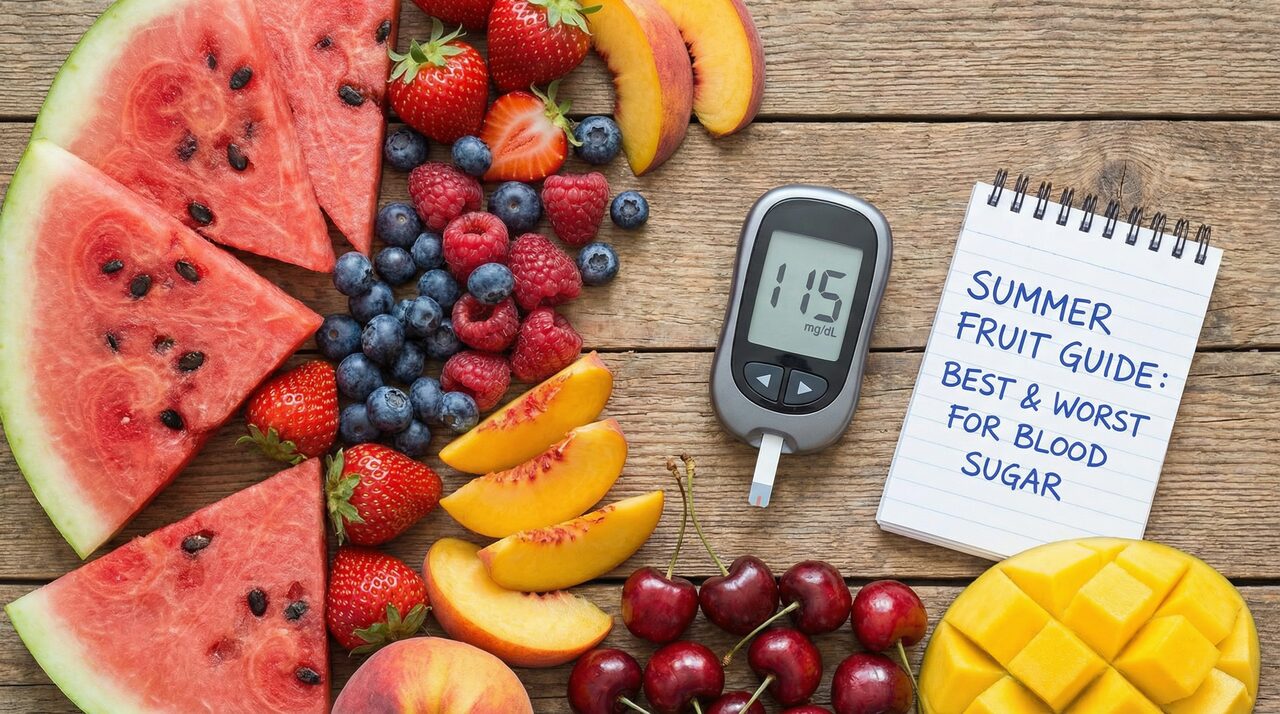
Fruit can fit a diabetes eating plan. The point is not to avoid fruit. The point is to understand portions, carbohydrates, fiber, and how your own glucose responds.
Quick summary
Whole fruit is usually a better choice than fruit juice because it contains fiber and is easier to portion. Large servings, dried fruit, smoothies, and juice can add carbohydrate quickly.
Key takeaways
- Fruit contains carbohydrate and can raise blood sugar.
- Whole fruit is usually more filling than juice.
- Portion size matters more than whether a fruit is labeled diabetes-friendly.
- People using insulin may need accurate carb counting for fruit.
Better fruit habits
- Choose whole fruit more often than juice.
- Pair fruit with protein or a meal if that helps your glucose pattern.
- Measure or estimate portions instead of grazing from a large bowl.
- Watch dried fruit because small amounts can contain more carbohydrate than expected.
- Use glucose data to learn which portions work for you.
Summer examples
Berries, melon, peaches, plums, apples, oranges, and grapes can all fit depending on portion and the rest of the meal. No single fruit is magic, and no single fruit is forbidden for everyone.
If you have kidney disease or potassium restrictions, fruit advice may change. Ask for individualized nutrition guidance.
Practical takeaway
Use fruit as part of the plate, not as a free food or a forbidden food. Portion, fiber, and total carbohydrate are the useful details.
Safety note
This article is not a substitute for medical care. Seek medical advice if fruit choices repeatedly cause very high readings, lows after insulin dosing, or confusion about carb counting.
What to ask your care team
- How much fruit fits my meal plan?
- Should I count fruit carbs for insulin dosing?
- Do kidney labs change my fruit choices?
Related reading
Source summary
- Choosing Healthy Carbs, Centers for Disease Control and Prevention. Patient guidance. Accessed June 5, 2026. Source
- Carb Counting, Centers for Disease Control and Prevention. Patient guidance. Accessed June 5, 2026. Source
- Healthy Living With Diabetes, National Institute of Diabetes and Digestive and Kidney Diseases. Patient guidance. Accessed June 5, 2026. Source
- How to Understand and Use the Nutrition Facts Label, U.S. Food and Drug Administration. Patient guidance. Accessed June 5, 2026. Source