Diabetes Education

Summer Travel with Diabetes: Your Essential Planning Guide

Prepare for a safe and enjoyable trip with diabetes. This guide covers packing essentials, medication storage, emergency plans, and tips for managing...

Summer is a wonderful time for adventures, whether you’re planning a relaxing beach getaway, an exciting city break, or a family road trip. For individuals living with diabetes, travel requires a bit more preparation to ensure a safe and enjoyable experience. Changes in routine, meal times, activity levels, and even climate can all impact blood sugar management. But with careful planning, you can navigate these challenges and focus on making lasting memories.

Advertisement

Key takeaways

  • Pack extra diabetes supplies and keep medicines, devices, snacks, and treatment for lows accessible.
  • Check manufacturer instructions for heat, water, scanner, and storage limits on your specific products.
  • Make a backup plan for delays, illness, lost supplies, and local medical care.

Why this matters when you live with diabetes

Managing diabetes while traveling isn’t just about convenience; it’s about maintaining your health and preventing complications. Unexpected delays, lost luggage, or exposure to extreme temperatures can quickly turn a dream vacation into a stressful situation if you’re not prepared. Your diabetes supplies, medications, and monitoring equipment are crucial for your well-being, and knowing how to protect them and what to do in an emergency is paramount. Understanding how travel affects your blood sugar and having a plan for different scenarios will empower you to travel confidently.

What to do before you start

Advertisement

Preparation is key to stress-free travel with diabetes. Start planning well in advance of your departure date. Here’s a checklist of essential steps:

  • Visit your healthcare professional: Schedule an appointment a few weeks before your trip. Discuss your travel plans, potential changes to your medication schedule, especially for time zone shifts, and get prescriptions for extra supplies. Avoid making large changes to insulin or other diabetes medicines for travel without a plan from your diabetes care team. Ask for a letter from your doctor explaining your diabetes and the need for your medications and supplies, which can be helpful for airport security.
  • Check your insurance: Confirm your health insurance coverage for medical care and prescriptions while you’re away, especially if traveling internationally. Consider travel insurance that includes medical emergencies.
  • Research your destination: Understand the local climate, food options, and access to pharmacies or medical facilities. If traveling internationally, learn the generic names of your medications.
  • Prepare travel documentation: Keep your medical documentation, prescriptions, and insurance information easily accessible. Consider carrying a medical alert ID.

Practical steps you can use this week

Once you’ve handled the initial planning, focus on the practical aspects of packing and managing your diabetes day-to-day during your trip. These steps will help you stay on track:

Packing Essentials: Your Diabetes Travel Checklist

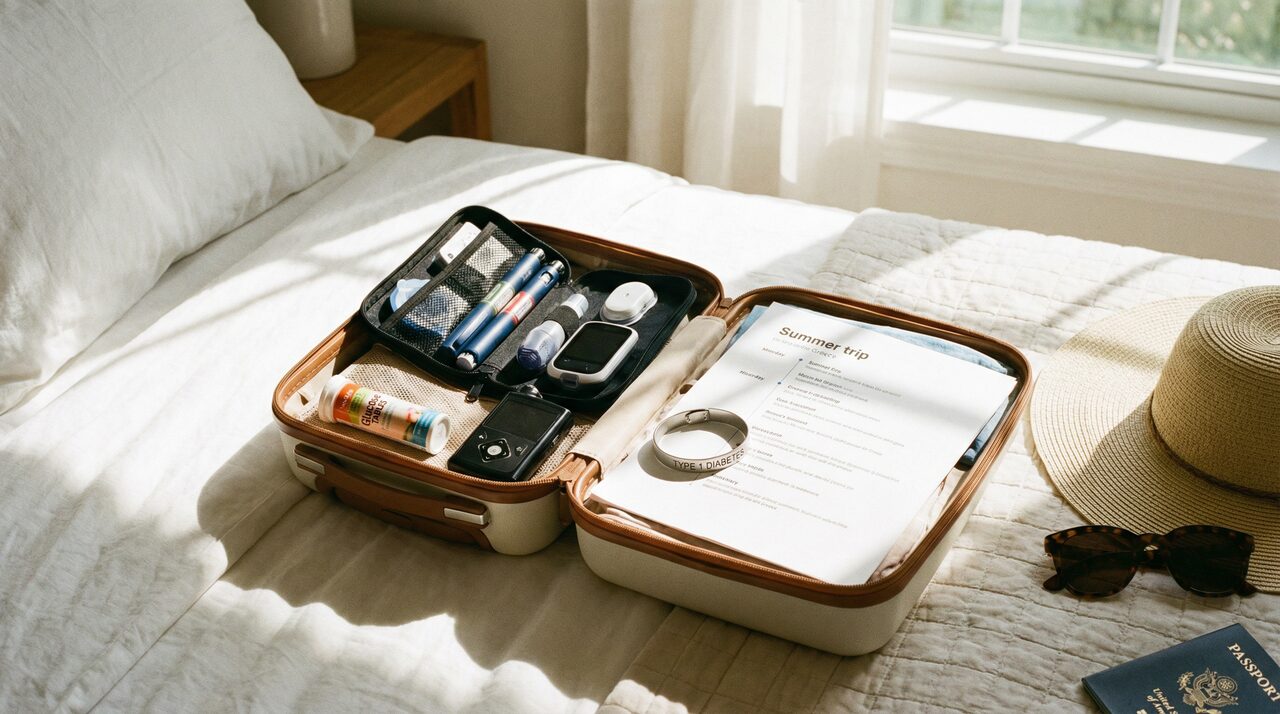
Consider packing extra medication and supplies for the duration of your trip. Keep all diabetes-related items in your carry-on bag to prevent loss or exposure to extreme temperatures in checked luggage.

  • Medications: Insulin, oral medications, GLP-1 receptor agonists, etc.
  • Monitoring: Blood glucose meter, test strips, lancets, continuous glucose monitor (CGM) supplies, extra batteries.
  • Hypoglycemia treatment: Glucose tablets, glucose gel, juice boxes, hard candies.
  • Emergency glucagon: If prescribed.
  • Sharps container: For safe disposal of needles and lancets.
  • Alcohol swabs, antiseptic wipes, bandages.
  • Prescriptions: Copies of all prescriptions, including generic names.
  • Medical documentation: Explaining your condition and need for supplies.
  • Snacks: Healthy, non-perishable snacks to manage blood sugar fluctuations.
  • Water bottle: Stay hydrated.
  • Comfortable shoes: Especially important for walking and preventing foot issues.

Protecting Your Supplies: Heat and Storage Thresholds

Insulin storage times and temperature limits vary by brand, pen, vial, and pump cartridge. CGMs, meters, strips, pumps, receivers, and phones also have product-specific heat, cold, water, and scanner limits. Follow the label and manufacturer instructions for each product.

Insulin and many other diabetes medications are sensitive to extreme temperatures. High heat can degrade insulin, making it less effective, while freezing can also damage it. Always be mindful of where you store your supplies.

  • Insulin: Storage limits and room-temperature use times vary by brand, pen, vial, and pump cartridge. Follow the instructions that come with your specific insulin and avoid direct sunlight or hot cars.
  • Cooler bags: Use insulated bags with ice packs (not directly touching insulin) to keep insulin cool in hot climates.
  • Meters and strips: Extreme heat or cold can affect the accuracy of blood glucose meters and test strips. Keep them in a moderate temperature range as much as possible.
  • Avoid direct sunlight: Do not leave medications or devices in a hot car, by a sunny window, or on a beach towel in direct sun.

Managing Blood Sugar on the Go

  • Check more often: Travel can disrupt routines, so check your blood sugar more frequently than usual.
  • Stay hydrated: Drink plenty of water, especially in hot weather, as dehydration can affect blood sugar levels.
  • Adjust for activity: If your activity changes, your insulin, medicine, or carbohydrate needs may change. Do not make large changes without a plan from your diabetes care team.
  • Time zone changes: Discuss time zone medication scheduling with your doctor before travel; do not change prescription doses without a specific plan.
  • Airport security: Inform airport security officers that you have diabetes and are carrying medical supplies. Tell security staff that you wear an insulin pump or CGM. TSA guidance applies to U.S. travel, but some manufacturers advise against putting them through X-ray machines or full-body scanners. Ask for visual inspection or a pat-down if your device instructions recommend it. International security rules may differ, so check the medical item policies for each country and airport on your route.

When to call your healthcare professional

While planning helps prevent many issues, sometimes unexpected situations arise. Know when to seek medical attention or contact your care team:

  • Persistent high or low blood sugar: If your blood sugar levels are consistently out of your target range despite adjustments.
  • Signs of dehydration: Excessive thirst, dry mouth, infrequent urination, dizziness.
  • Symptoms of illness: Fever, vomiting, severe diarrhea, or any infection.
  • Signs of severe hypoglycemia: Confusion, seizures, unconsciousness.
  • Damaged or lost supplies: If you run out of essential medications or your supplies are compromised.
  • Any new or worsening symptoms: Especially if they concern you.

Questions to ask at your next visit

To ensure you’re fully prepared for future travels, consider asking your healthcare team these questions:

  • “What specific adjustments should I make to my medication if I travel across multiple time zones?”
  • “Can you provide a comprehensive letter for airport security regarding my diabetes supplies?”
  • “What are the signs of heat-related illness I should watch for, and how do they differ for someone with diabetes?”
  • “Are there any specific foods or drinks I should be cautious about at my destination?”
  • “What is the best way to manage my blood sugar if my activity level changes significantly during my trip?”

Medical note: This article is for education only and does not replace care from your healthcare professional. If you use insulin or medicines that can cause low blood glucose, are pregnant, have kidney disease, heart disease, vision problems, neuropathy, or other diabetes-related complications, discuss changes to food, activity, medicines, devices, or travel plans with your diabetes care team.

Sources

Spread the love
Advertisement

Leave a comment