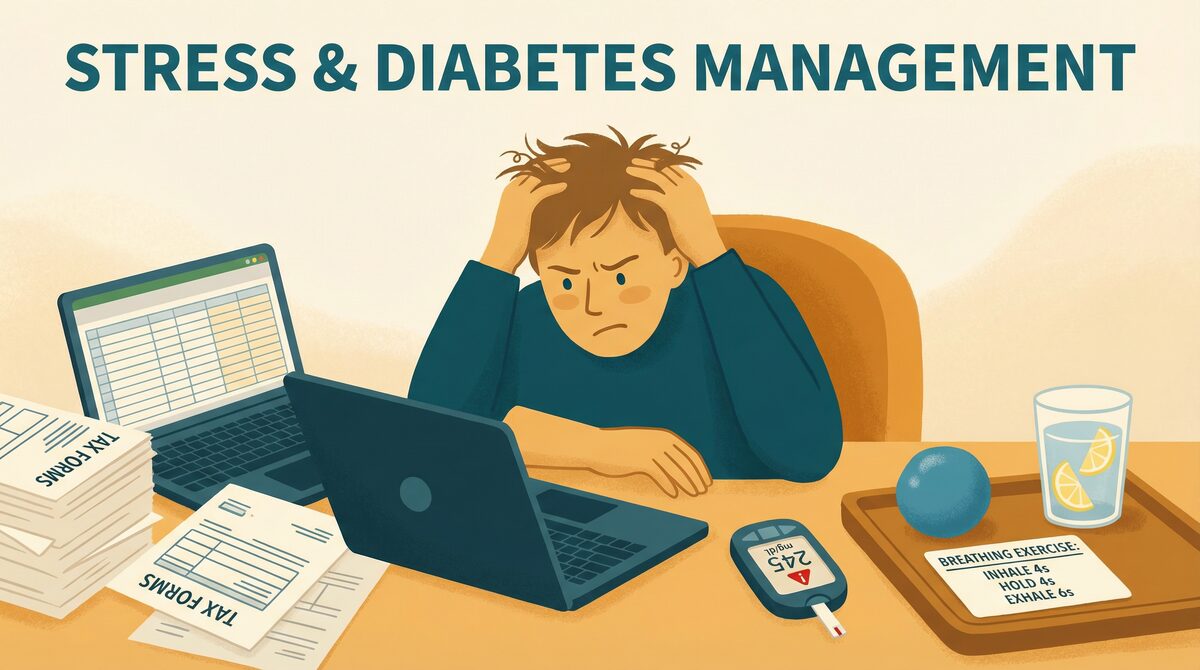
Tax deadlines, bills, insurance letters, and medicine costs can make diabetes feel heavier. Stress does not mean someone is weak. It means the body and brain are responding to pressure.
Quick summary
CDC says stress hormones can make blood sugar rise or fall unpredictably and that diabetes problems can worsen mental health. A calmer check-in is not a cure for diabetes or financial strain, but it can help a person notice patterns, protect medication routines, and ask for support sooner.
Key takeaways
- Stress can affect glucose, sleep, eating, movement, and medication routines.
- A stressful day is a reason to check patterns, not a reason to blame yourself.
- Do not skip medicines, insulin, food, or appointments because of a bill without asking for help.
- Ongoing anxiety, depression, burnout, or thoughts of self-harm need real support.
Start with the body
Take a short pause before making diabetes decisions under pressure. Check glucose if your care plan calls for it, drink water, eat if a meal has been delayed, and keep low-glucose treatment nearby if you use insulin or a medicine that can cause lows. Stress can change routines, and changed routines can change glucose.
Name the problem clearly
Financial stress often hides inside vague worry. Write down the specific issue: a tax deadline, a prescription cost, a bill, food cost, insurance denial, or missed appointment. Naming the problem can make the next step smaller. It also gives the care team or social worker something concrete to help with.
Use quick calming without overpromising
Slow breathing, a brief walk, stretching, calling a trusted person, or stepping away from the screen may help you feel calmer and notice patterns. These steps do not treat diabetes, lower glucose reliably, replace medicine, or solve financial stress. They are support tools, not medical treatment.
Know when to ask for help
If stress is making it hard to eat, sleep, take medicine, check glucose, or attend appointments, bring it up with the diabetes care team. CDC encourages people with diabetes distress to talk with the care team. Persistent anxiety, depression, burnout, panic, or any self-harm risk deserves support sooner, not after everything falls apart. If you are thinking about hurting yourself or feel in immediate emotional danger, call or text 988 in the United States.
What to ask your care team
- Could stress, missed meals, poor sleep, or medication access be affecting my glucose pattern?
- Who can help with medicine costs, insurance forms, food access, or appointment barriers?
- Do I need diabetes distress, anxiety, depression, or sleep support?
- What is my written plan for lows or highs on unusually stressful days?
Practical takeaway
Financial stress is a health issue when it changes diabetes routines, so the safest response is practical support, not self-blame.
Safety note
Seek urgent care for severe low glucose, confusion, fainting, ketones, repeated vomiting, chest pain, trouble breathing, or high glucose with vomiting, ketones, dehydration, confusion, or breathing problems. If you may harm yourself, call or text 988 in the United States. This information is general education and is not a substitute for medical care.
Source summary
- CDC: Diabetes and mental health. Explains diabetes distress, stress, anxiety, depression, and how stress hormones may affect blood sugar unpredictably. Source
- CDC: 10 tips for coping with diabetes distress. Patient tips for managing diabetes distress and talking with the care team. Source
- NIDDK: Healthy living with diabetes. Guidance on meals, activity, sleep, mental health, and asking for help with stress. Source
- AHA: Stress and heart health. Explains stress, blood pressure, heart rate, health behaviors, and heart-health concerns. Source
- NCCIH: Stress. NIH resource on stress, relaxation response, and when to seek more help. Source