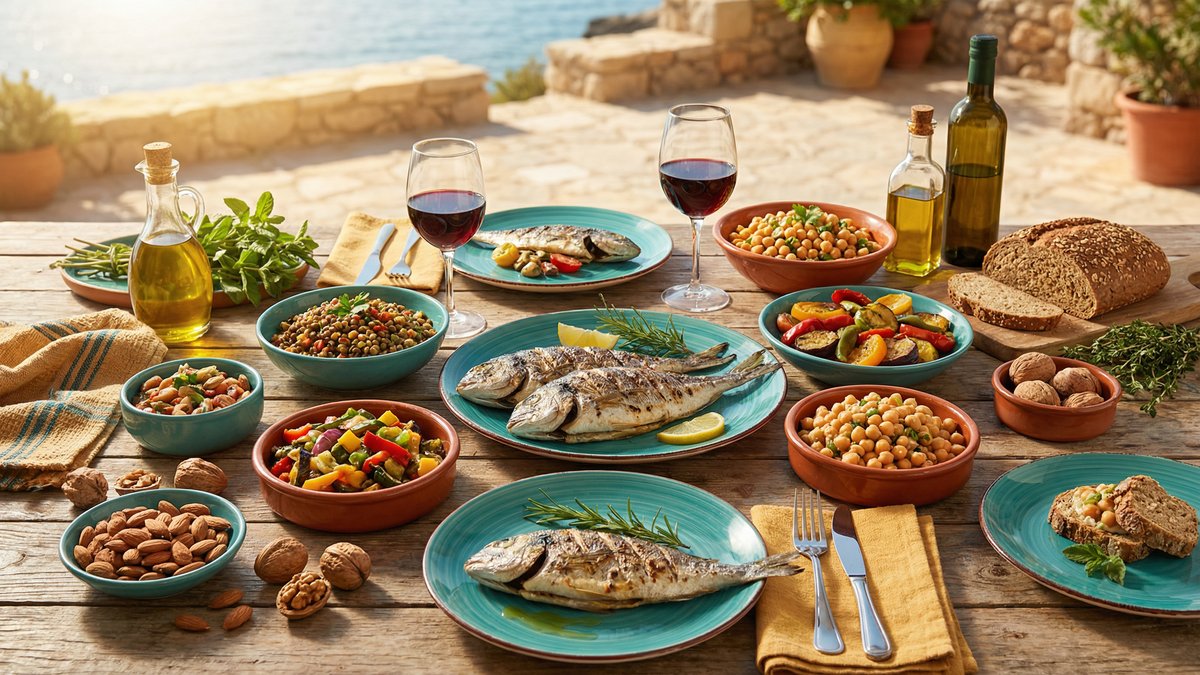
The Mediterranean diet is not a single strict menu. It is a pattern built around vegetables, legumes, fruit, nuts, seeds, whole grains when tolerated, fish, olive oil, herbs, and minimally processed foods.
Quick summary
For people with diabetes, the pattern can support heart health and meal quality, but portions and carbohydrate choices still need to fit the person.
Key takeaways
- Mediterranean-style eating emphasizes whole foods and unsaturated fats.
- It can be adapted for different carbohydrate goals.
- Olive oil and nuts are calorie-dense, so portions still matter.
- The pattern works best when paired with blood pressure, cholesterol, activity, sleep, and medication plans when needed.
Why it fits diabetes care
Mediterranean-style meals often include fiber, protein, and healthy fats, which can make meals more satisfying and less processed. Legumes, vegetables, fish, and nuts can support cardiometabolic health when they replace refined carbohydrates and high-saturated-fat foods.
For people using insulin or medicines that can cause low blood sugar, meal timing and carbohydrate consistency may still matter.
Build a simple plate
- Half the plate: non-starchy vegetables such as salad, peppers, courgette, broccoli, aubergine, or greens.
- Protein: fish, chicken, eggs, Greek yogurt, tofu, or legumes.
- Carbohydrate if included: beans, lentils, fruit, oats, whole grains, or a measured portion of starchy vegetables.
- Fat and flavor: olive oil, nuts, seeds, avocado, herbs, spices, lemon, and vinegar.
- Limit: sugary drinks, highly processed snacks, large desserts, and heavy creamy sauces.
Evidence in context
Mediterranean diet trials and guideline discussions support the pattern for cardiovascular risk reduction, but results depend on the whole diet and the person’s baseline risk. It is not a cure for diabetes, and it does not replace prescribed medicines.
Practical takeaway
Think pattern, not perfection. A Mediterranean-style plate can be diabetes-friendly when portions, carbohydrates, sodium, and personal glucose response are considered.
Safety note
This article is not a substitute for medical care. If you have kidney disease, food allergies, digestive conditions, pregnancy, or medicines that affect potassium or glucose, ask for individualized nutrition advice.
What to ask your care team
- What does this mean for my diabetes, heart, kidney, medicine, or monitoring plan?
- Which symptoms, readings, or side effects should prompt urgent care?
- Do any tests, prescriptions, follow-up visits, or safety instructions need review?
Related reading
Source summary
- Mediterranean Diet, American Heart Association. Nutrition guidance. Accessed June 3, 2026. Source
- Primary Prevention of Cardiovascular Disease with a Mediterranean Diet, New England Journal of Medicine via PubMed. Randomized trial. Accessed June 3, 2026. Source
- Standards of Care in Diabetes 2026, American Diabetes Association. Guideline overview. Accessed June 3, 2026. Source
- Managing Diabetes, National Institute of Diabetes and Digestive and Kidney Diseases. Patient guidance. Accessed June 3, 2026. Source