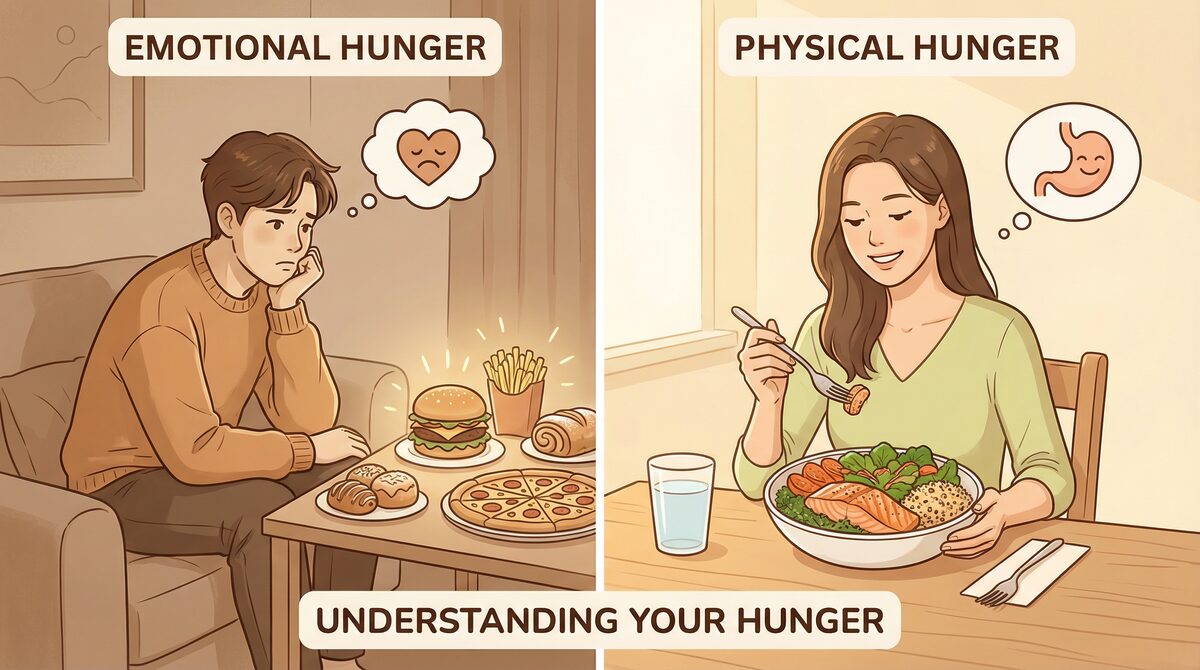
Cravings are often treated like a willpower problem. With diabetes, they can also be a signal: low glucose, skipped meals, poor sleep, stress, restrictive dieting, medication timing, food insecurity, normal hunger, or a meal that did not keep you full.
Quick summary
CDC lists hunger as a possible low-glucose symptom and explains that carbs, protein, fat, fiber, activity, alcohol, and routine changes can all affect glucose. Cravings should be handled with curiosity and safety, not shame.
Key takeaways
- Sudden intense hunger can be a low-glucose symptom for some people.
- Overly restrictive eating can backfire, especially for people using medicines that can cause lows.
- Pairing carbs with protein, fat, and fiber may help meals feel more satisfying.
- Repeated cravings, binge eating, or fear around food deserves professional support.
First rule: rule out a low
If you use insulin or a medicine that can cause low glucose, sudden hunger, shaking, sweating, dizziness, anxiety, or confusion should prompt a glucose check if your plan calls for it. Hunger is only one possible low-glucose symptom, and not every craving is a low. CDC says blood sugar below 70 mg/dL is considered low for many people with diabetes, though individual targets can vary. Treat lows according to your care plan.
Look at the last few hours
Cravings may follow a missed meal, not enough carbohydrate for the medicine taken, a very sugary snack, alcohol, extra activity, poor sleep, or a stressful event. NIDDK notes that diabetes meal timing can depend on medicines and activity. A pattern is more useful than one isolated craving.
Build meals that last
CDC meal-planning guidance supports the plate method and carb counting. A practical meal often includes vegetables or fiber-rich foods, a protein source, and a planned carb portion, but this is a strategy, not a universal cure for cravings. This is not about banning sweets. It is about reducing the swing between feeling deprived and feeling out of control.
When cravings need more support
If cravings are tied to binge eating, purging, secret eating, fear of insulin, skipped medicine, depression, anxiety, or food insecurity, ask for help. A registered dietitian, diabetes educator, therapist, social worker, or clinician can help without blaming you.
What to ask your care team
- Could these cravings be related to low glucose, medicine timing, skipped meals, poor sleep, stress, or food access?
- Should I adjust my meal plan with a dietitian rather than restricting more?
- What is my low-glucose treatment plan?
- Do I need support for binge eating, diabetes distress, or food insecurity?
Practical takeaway
Cravings are information. With diabetes, the safest response is to check for lows when relevant, look for patterns, and build a plan that is nourishing rather than punishing.
Safety note
Seek urgent care for severe low glucose, confusion, seizure, fainting, ketones, repeated vomiting, dehydration, or high glucose with vomiting, ketones, dehydration, confusion, or trouble breathing. This information is general education and is not a substitute for medical care.
Source summary
- CDC: Diabetes meal planning. Explains plate method, carb counting, portions, and individualized meal planning. Source
- CDC: Choosing healthy carbs. Explains carb quality, whole fruit, refined carbs, and pairing carbs with protein, fat, or fiber. Source
- CDC: Low blood sugar. Lists hunger as a low-glucose symptom and explains causes and severe-low safety. Source
- NIDDK: Low blood glucose. Explains low-glucose prevention, meals, snacks, fast carbohydrates, and when plans may need adjustment. Source