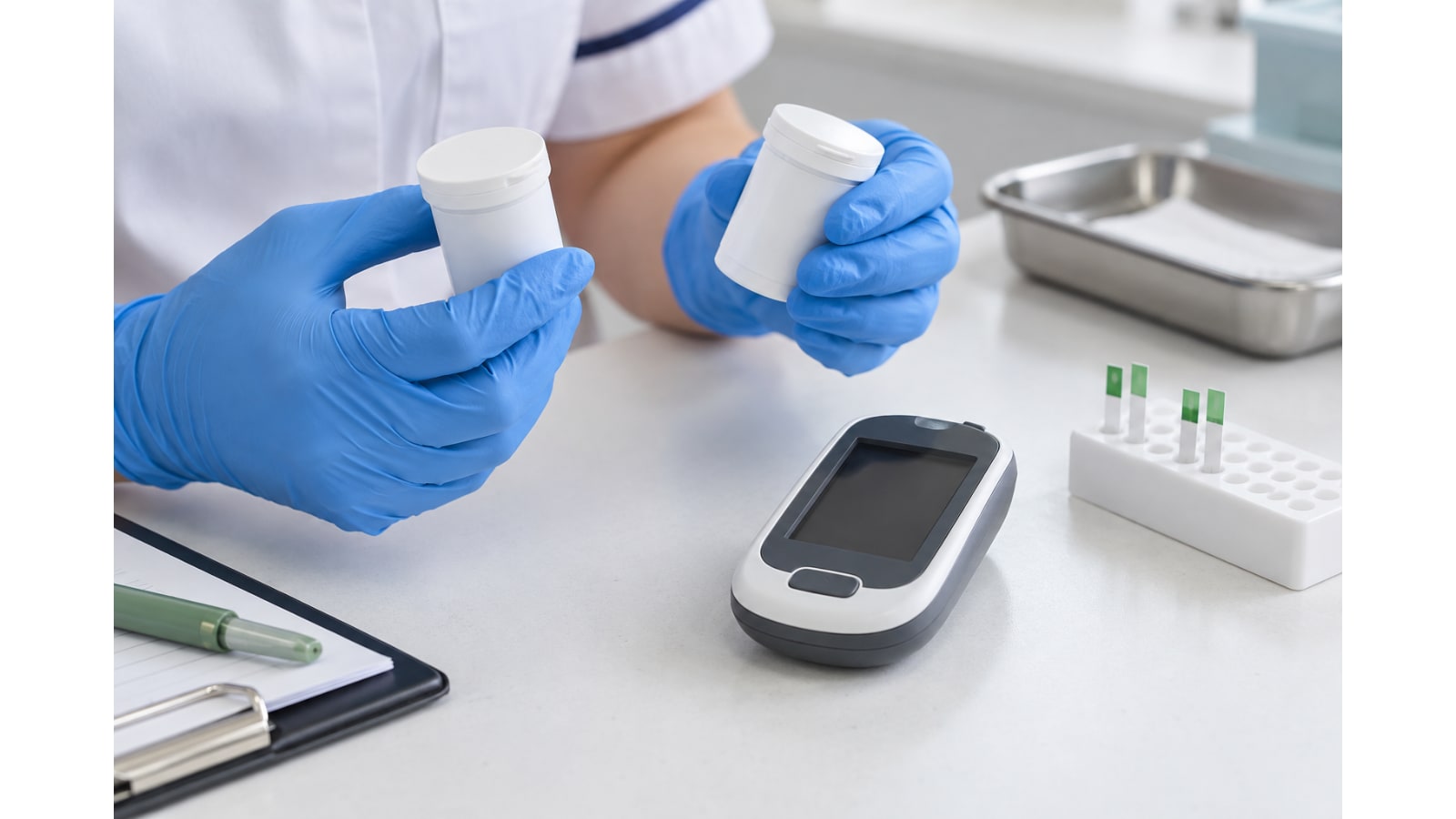
A UK safety notice issued on 9 October 2026 warns that quality-control problems with specified Nova Biomedical StatStrip ketone test strips could disrupt professional blood ketone testing. The notice concerns clinical testing services, not a blanket recall of every home glucose or ketone meter.
What the StatStrip alert says
The Medicines and Healthcare products Regulatory Agency (MHRA) notice, DSI/2026/013, identifies StatStrip Ketone Test Strips, part number 46951. It lists affected lots, tells services to remove recalled stock from use and warns that further lots may become unusable if quality-control testing fails. The manufacturer’s expected UK replacement interval is approximately four weeks, not a guaranteed delivery date.
Services are asked to assess testing capacity, validate alternative methods and make contingency arrangements. Patients at greatest clinical risk, including children and people with suspected or established diabetic ketoacidosis, need particular attention when supply is constrained. The official notice and its downloadable document contain the product and lot details.
Why ketones matter during illness
Diabetic ketoacidosis, usually shortened to DKA, is a serious complication in which insufficient insulin allows harmful amounts of ketones to build up. It can be life threatening and requires urgent hospital treatment. It usually affects people with type 1 diabetes, but can also occur in people with type 2 diabetes who need insulin.
Glucose and ketone information answer different questions. A glucose reading or glucose trend from a continuous glucose monitor is not itself a blood ketone result. Your care plan should explain which readings you need and how to obtain them.
DKA can also be the first sign of previously undiagnosed type 1 diabetes, particularly in children. A person should not need an existing diabetes diagnosis before symptoms are taken seriously.
Keep your existing diabetes plan in place
NHS guidance for type 1 diabetes describes an individual care plan developed with the diabetes team. It covers the insulin routine, glucose checks, recognition of low and high glucose, equipment and what to do when unwell. The details are not identical for every person.
A supply alert is not a new insulin prescription. Do not use it to calculate a different dose, copy another person’s treatment or stop prescribed insulin. Follow the sick-day and insulin instructions already agreed with your healthcare professional, and contact the team when the plan is unclear.
It can help to keep the care plan, current medicine list and relevant contact details together. These give a conversation with a clinician a practical starting point. Someone helping with your diabetes care should know where to find the plan and whom to contact, rather than trying to reconstruct instructions during an illness.
Questions worth asking your care service
If this notice raises a concern, keep the conversation specific:
- Does this service use the StatStrip ketone strips named in the alert?
- What arrangements are in place if the usual testing method is unavailable?
- If I become unwell, which service should I contact first?
- What should I do if I cannot obtain the ketone information my plan calls for?
- Are my written sick-day instructions and contact numbers current?
These questions distinguish an equipment concern from a treatment decision. They do not require you to identify a replacement clinical device or decide which laboratory method a service should use. Those are matters for the team responsible for your care.
When not to wait for a test result
Warning symptoms include vomiting or abdominal pain, breathing more deeply or rapidly than usual, fruity-smelling breath, marked sleepiness or confusion, and severe thirst or dehydration. If you are becoming progressively unwell, seek urgent medical care.
The NHS advises emergency assessment when a person has symptoms of DKA but does not know their ketone level. In the UK, this means calling 999 or going to A&E. Do not wait for a missing result to become available before seeking help for concerning symptoms. Outside the UK, use the local emergency service.
The practical takeaway
The immediate task for readers is to know their existing care plan and how to reach their care team. Keep questions about the named product separate from assumptions about every testing device. A clear contact route is useful whether testing happens in a clinic, a community service or an emergency department.
Related Living Diabetes guides
Sources
- MHRA device safety information DSI/2026/013, 9 October 2026, with product and lot details in the official notice.
- NHS: diabetic ketoacidosis.
- NHS: treatment for type 1 diabetes.
General information, not an individual treatment plan. This article describes a UK safety notice; follow your own care team’s instructions and local emergency advice.