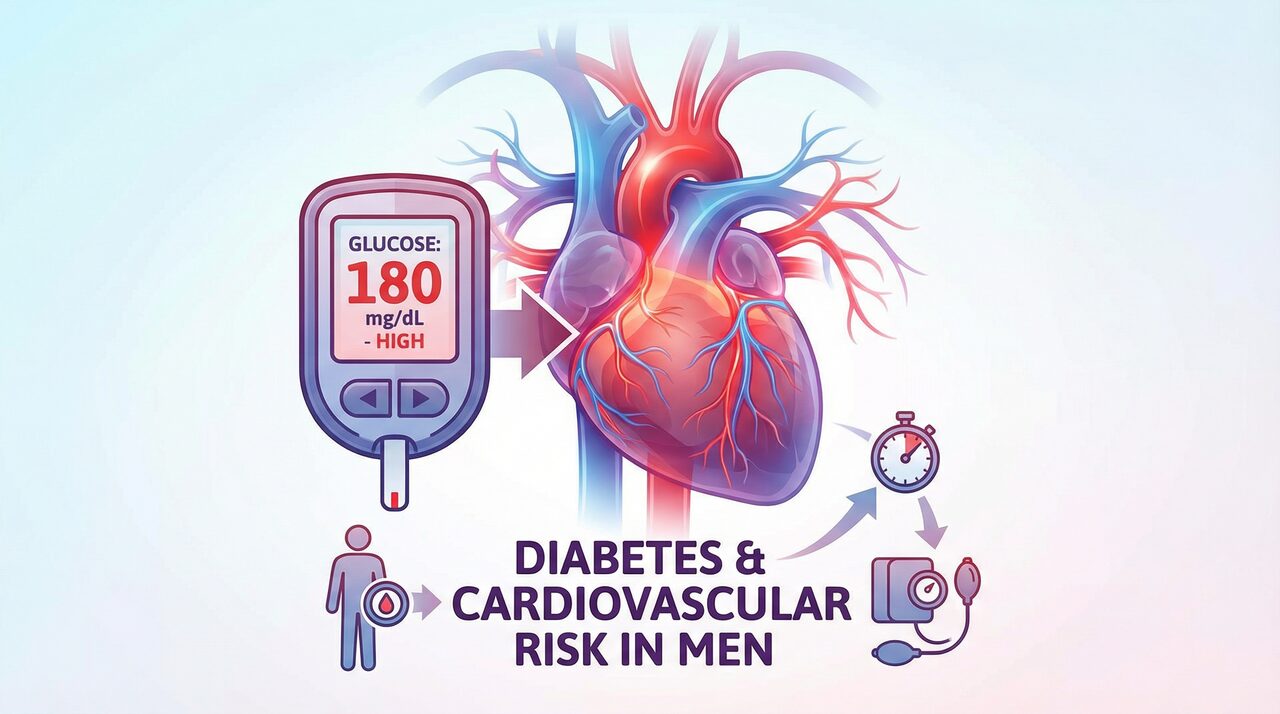
Living with diabetes means managing many aspects of your health, and this article focuses on men and heart attack risk, but women with diabetes also have a substantially increased risk of heart disease and should take symptoms seriously. Diabetes can accelerate cardiovascular disease and make its effects more severe. Taking proactive steps and knowing what to look for can significantly improve your heart health and overall well-being.
Key takeaways
- Bring symptoms such as erectile dysfunction, sleep problems, or fatigue to your clinician, since they can sometimes be clues to heart or blood vessel problems, among many other possible causes. Chest pain or pressure can be a heart attack; seek emergency medical care right away by calling local emergency services.
- Screening and treatment decisions depend on your age, history, medicines, and personal risks.
- Do not change medicines or supplements without discussing it with your healthcare professional.
Why this matters when you live with diabetes
Diabetes, particularly type 2, is a major risk factor for cardiovascular disease, including heart attacks and strokes. Over time, high blood sugar levels can damage blood vessels and nerves that control your heart. This damage can lead to atherosclerosis, a condition where plaque builds up in your arteries, narrowing them and making them less flexible. When these plaques rupture, they can form blood clots that block blood flow to the heart, causing a heart attack.
Men with diabetes can have important cardiovascular risk factors, and heart attack symptoms can sometimes be less obvious or attributed to other causes. It is crucial to be aware of these risks and to discuss them openly with your healthcare team.
What to do before you start
Before you can effectively manage your heart attack risk, it is essential to understand your current health status. This involves regular check-ups and open communication with your doctor. Key areas to focus on include:
- Blood Sugar Control: Consistently managing your blood glucose levels is fundamental. High blood sugar is a primary driver of vascular damage.
- Blood Pressure Management: High blood pressure often co-exists with diabetes and significantly increases heart attack risk. Regular monitoring and medication, if needed, are vital.
- Cholesterol Levels: Keeping your cholesterol within healthy ranges helps prevent plaque buildup in your arteries. Your doctor may recommend lifestyle changes or statin medications.
- Weight Management: Maintaining a healthy weight reduces strain on your heart and improves insulin sensitivity.
- Smoking Cessation: Smoking dramatically increases heart disease risk. If you smoke, quitting is one of the most impactful steps you can take for your heart health.
Practical steps you can use this week
You don’t have to wait to start protecting your heart. Here are practical steps you can integrate into your routine:
- Eat a Heart-Healthy Diet: Focus on whole foods, including plenty of fruits, vegetables, lean proteins, and whole grains. Limit processed foods, sugary drinks, and unhealthy fats.
- Stay Active: Guidelines for many adults without significant limitations often suggest about 150 minutes of moderate-intensity aerobic activity per week, such as brisk walking, swimming, or cycling, plus strength training on two or more days. Ask your healthcare professional what type and amount of activity are safe for you, especially if you have heart disease or other complications.
- Monitor Your Numbers: Regularly check your blood sugar, blood pressure, and cholesterol as advised by your doctor. Understanding your numbers empowers you to make informed decisions.
- Manage Stress: Chronic stress can impact heart health. Find healthy ways to cope, such as meditation, hobbies, or spending time with loved ones.
- Prioritize Sleep: Aim for 7-9 hours of quality sleep each night. Poor sleep can affect blood sugar and blood pressure.
When to call your healthcare professional
Recognizing the signs of a heart attack is critical, especially for men with diabetes, as symptoms can sometimes be atypical. Some people with diabetes may have milder or less typical chest pain, or may mainly notice shortness of breath, unusual fatigue, nausea, or sweating. Do not delay seeking emergency medical help if you experience any of the following:
- Chest Pain or Discomfort: This can feel like pressure, squeezing, fullness, or pain in the center of your chest that lasts more than a few minutes, or goes away and comes back.
- Pain in Other Areas: Discomfort in one or both arms, the back, neck, jaw, or stomach.
- Shortness of Breath: This can occur with or without chest discomfort.
- Other Signs: Breaking out in a cold sweat, nausea, lightheadedness, or unusual fatigue.
If you suspect you are having a heart attack, call emergency services immediately. Do not try to drive yourself to the hospital.
Beyond emergencies, it is important to discuss any new or worsening symptoms with your doctor, even if they seem minor. This includes unexplained fatigue, changes in exercise tolerance, or persistent discomfort. Early detection and intervention are key to preventing serious complications.
Questions to ask at your next visit
Being an active participant in your healthcare is vital. Consider asking your doctor these questions:
- “What are my specific risk factors for heart disease, given my diabetes?”
- “Are my blood sugar, blood pressure, and cholesterol targets appropriate for my heart health?”
- “What lifestyle changes can I make to further reduce my heart attack risk?”
- “Are medications such as statins or, in selected cases, low-dose aspirin appropriate for me, and what are the bleeding risks and benefits in my specific situation?”
- “What are the warning signs of a heart attack that I should be particularly aware of?”
- “When should I consider seeing a cardiologist?”
Medical note: This article is for education only and does not replace care from your healthcare professional. If you use insulin or medicines that can cause low blood glucose, are pregnant, have kidney disease, heart disease, vision problems, neuropathy, or other diabetes-related complications, discuss changes to food, activity, medicines, devices, or travel plans with your diabetes care team.