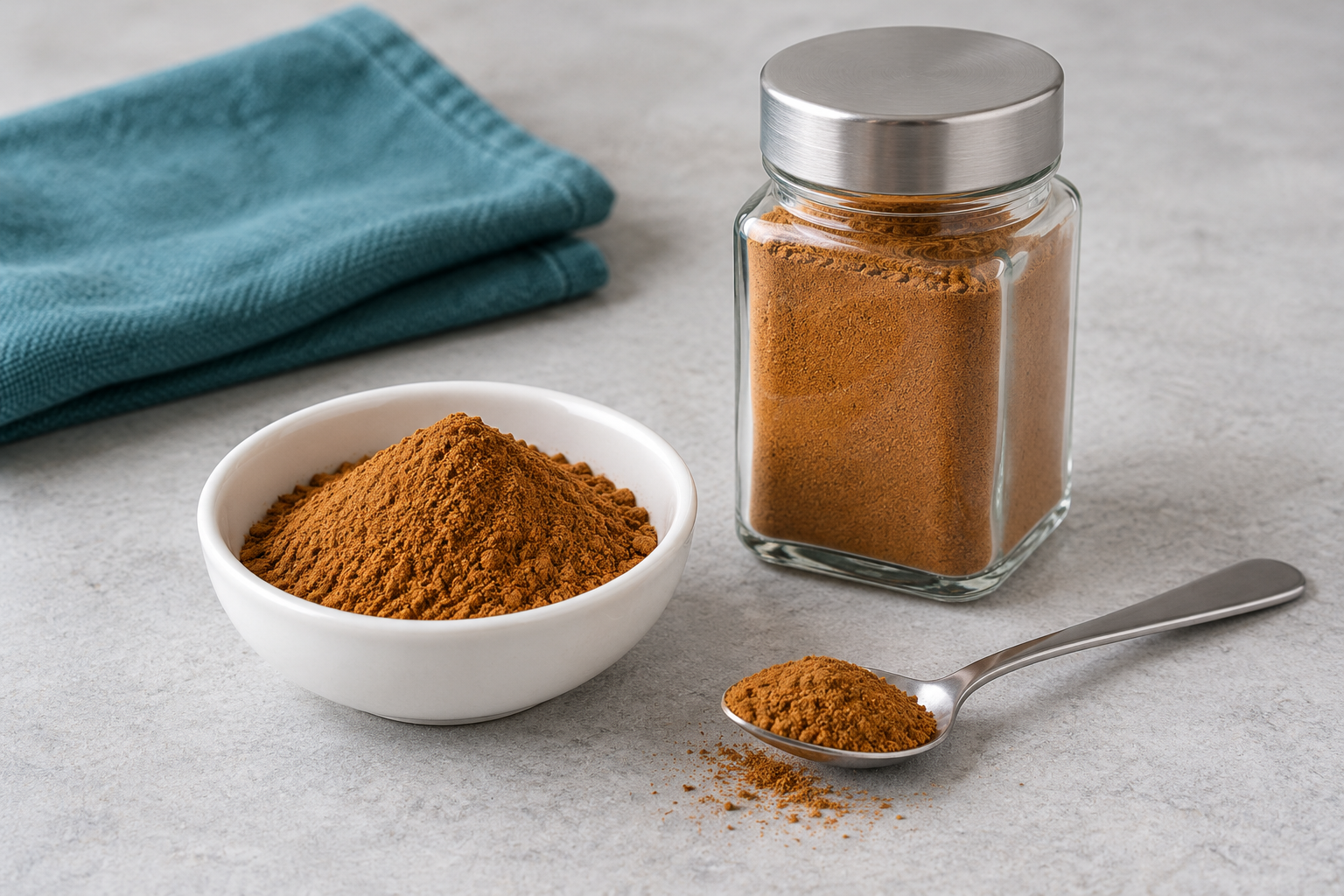
SLR Food Distribution has recalled a specified Wise Wife ground-cinnamon product because of elevated lead levels. The company announcement was published by the US Food and Drug Administration (FDA) on 29 October 2026.
Do not eat the recalled product. Discard it or return it to the shop for a refund. Check the identifiers below against the original notice, not the illustrative photograph accompanying this article.
Which cinnamon is recalled?
The FDA-hosted recall announcement and product photograph identify:
| Brand and product | Wise Wife Ground Cinnamon |
|---|---|
| Size | 110 g (3.88 oz) |
| UPC | 0688474302754 |
| Best before | 25 April 2027, printed as 4/25/2027 |
| Container | Clear plastic, black screw-top cap |
Distribution covered Connecticut, Indiana, Kansas, Massachusetts, Michigan, Minnesota, North Carolina, Nebraska, New York, Ohio, Pennsylvania, Texas, Virginia and Wisconsin, between 8 September 2025 and 28 June 2026.
The voluntary recall followed testing by the Connecticut Agricultural Experiment Station. No illnesses had been reported when the announcement was issued. It gives no lead concentration or individual exposure estimate.
Why can lead exposure matter without symptoms?
The FDA’s information on lead in food explains that lead can affect people of any age. Possible harm depends on factors including the amount, frequency and duration of exposure, age, and exposure from other sources. A product warning cannot establish how much lead a particular person has absorbed.
Developing babies and young children are especially vulnerable. The FDA describes neurological effects associated with high exposure during pregnancy, infancy and early childhood. In adults, chronic exposure is associated with kidney dysfunction, high blood pressure and effects on thinking and memory. These are general health risks, not outcomes demonstrated in people who used this particular product.
Food safety and nutritional quality are different questions. The FDA advises a varied, nutrient-dense diet rather than broadly avoiding nutritious foods because contaminants can occur in the food supply. That general advice does not override a named product recall.
What should a family do about possible exposure?
The CDC explains that most children with lead exposure have no obvious immediate symptoms. A child appearing well is therefore not a reliable way to decide that exposure has been harmless. Parents who think their child may have been exposed should speak with the child’s healthcare provider.
Children younger than six are particularly vulnerable because their bodies are developing rapidly. Lead exposure can affect the brain and nervous system, growth, learning, behaviour, hearing and speech. These effects are reasons to prevent further exposure and seek appropriate assessment, not a prediction that every child who ate a food will develop them.
When asking for advice, explain which product was used and what you know about when it was eaten. You do not need to diagnose poisoning yourself before contacting a professional.
How is lead exposure assessed?
A blood lead test is the best way to assess whether a child has been exposed, according to the CDC. The healthcare provider can discuss whether testing is needed and arrange follow-up based on the result and the child’s circumstances.
A small sample may be taken from a finger, heel or arm. An initial finger-prick result can be affected by lead on the skin, so a venous blood sample may be used for confirmation. A recall notice, a symptom checklist and a normal appearance are not substitutes for that clinical process.
A blood lead result is interpreted alongside possible sources of exposure. Follow-up can include finding and removing the source and arranging further tests. Treatment decisions belong with the healthcare team; do not start a supposed lead-removal remedy or supplement yourself.
Where can you get prompt advice?
In the United States, Poison Help can be reached on 1-800-222-1222. It connects callers with a local poison centre. The service advises not waiting for signs of poisoning before calling when exposure may have occurred.
Have the product container available if possible. Be ready to describe the person’s age, weight, known health conditions, the product and when contact occurred. The expert’s advice will depend on the circumstances.
If someone is not breathing, call 911 in the US immediately. Do not delay an emergency call to complete a pack check or arrange a refund. Outside the US, use your local poison-advice and emergency services.
Does cinnamon help manage diabetes?
This contamination alert is separate from whether cinnamon is an effective treatment. The US National Center for Complementary and Integrative Health (NCCIH) says it remains unclear whether cinnamon supplements help with diabetes or weight loss. Studies are difficult to interpret partly because different species and plant parts may have been used.
Using a spice in food is not the same as taking it in larger supplement amounts. NCCIH considers cinnamon likely safe in quantities commonly used for flavouring food, but larger amounts or prolonged use can cause problems, including digestive symptoms or allergic reactions. That general assessment is not permission to use a recalled product.
If you use herbal products and take medicines, discuss them with your healthcare professional. Do not replace prescribed diabetes treatment with cinnamon, or change medicine doses because of this food recall. Our type 2 diabetes information provides wider background on ongoing care.
Questions worth asking
Is this a warning to stop eating all cinnamon?
No. Use the named pack identifiers for this recall. Do not extend a product-specific alert to every brand, country or cinnamon-containing food.
Does an absence of reported illness prove there is no risk?
No. Reports and exposure assessment answer different questions. Follow the product action and seek professional advice about possible exposure rather than waiting to feel unwell.
Where should I check for changes?
Return to the original recall notice for updates and identification photographs. Our news section also covers other patient-safety alerts; each has its own product details and instructions.