The short answer
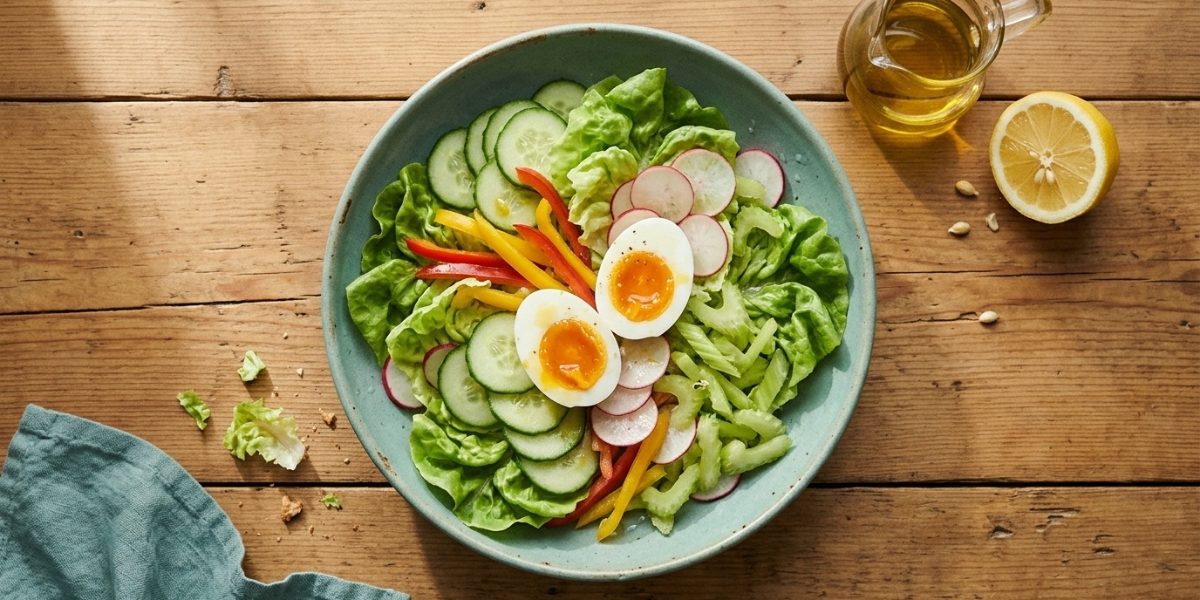
Lettuce, cucumber, peppers, radishes, celery, cabbage, onions and raw mushrooms are all lower in potassium. Tomatoes, avocado, spinach, beans and potatoes are higher.
Only limit potassium if your team has asked you to. Dress salads with olive oil, lemon and herbs, and avoid salt substitutes, which are mostly potassium.
Salad sounds like the safest meal there is. With kidney disease, a few of the usual ingredients need a second look. Here’s how to build one that works.
Do I need a low-potassium salad?
Only if you’ve been told to limit potassium. Many people with early kidney disease haven’t, and for them the usual advice stands: eat plenty of vegetables.
Potassium limits come from your blood tests. If yours runs high, or you take medicines that raise it, your team or a kidney dietitian will tell you. If nobody has, ask before you restrict anything.
Which ingredients are lower in potassium?
| Group | Lower potassium | Higher potassium (limit if advised) |
|---|---|---|
| Leaves | Lettuce, cabbage, kale, watercress | Cooked spinach and most other cooked greens |
| Vegetables | Cucumber, peppers, radishes, celery, onions, raw mushrooms, cauliflower, green beans, sweetcorn, courgette | Tomatoes, avocado, beetroot, potatoes, raw carrots |
| Fruit | Apple, pear, grapes, berries, pineapple, tangerine | Banana, orange, mango, melon, dried fruit, pomegranate |
| Protein | Egg, chicken, tinned tuna (drained) | Beans and lentils, nuts and seeds |
| Carbs | Pasta, rice, couscous | Potato salad |
As a rough guide, 200 mg of potassium or more in a serving counts as high.
Portion matters as much as the ingredient. A big helping of a lower-potassium food can add up to a high-potassium meal. A few slices of tomato is very different from a whole bowl.
What about the dressing?
- Good choices: olive oil, lemon or lime juice, vinegar, garlic, fresh herbs, black pepper, a little mustard.
- Go easy on: bottled dressings, which are often salty and sometimes sugary.
- Avoid: salt substitutes and “lite” salt. They’re mostly potassium chloride.
Five kidney-friendly salad ideas
Each one fills half a plate with vegetables, adds protein, and keeps carbs modest.
1. Crunchy chicken salad. Shredded lettuce and white cabbage, cucumber, red pepper and spring onion, with sliced grilled chicken. Dress with olive oil, lemon and black pepper.
2. Egg and radish salad. Two boiled eggs on a bed of lettuce with sliced radishes, celery and cucumber. A spoon of yoghurt and chopped chives on top.
3. Tuna and sweetcorn pasta salad. A small portion of cooled pasta with drained tuna, sweetcorn, diced pepper and parsley. Olive oil and vinegar to dress. Count the pasta as your carbs.
4. Apple and cabbage slaw. Shredded cabbage, grated apple and a little onion in a yoghurt and lemon dressing. Good beside grilled fish.
5. Roasted pepper and couscous bowl. A few spoons of couscous with roasted peppers, courgette, onion and fresh mint, plus a little feta if your salt allowance permits.
How do I keep blood sugar steady?
- Keep pasta, rice or couscous to about a quarter of the bowl.
- Always add protein. It keeps you full and slows the rise in glucose.
- Count fruit in a salad as part of your carbs.
- Watch sweet dressings and croutons.
If you take insulin or a sulfonylurea, a very low-carb salad on its own can leave you short. Match your dose or add a carb portion, as your team has advised.
Can I make a favourite ingredient fit?
Often, yes. Use less of it. Two cherry tomatoes for colour, or a few slices of avocado, may fit where a whole one wouldn’t. Your dietitian can tell you how much room you have.
If you’re not on a potassium limit, tomatoes, beans and avocado are healthy foods and don’t need avoiding. For general ideas, see filling summer salads.
The bottom line
Lettuce, cucumber, peppers, cabbage and radishes are your base. Add egg, chicken or tuna. Dress with oil, lemon and herbs. Keep higher-potassium extras small, and only if you need to.
More: reading food labels for kidney health and pantry swaps.
Sources
- National Kidney Foundation. Potassium in your CKD diet.
- American Diabetes Association. Standards of Care in Diabetes 2026, section 11: Chronic kidney disease and risk management.
- American Diabetes Association. Standards of Care in Diabetes 2026, section 5: Facilitating positive health behaviors and well-being.
General public information, not personalised treatment advice. Children, pregnancy and complex health conditions need individual specialist advice. Don’t start, stop or change a medicine without speaking to your own healthcare team.