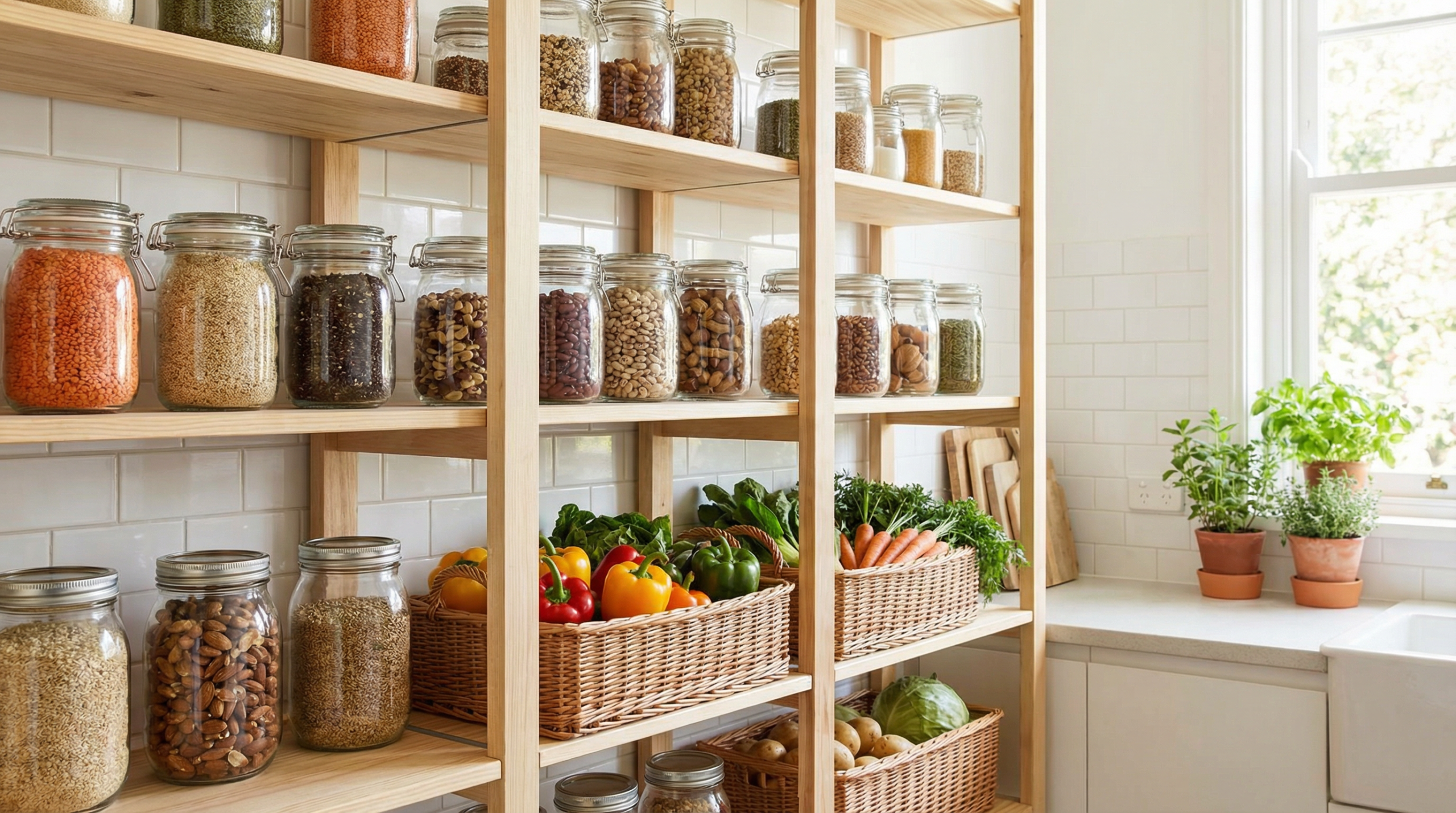
A pantry cleanout is not about throwing away every food you enjoy. It is about making the easy choice a little safer on ordinary days.
Quick summary
For diabetes, look at carbohydrate portions, added sugars, fiber, and meal balance. For kidney or blood pressure concerns, also look at sodium and, when advised, potassium, phosphorus, protein, and fluid guidance.
Key takeaways
- Put fast low-glucose treatment where it is easy to find.
- Group carb foods so portions are easier to plan.
- Check sodium in soups, sauces, canned foods, seasoning mixes, and packaged snacks.
- Kidney disease may require a different pantry plan than diabetes alone.
Shelf 1: Low-glucose safety
Keep glucose tablets, gels, juice boxes, or other fast carbohydrate treatment in a predictable place if you use insulin or medicines that can cause lows. Family members should know where it is. Do not replace low-glucose treatment with slower foods such as chocolate or high-fat snacks unless your care plan specifically allows it.
Shelf 2: Meal builders
Stock foods that make balanced meals easier: canned tuna or salmon, beans if they fit your kidney plan, low-sodium soups, whole grains, nuts or seeds if appropriate, no-salt-added vegetables, herbs, spices, vinegar, and lower-sugar sauces. Put measuring cups or portion reminders near common carb foods.
Shelf 3: Label checks
CDC meal-planning guidance highlights carb counting and the plate method. For pantry foods, look at serving size first, then total carbohydrate, fiber, added sugars, sodium, and ingredients. For kidney disease, ask whether phosphorus additives, potassium, protein, or fluid limits matter for you.
Shelf 4: Reduce friction
Move foods that support your plan to eye level. Put rarely used sweets or salty snacks somewhere less automatic. Keep a short list of quick meals you can make when tired. Pantry organization works best when it lowers effort, not when it creates shame. If money is tight, start with one shelf or one swap rather than replacing everything at once.
What to ask your care team
- Which label numbers matter most for me: carbs, sodium, potassium, phosphorus, protein, or calories?
- What low-glucose treatment should I keep at home?
- Do I need kidney-specific nutrition advice?
- Which pantry swaps would make weekday meals easier?
Practical takeaway
A diabetes-friendly pantry is not perfect. It is organized so safer meals and urgent glucose treatment are easier to reach.
Safety note
Seek urgent care for severe low glucose, confusion, ketones, vomiting, dehydration, swelling with breathing trouble, or dangerous glucose patterns after major diet changes. This information is general education and is not a substitute for medical care.
Source summary
- CDC: Diabetes meal planning. Explains the plate method, carb counting, portions, and individualized meal planning. Source
- NIDDK: Healthy living with diabetes. Patient guidance on meals, snacks, carbs, activity, sleep, and individualized care. Source
- CDC: Choosing healthy carbs. Explains portioning carbohydrate foods and pairing carbs with protein, fat, or fiber. Source
- CDC: Diabetes and kidney disease food. Explains why kidney disease may change sodium, potassium, phosphorus, protein, and fluid needs. Source