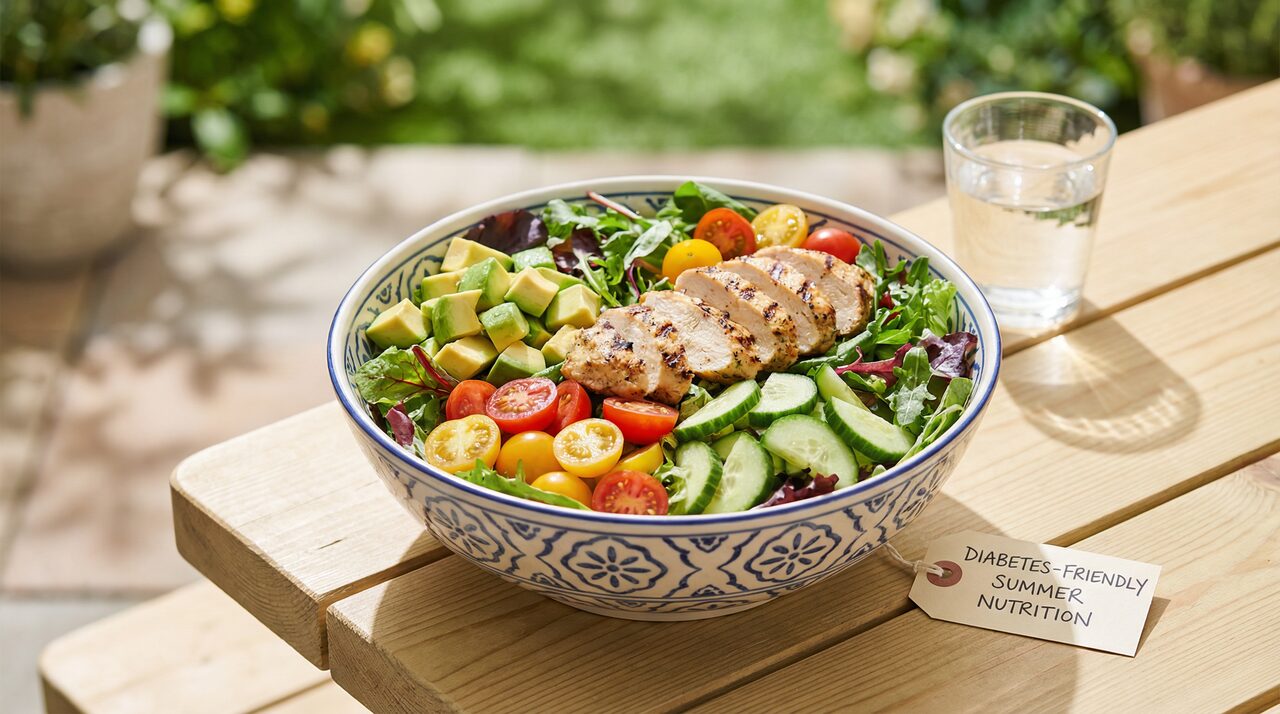
A salad can be satisfying or it can leave someone hungry an hour later. For diabetes, the difference often comes down to protein, fiber, fat, planned carbs, and the dressing.
Quick summary
CDC meal-planning guidance supports balanced meals rather than tiny portions. A summer salad can fit diabetes care when it includes enough food, clear carb choices, and attention to sodium and kidney needs.
Key takeaways
- A salad should usually include protein if it is meant to be a meal.
- Fruit, grains, beans, croutons, sweet dressings, and chips can all add carbohydrates.
- Dressing, cheese, olives, deli meat, and packaged toppings can add sodium.
- Kidney disease may change protein, potassium, phosphorus, sodium, and fluid targets.
Start with protein
Use grilled fish, chicken, tofu, eggs, beans, lentils, cottage cheese, Greek yogurt dressing, or another protein that fits your plan. Protein can make the salad more filling. If you have kidney disease, ask whether your protein target is different.
Choose a carb on purpose
Beans, fruit, corn, quinoa, brown rice, whole-grain crackers, or a small bread side can all fit different plans. The problem is not that salad has carbs. The problem is surprise carbs from several toppings at once. If you count carbs, count the salad like any other meal.
Make dressing work harder
A dressing can add flavor, fat, sodium, and sometimes sugar. Try lemon, vinegar, herbs, mustard, pepper, garlic, onion, or a measured amount of oil. Bottled dressings and restaurant salads may carry more sodium than expected.
Keep it safe in the heat
Summer salads often contain cut produce, eggs, chicken, seafood, or dairy. CDC recommends clean hands and surfaces, separating raw and ready-to-eat foods, cooking when needed, and chilling foods promptly. Do not leave perishable salads sitting out during a long outdoor event.
What to ask your care team
- What protein amount fits my diabetes and kidney plan?
- Which salad toppings should I count as carbs?
- Is sodium in dressing or toppings affecting my blood pressure plan?
- How long can this salad safely sit out at a summer event?
Practical takeaway
A diabetes-friendly summer salad is not about eating less. It is about building a satisfying bowl with protein, fiber, planned carbs, safer dressing, and food-safety awareness.
Safety note
Seek urgent care for severe low glucose, confusion, signs of allergic reaction, repeated vomiting or diarrhea, dehydration, fever with food poisoning symptoms, or high glucose with vomiting, ketones, dehydration, confusion, or trouble breathing. This information is general education and is not a substitute for medical care.
Source summary
- CDC: Diabetes meal planning. Explains the plate method, carb counting, portions, and individualized meal planning. Source
- CDC: Choosing healthy carbs. Explains carbohydrate quality, whole grains, fruit, fiber, and pairing carbs with protein, fat, or fiber. Source
- NIDDK: Healthy living with diabetes. Patient guidance on meals, snacks, activity, medicines, alcohol, sleep, and individualized care. Source
- CDC: Diabetes and kidney disease food. Explains why chronic kidney disease may change sodium, potassium, phosphorus, protein, and fluid advice. Source
- CDC: Preventing food poisoning. Food safety guidance built around clean, separate, cook, and chill. Source
- AHA: Sodium and salt. Explains sodium, blood pressure, and ways to reduce sodium in a heart-health pattern. Source