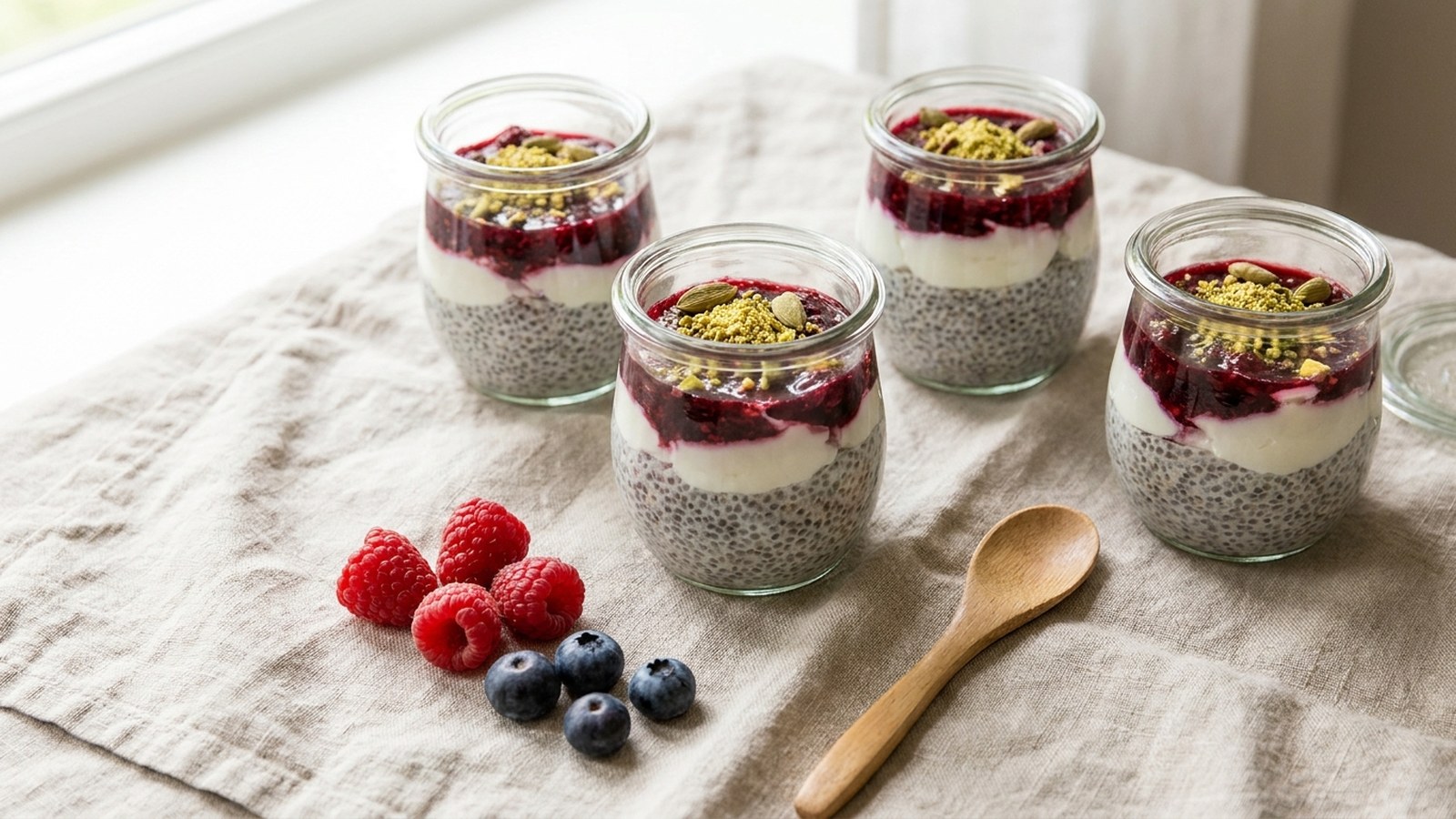
Cardamom Berry Labneh Chia Breakfast Cups is designed as a practical diabetes-friendly recipe, not a medical prescription. It uses familiar ingredients, measured carbohydrate portions, and enough protein and fiber to make the meal more satisfying.
Quick summary
A small breakfast cup that leans on protein, fiber, and flavor instead of sugar.
Key takeaways
- Built for 4 servings.
- Uses measured carbohydrate portions rather than removing all carbohydrate.
- Includes protein, fiber, or both to support a more balanced plate.
- Nutrition values are estimates and will vary by brand and portion.
Recipe snapshot
- Prep time: 10 min
- Chill time: 4 hr or overnight
- Serves: 4
- Style: Make-ahead breakfast
- Estimated carbohydrate: 13 to 18 g total carbohydrate per cup
Ingredients
- 1 cup plain labneh or thick Greek yogurt
- 1/2 cup unsweetened milk or fortified soy milk
- 3 tablespoons chia seeds
- 1/2 teaspoon ground cardamom
- 1 teaspoon vanilla extract
- 1 cup mixed berries, fresh or thawed frozen
- 2 tablespoons chopped pistachios or almonds
- Optional: 1 teaspoon lemon zest
Instructions
- Whisk labneh, milk, chia seeds, cardamom, and vanilla in a bowl.
- Cover and chill for at least 4 hours, or overnight, until thick.
- Spoon into 4 small cups.
- Top each cup with berries, nuts, and optional lemon zest.
- Serve cold. Stir in a splash of milk if you prefer a looser texture.
Nutrition note
Estimated per cup: 160 to 220 calories, 13 to 18 g total carbohydrate, 5 to 7 g fiber, and 10 to 16 g protein depending on yogurt and milk.
Diabetes-friendly serving notes
The berries provide sweetness with fiber, while chia and yogurt add protein and fat that can slow digestion. The portion is deliberately small because nuts, yogurt, and seeds are calorie dense.
Better pairings and swaps
- Use plain Greek yogurt if labneh is not available.
- Use sunflower seeds instead of nuts for a nut-free version.
- Use half berries and half chopped cucumber for a less sweet breakfast cup.
Practical takeaway
This recipe works best as part of a balanced plate. Check your own glucose patterns, medication plan, and appetite rather than treating any recipe as a one-size-fits-all answer.
Safety note
If you have kidney disease, review potassium, phosphorus, and protein targets with your care team. If you use insulin or medicines that can cause low blood glucose, count the carbohydrate in this breakfast within your usual plan. Choose unsweetened yogurt and milk.
Related reading
Source summary
- Healthy Eating, Centers for Disease Control and Prevention. Accessed 2026-06-24.
- Food and Nutrition, American Diabetes Association. Accessed 2026-06-24.
- Healthy Living With Diabetes, National Institute of Diabetes and Digestive and Kidney Diseases. Accessed 2026-06-24.