A hospital glucose result needs to be both accurate and attached to the right person. An FDA safety notice highlights a software problem that can break that second link in certain Nova Biomedical StatStrip hospital meters.
The FDA listed the notice on 20 October 2026, following a revised manufacturer advisory dated 5 October. It concerns the Gen 2.0 hospital system, not every StatStrip device or every home glucose meter. The underlying manufacturer action began in July, so this is an ongoing safety issue, not a newly discovered fault today.
Which hospital glucose meters are listed?
The FDA notice identifies these US products:
- StatStrip Glucose Hospital Meter System, model 63685.
- Glucose Hospital Meter System Multipack, model 66739.
Both are associated with device identifier 00385480636858. The notice excludes the earlier Gen 1.86 model. Nova’s separate global announcement lists additional regional products, so a hospital outside the US should check its own supplied notice rather than assume the US list is complete.
What can go wrong?
According to Nova’s revised customer advisory, information from a previous patient can remain displayed after a barcode scan. Accepting that information can send the next glucose result to the wrong medical record.
The manufacturer says the issue concerns all software versions of the affected Gen 2.0 system and does not impair the analytical measurement itself. That distinction matters: a plausible number can still be unsafe if it belongs to someone else.
Treatment based on another person’s result could mean unnecessary insulin, delayed treatment or a missed treatment need. The FDA identifies critically ill people and infants as particularly vulnerable. This is why a record-assignment error deserves attention even when the meter appears to be testing normally.
What are hospitals being asked to do?
The notices describe replacing affected equipment with an alternative where one is available. They also specify safeguards for settings without an alternative while a software solution is awaited.
Those safeguards include checking patient details at both the scan and result stages, appropriate patient-validation settings where supported, and operator logout after each test. A wrongly assigned result must be escalated, flagged or removed under the hospital’s record-correction procedure and brought to the treating team’s attention.
These are instructions for trained clinical, laboratory and technical staff. Patients should not alter hospital software, remove equipment or attempt their own workaround. A family member can ask the ward team whether an affected model is in use and how the hospital is following the notice.
Does a recall mean every test caused harm?
No. An FDA medical-device recall can involve correcting a device as well as removing it. Its seriousness describes the potential consequences, not a prediction that everyone exposed has been harmed.
Here, the FDA describes the recall as its most serious type. The published notices do not provide a usable per-test probability for an individual patient. A hospital must assess any suspected misassigned result in the context of the person, treatment and medical record.
Is the software update available?
Nova’s 5 October announcement describes a planned phased rollout in November 2026. That is a plan, not confirmation that a fix has already reached every hospital. The announcement also describes a shipment hold while corrective work is developed and validated.
Hospitals need current instructions from Nova or their authorised distributor, including which regional products and software are covered. A calendar date alone is not evidence that a particular meter has been updated.
What should patients do with an unexpected result?
Tell the clinical team promptly if a result, patient name or treatment instruction seems inconsistent. Do not independently stop insulin or make a dose change because of this article. This hospital notice is not a reason to abandon prescribed home monitoring.
Low glucose needs prompt treatment under the agreed care plan. Suspected diabetic ketoacidosis needs immediate emergency assessment, even if a ketone result is unavailable. Call your local emergency service or go to an emergency department; do not wait for equipment paperwork. Seek immediate emergency help for unconsciousness, seizures or breathing difficulty. Never give food or drink to someone who cannot swallow safely. See NHS hypoglycaemia guidance and NHS DKA guidance.
Questions worth asking
- Is this one of the affected hospital models?
- How are my identity and result being matched?
- If an error is suspected, who is reviewing the record and treatment?
- What instructions apply until the hospital confirms its equipment has been corrected?
For related reading, see our separate UK StatStrip ketone-strip alert and explanation of basal and bolus insulin. A shared brand name does not make different product notices interchangeable.
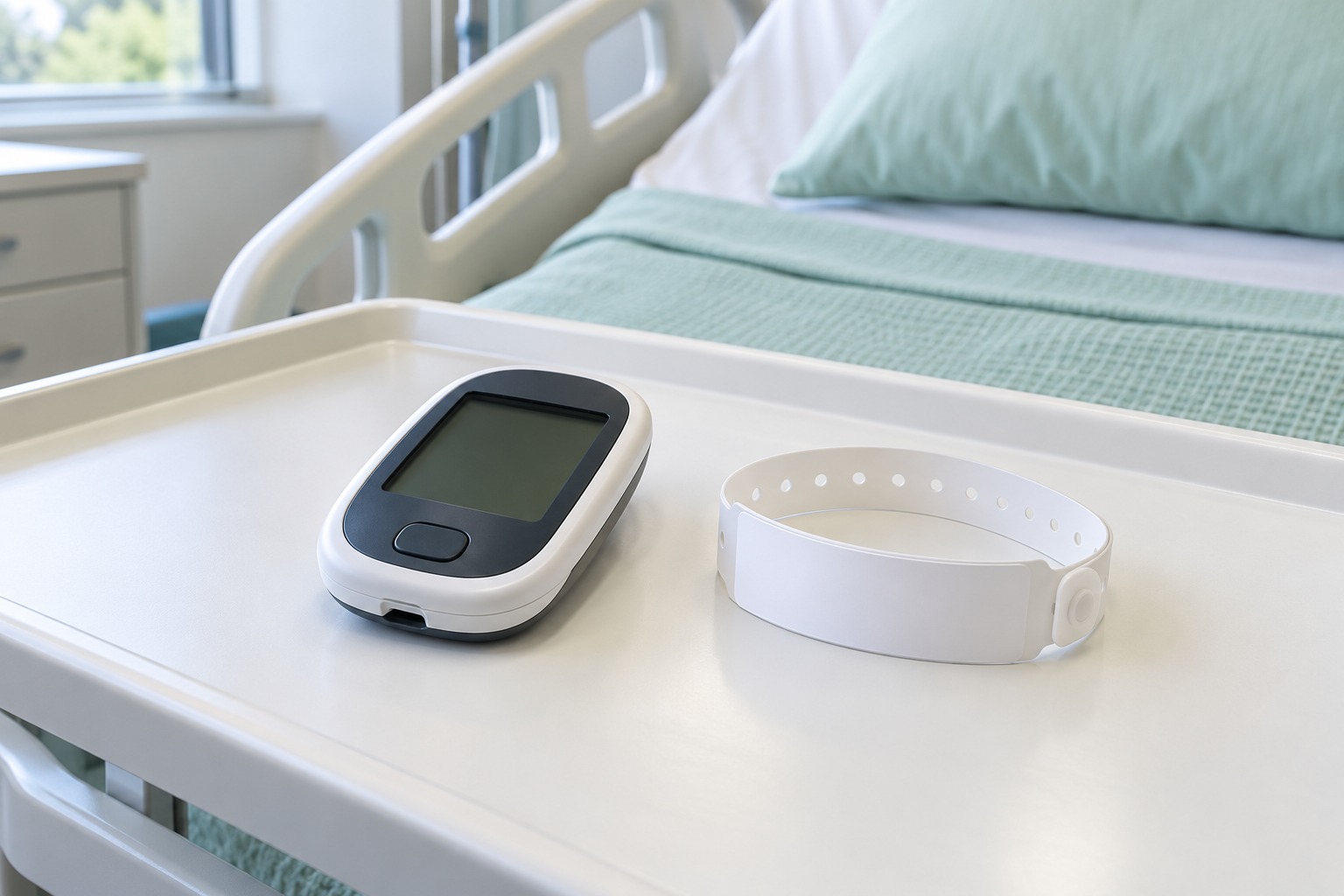
The featured image is a generic illustration of a glucose meter and identity wristband, not a photograph of the affected device.