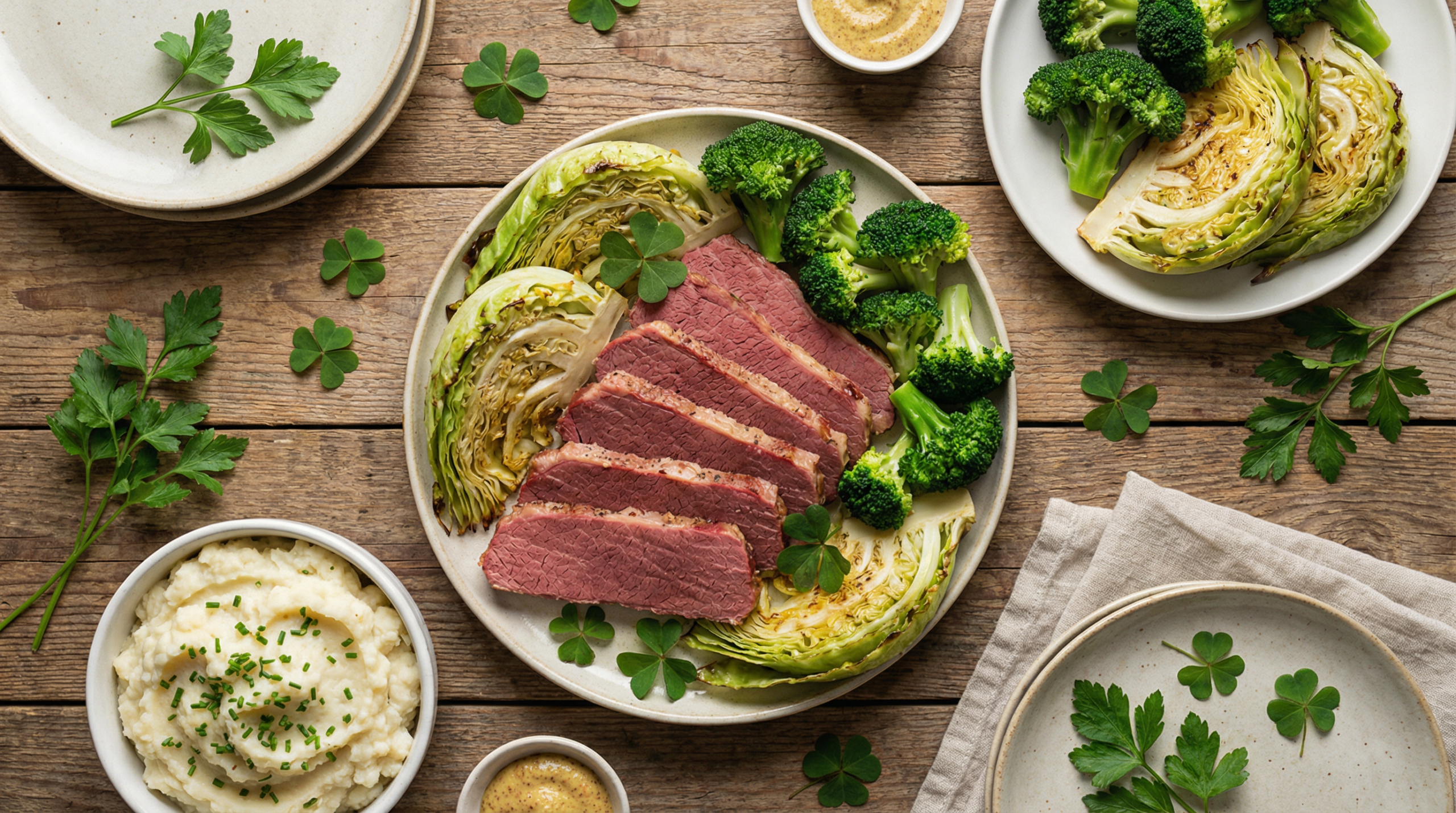
A holiday plate can include tradition without turning diabetes care into a battle. The key is to plan around carbs, sodium, alcohol, and medication timing instead of trying to make every food perfect.
Quick summary
Traditional foods such as potatoes, bread, beer, desserts, and some stews can affect glucose. Corned beef and packaged foods may be high in sodium. People using insulin or medicines that can cause lows need a plan for alcohol and delayed meals.
Key takeaways
- Choose the carb foods you most want and portion them intentionally.
- Watch sodium in corned beef, broths, packaged sauces, and restaurant meals.
- Alcohol can increase low-glucose risk, especially when food is delayed.
- Do not skip medicines or insulin to make room for a holiday meal unless your care team has given that plan.
Build a calmer holiday plate
Start with vegetables or salad, add protein, then choose one main carb such as potato, bread, or dessert. If you want more than one, use smaller portions. The plate method is not a rulebook, but it helps prevent the whole meal from becoming starch plus alcohol.
Sodium matters too
Some holiday foods are very salty. Sodium can matter for blood pressure, heart disease, kidney disease, and fluid retention. AHA recommends lowering sodium intake as part of blood pressure care. If you have kidney disease or heart failure, ask for stricter guidance.
Alcohol needs a plan
Beer and mixed drinks can add carbohydrates, but alcohol can also contribute to delayed low glucose, especially for people using insulin or sulfonylureas. CDC holiday guidance advises eating food when drinking alcohol. Carry glucose treatment and avoid drinking on an empty stomach.
After the celebration
Check patterns, hydrate, and return to the usual plan. One holiday does not ruin diabetes care. If you notice repeated highs or lows after similar events, ask your clinician or dietitian for a holiday plan that fits your medicines and culture.
What to ask your care team
- How should I manage alcohol with my medicines?
- What carb portions make sense for my holiday meal?
- Do I need lower-sodium swaps because of blood pressure, heart, or kidney disease?
- When should I check glucose during and after a long celebration?
Practical takeaway
St. Patrick’s Day can be safer with intentional carb portions, lower-sodium choices, alcohol caution, and a backup glucose plan.
Safety note
Seek urgent care for severe low glucose, confusion, vomiting, chest pain, ketones, dehydration, or glucose that remains dangerously high or low after the celebration. This information is general education and is not a substitute for medical care.
Source summary
- CDC: Buffet table tips for people with diabetes. Holiday meal and alcohol tips for people with diabetes. Source
- AHA: Shaking the salt habit. Explains sodium reduction for blood pressure. Source
- CDC: Diabetes meal planning. Explains the plate method, carb counting, portions, and individualized meal planning. Source
- NIDDK: Healthy living with diabetes. Patient guidance on meals, snacks, carbs, activity, sleep, and individualized care. Source
- CDC: Choosing healthy carbs. Explains portioning carbohydrate foods and pairing carbs with protein, fat, or fiber. Source