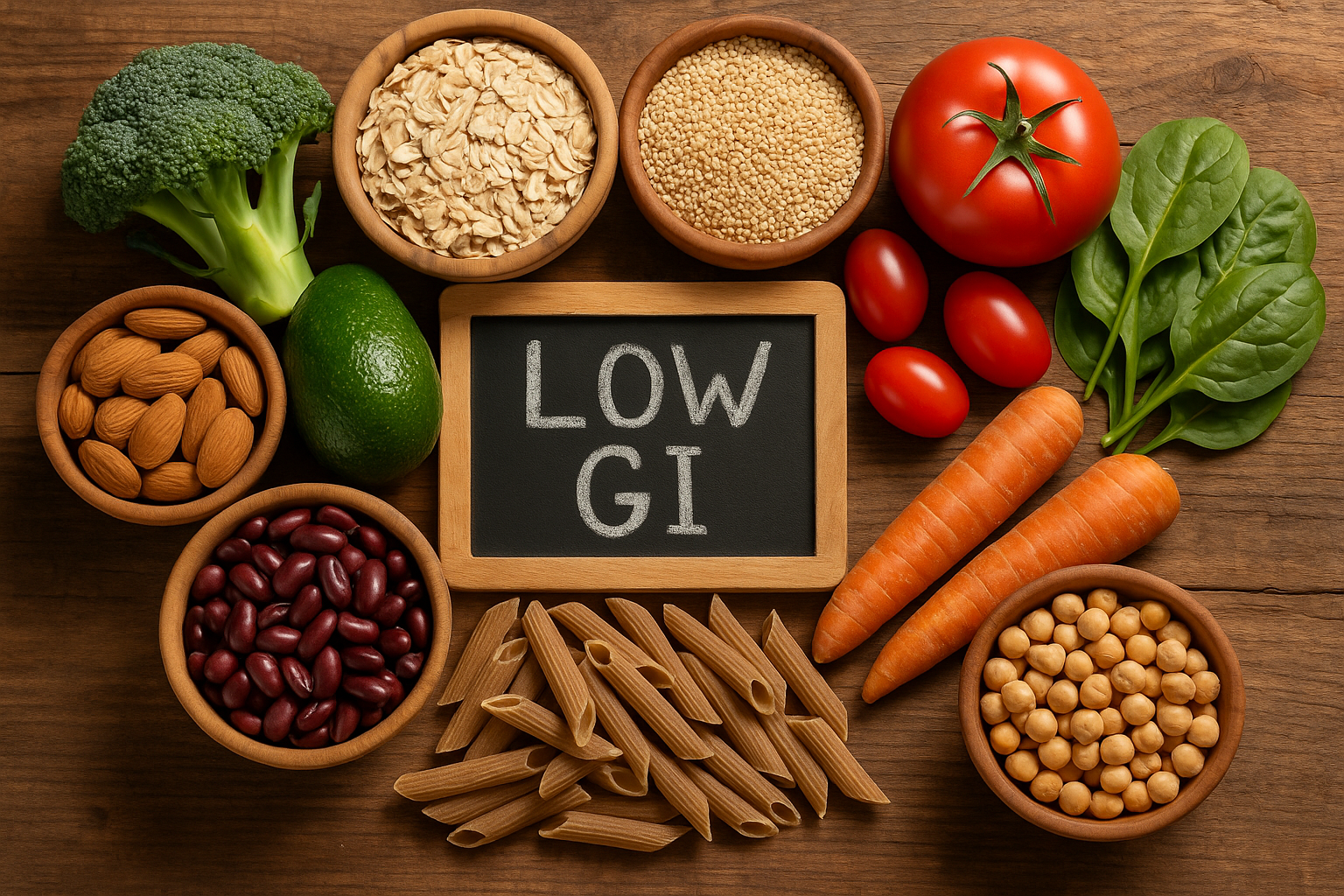
Glycemic index and glycemic load can help explain why two carbohydrate foods may affect glucose differently. They are useful concepts, but they do not replace total carbohydrate counting, portion size, medication planning, or glucose monitoring.
Quick summary
Glycemic index ranks how quickly a carbohydrate food may raise glucose. Glycemic load considers both the food’s glycemic index and the amount of carbohydrate in a serving. For diabetes decisions, the serving and the care plan matter more than a label such as low GI or high GI.
Key takeaways
- Glycemic index is a tool, not a complete meal plan.
- Glycemic load adds serving size, which often makes it more practical than glycemic index alone.
- Total carbohydrate still matters, especially for people using mealtime insulin.
- Insulin-to-carb ratios and correction factors must come from the diabetes care team.
Glycemic index in plain language
MedlinePlus describes glycemic index as a measure of how quickly a food can raise blood glucose. Foods with a lower glycemic index may raise glucose more slowly, while higher-GI foods may raise it faster. But mixed meals, cooking method, ripeness, fibre, fat, protein, and portion size can all change the real-life response.
Why glycemic load helps
Glycemic load considers both carbohydrate quality and quantity. A food can have a higher glycemic index but a small carbohydrate portion, or a lower glycemic index but a large portion. That is why focusing only on GI can be misleading.
How to use it safely
Use GI and GL as pattern tools. Choose higher-fibre carbohydrate foods more often, pair carbohydrate with protein and vegetables, and compare your own glucose patterns when you can. If you use insulin, the carb grams and your prescribed insulin plan remain central. Do not change your insulin-to-carb ratio, correction factor, or insulin dose based on glycemic index or glycemic load without your diabetes team’s guidance.
Common traps
Low-GI does not automatically mean low-calorie, low-carb, low-sodium, or heart healthy. A dessert can still be a dessert. A large portion of a healthy grain can still raise glucose. A glucose reading after one meal is useful information, but repeated patterns are more reliable.
What to ask your care team
- Should I focus on plate method, carb counting, glycemic index, or a mix?
- What carb targets fit my medicines and glucose goals?
- If I use insulin, what ratio and correction factor has my team prescribed?
- How should I handle delayed highs after high-fat or high-protein meals?
Practical takeaway
Use glycemic index and glycemic load as extra context. For day-to-day diabetes safety, portion size, total carbohydrate, medicines, activity, and your glucose pattern still matter most.
Safety note
Do not adjust insulin, sulfonylureas, meglitinides, insulin-to-carb ratios, or correction factors based only on GI or GL. Follow your prescribed plan and ask for diabetes education support. This information is general education and is not a substitute for medical care.
Source summary
- MedlinePlus: Glycemic index and diabetes. Explains glycemic index as a diabetes meal-planning tool. Source
- CDC: Carb counting. Reviews carbohydrate counting and the 15-gram carb serving concept. Source
- CDC: Choosing healthy carbs. Explains how carbohydrate quality can support diabetes meal planning. Source
- NIDDK: Diet, eating, and physical activity. Reviews meal planning, carbohydrate counting, activity, and individualized diabetes care. Source