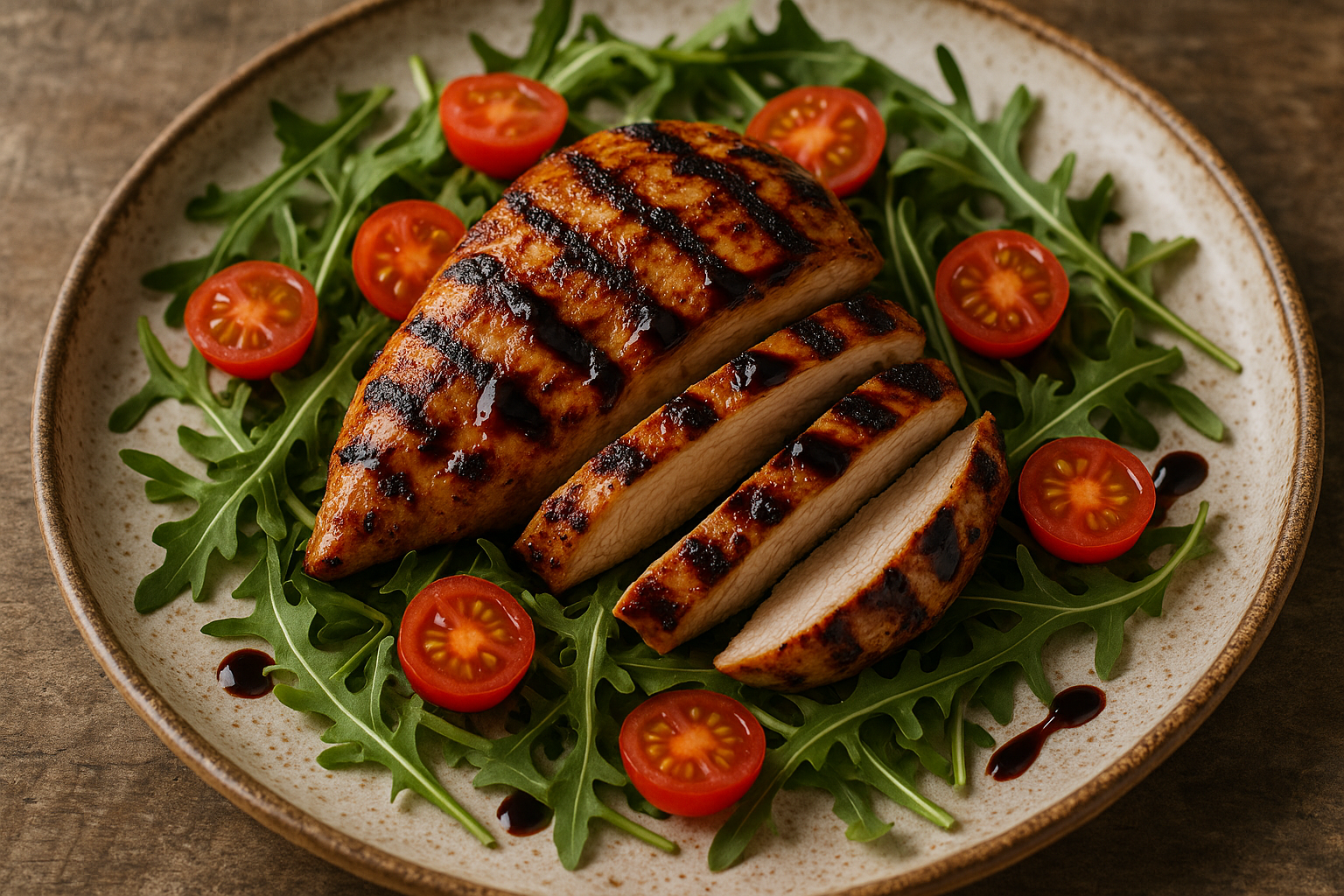
Balsamic chicken can be a simple dinner with plenty of flavor. The main diabetes planning point is the glaze: balsamic vinegar, honey, sugar, and bottled marinades can change carbohydrate content.
Quick summary
This version keeps the sauce tangy rather than syrupy and pairs the chicken with vegetables and a measured side if needed.
Key takeaways
- Chicken provides protein.
- Balsamic glazes can contain added sugar.
- Vegetables help balance the plate.
- Starchy sides should be counted.
Ingredients
- Chicken breast or thighs.
- Balsamic vinegar.
- Garlic.
- Olive oil.
- Italian herbs.
- Black pepper.
- Tomatoes, zucchini, green beans, or salad.
- Optional small amount of mustard.
How to make it
- Marinate chicken with balsamic vinegar, garlic, herbs, pepper, and a small amount of olive oil.
- Bake, grill, or pan-cook until the chicken is cooked through.
- Simmer leftover marinade only if it is cooked safely, or discard it.
- Serve with vegetables.
- Add a measured grain, potato, or bean side if it fits your plan.
Diabetes-friendly serving notes
Check bottled balsamic glaze for sugar.
Do not count chicken as carbohydrate, but count the sauce if sweetened.
Use non-starchy vegetables generously.
Choose sides based on your glucose pattern and medication plan.
Practical takeaway
A flavorful chicken dinner can be simple when the sauce is not quietly turning into dessert.
Safety note
This article is not a substitute for medical care. Cook poultry thoroughly and avoid cross-contamination. Ask for individualized guidance if you have kidney disease, sodium restriction, or need precise carbohydrate counts for insulin.
What to ask your care team
- Does my balsamic sauce contain added sugar?
- What side dish should I count with this meal?
- How can I make the plate more filling without a large glucose rise?
Related reading
Source summary
- Diabetes Plate Method, American Diabetes Association. Patient nutrition guidance. Accessed June 5, 2026. Source
- Diabetes Meal Planning, Centers for Disease Control and Prevention. Patient nutrition guidance. Accessed June 5, 2026. Source
- Healthy Living With Diabetes, National Institute of Diabetes and Digestive and Kidney Diseases. Patient guidance. Accessed June 5, 2026. Source
- MyPlate, U.S. Department of Agriculture. Nutrition guidance. Accessed June 5, 2026. Source