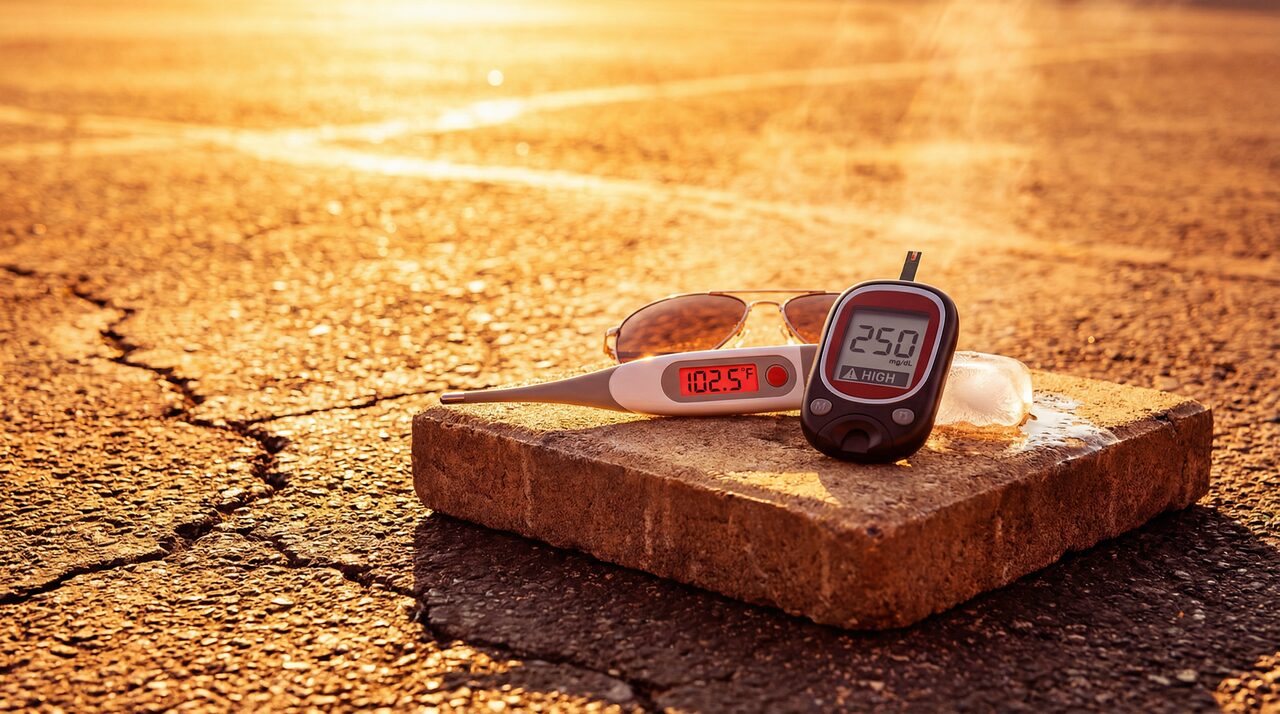
A beach day should feel like a break, not a medical project. Still, heat, sun, sand, swimming, alcohol, long walks, and delayed meals can all affect glucose and diabetes supplies.
Quick summary
CDC warns that people with diabetes can dehydrate more quickly in heat, that sunburn can raise blood sugar, and that heat can damage medicines, meters, pumps, sensors, and test strips. A simple beach plan can prevent most problems.
Key takeaways
- Check glucose more often when heat, swimming, walking, or meal timing changes your usual routine.
- Keep insulin, medicines, meters, sensors, pumps, and strips out of direct sun and hot cars.
- Wear footwear on hot sand, around pools, and near rocks, especially if you have neuropathy or reduced sensation.
- Use sun protection and hydration as part of diabetes safety, not as optional extras.
Plan before you leave
Pack more supplies than you expect to need. Include glucose treatment, water, snacks, backup testing supplies, medicine, identification, and a way to protect devices from sand and heat. If you use insulin, ask your care team how to handle active swimming, long walks, delayed meals, or alcohol. A written plan matters most for people who use insulin or medicines that can cause low blood sugar.
Heat changes the day
Heat can make dehydration happen faster and may change how the body uses insulin. CDC advises drinking water, checking glucose more often, and getting medical attention for heat illness. Do not leave diabetes supplies in a hot car, in direct sunlight, or on the beach. A small insulated bag can help, but insulin should not be placed directly on ice or a frozen gel pack unless the product instructions allow it.
Sun and feet need attention
CDC recommends broad sun protection when the UV index is high. Sunscreen, shade, hats, sunglasses, and protective clothing all help. For feet, the beach has hidden hazards: hot sand, shells, sharp rocks, glass, and pool surfaces. People with neuropathy may not feel a burn or cut right away. Check feet after the beach and clean small injuries promptly.
When glucose does not match the plan
Swimming and walking may lower glucose for some people, while heat, sunburn, dehydration, stress, or sugary drinks may raise it. If CGM readings do not match symptoms, confirm with a fingerstick meter if your care plan says to. Treat low glucose promptly. If glucose stays high, especially with illness, pump failure, or ketone risk, follow your sick-day instructions.
What to ask your care team
- How should I adjust glucose checks around swimming, heat, and long walks?
- What is my plan for low glucose at the beach?
- How should I protect insulin, pumps, sensors, strips, and meters from heat and water?
- When should I check ketones or seek urgent care after a high reading?
Practical takeaway
A safer beach day with diabetes comes down to water, shade, foot protection, glucose checks, backup supplies, and keeping medicines and devices out of heat.
Safety note
Seek urgent care for confusion, fainting, heat stroke symptoms, severe low glucose, ketones, repeated vomiting, signs of infection, chest pain, or glucose that remains dangerously high or low despite your care plan. This information is general education and is not a substitute for medical care.
Source summary
- CDC: Managing diabetes in the heat. Guidance on dehydration, glucose checks, sunburn, heat illness, and keeping diabetes supplies out of heat. Source
- CDC: Reducing skin cancer risk. Sun protection guidance for UV exposure, sunscreen, shade, and protective clothing. Source
- CDC: Low blood sugar. Explains low-glucose symptoms and prompt treatment. Source
- CDC: Managing insulin in an emergency. Insulin storage and emergency supply principles relevant to travel and hot weather. Source