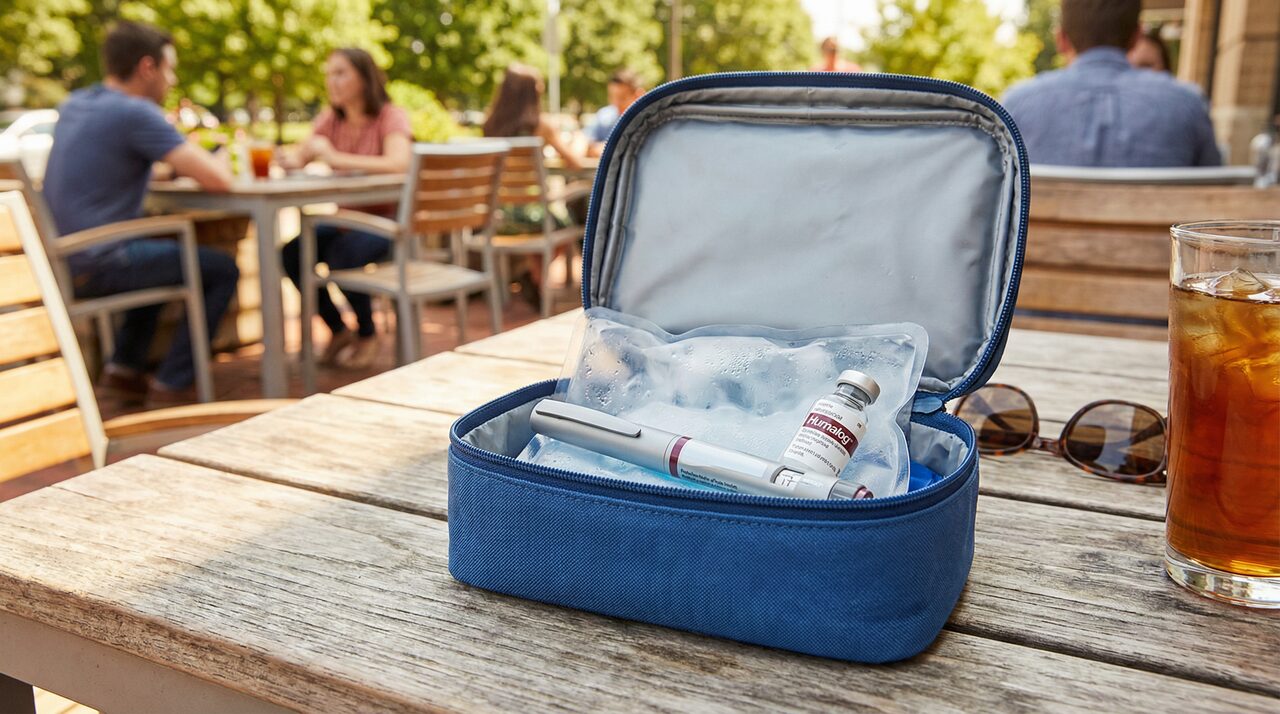
Insulin and diabetes technology are part of daily safety. Warm weather can make that safety more fragile if supplies are left in a hot car, direct sunlight, beach bag, pool deck, or overheated room.
Quick summary
CDC says heat can damage diabetes medicines, monitors, insulin pumps, and other equipment. FDA emergency insulin guidance says insulin should be kept away from direct heat and sunlight. Exact storage limits vary by product, unopened or opened status, and label instructions.
Key takeaways
- Do not leave insulin, oral diabetes medicines, meters, test strips, pumps, or sensors in a hot car or direct sun.
- Use a cooler during travel, but do not put insulin directly on ice or a frozen gel pack.
- If insulin storage is uncertain and glucose runs unexpectedly high, contact the diabetes care team.
- Power outages and storms need a diabetes care kit and backup plan.
What heat can do
CDC heat guidance says high temperatures can affect insulin, oral diabetes medicines, blood sugar monitors, insulin pumps, and other equipment. Heat can also increase dehydration, which can raise blood sugar and make a person feel worse. A sudden pattern of unexpected high glucose may be a clue to check insulin storage, infusion sites, illness, dehydration, or food changes and contact the diabetes care team.
Cool does not mean frozen
CDC advises keeping insulin cool during travel but not placing insulin directly on ice or a gel pack. Frozen insulin can break down and be less effective. Read the label for your exact insulin and ask a pharmacist about storage limits, because products differ by brand, unopened or opened status, and time since first use.
Make a summer supply plan
Keep supplies with you in a shaded, temperature-aware bag. Bring extra infusion sets, sensors, batteries, strips, lancets, chargers, fast glucose, snacks, and prescriptions if needed. For air travel, keep diabetes supplies in carry-on luggage where they are easier to access and less likely to face extreme temperatures.
Power outage or emergency
CDC emergency guidance recommends a diabetes care kit with medicines, prescriptions, glucose meter, batteries, pump supplies, and important medical information. If you must use insulin that may have been stored above recommended temperatures during an emergency, monitor glucose closely and seek medical advice as soon as possible.
What to ask your care team
- What are the storage instructions for my exact insulin or medicine?
- What should I do if insulin was left in heat or froze?
- What backup supplies do I need for travel, storms, or power outages?
- When should unexplained high glucose make me suspect insulin or device problems?
Practical takeaway
Warm-weather diabetes planning should protect insulin and devices from heat, avoid freezing, keep backup supplies ready, and use glucose patterns as a safety signal.
Safety note
Seek urgent care for ketones, repeated vomiting, severe dehydration, trouble breathing, confusion, severe low glucose, heat stroke symptoms, or high glucose with vomiting, ketones, dehydration, confusion, or trouble breathing. This information is general education and is not a substitute for medical care.
Source summary
- CDC: Managing diabetes in the heat. Explains dehydration, glucose checks, heat illness, foot safety, and protecting medicines and devices. Source
- CDC: Managing insulin in an emergency. Explains keeping insulin away from direct heat and sunlight and monitoring glucose if storage is uncertain. Source
- CDC: Low blood sugar. Explains low-glucose symptoms, severe lows, alcohol, activity, and hypoglycemia unawareness. Source
- CDC: Diabetes care during emergencies. Describes diabetes emergency kits, prescriptions, supplies, and planning for power outages or evacuation. Source
- FDA: Insulin storage and switching in an emergency. FDA emergency guidance on insulin storage, unrefrigerated use, direct heat, sunlight, and product switching. Source