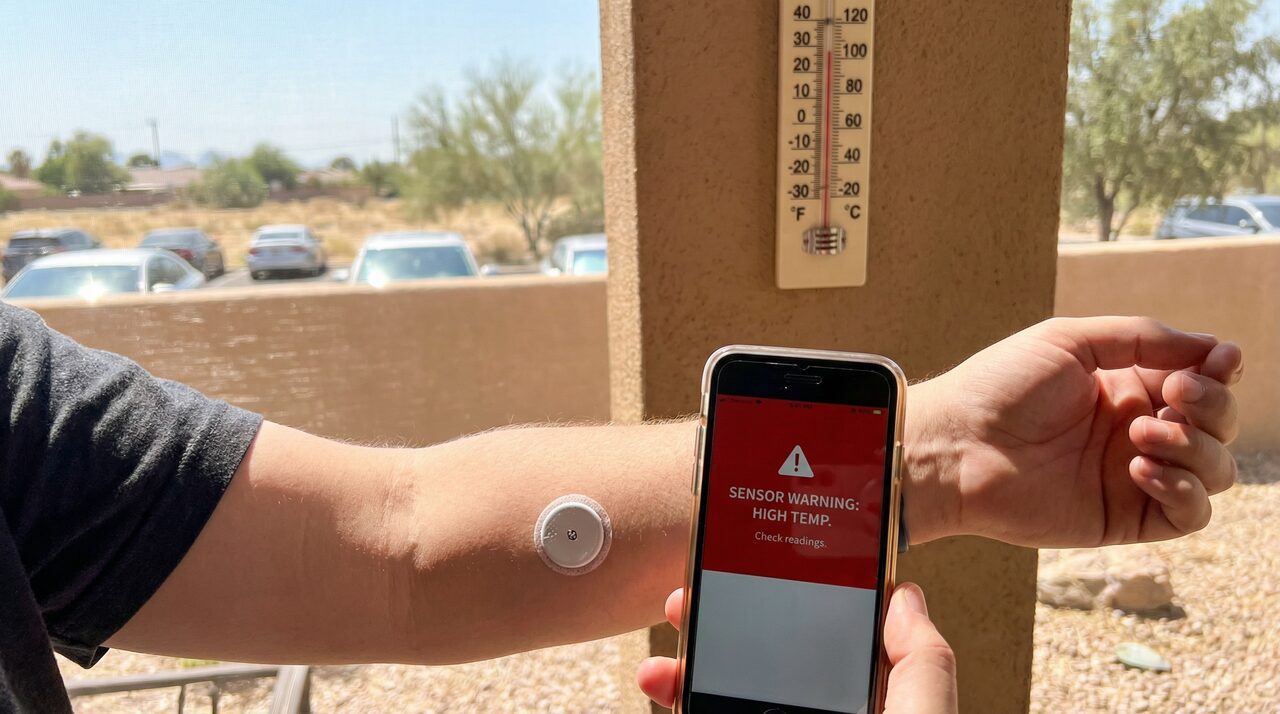
Continuous glucose monitors can be very helpful, but they are still medical devices that need correct use, storage, and interpretation. Heat, sweating, dehydration, loose adhesives, and disrupted routines can make summer diabetes management harder.
Quick summary
The key rule is this: if a CGM reading does not match how you feel, confirm with a blood glucose meter according to your device instructions and care plan.
Key takeaways
- CGM measures glucose in fluid under the skin, not directly in blood.
- Readings can lag behind blood glucose during rapid change.
- Heat may affect supplies, adhesive wear, hydration, and user routines.
- Do not make treatment decisions from readings that conflict with symptoms or device warnings.
When to double-check
- Symptoms do not match the CGM number.
- Glucose is changing quickly.
- The sensor is new, loose, compressed, or giving repeated alerts.
- You are dehydrated, ill, overheated, or treating a low.
- Your device instructions say to confirm with a meter.
Summer setup
Keep sensors, meters, test strips, insulin, and devices within their recommended storage ranges. Avoid parked cars, direct sun, and wet or loose adhesive if your device is not protected for that situation.
For people who use insulin, a wrong reading can lead to wrong dosing. Caution is especially important before driving, exercising, sleeping, or correcting a high.
Practical takeaway
CGM is a guide, not a guess-proof system. In heat or symptoms, trust safety checks and confirm when needed.
Safety note
This article is not a substitute for medical care. Seek urgent care for severe low blood sugar, ketones, vomiting, dehydration, confusion, heat illness, or symptoms that feel unsafe.
What to ask your care team
- When should I confirm CGM readings with a meter?
- How should I protect sensors and supplies in heat?
- What is my plan for repeated alerts or readings that do not match symptoms?
Related reading
Source summary
- Continuous Glucose Monitoring, National Institute of Diabetes and Digestive and Kidney Diseases. Patient guidance. Accessed June 5, 2026. Source
- Blood Glucose Monitoring Devices, U.S. Food and Drug Administration. Device guidance. Accessed June 5, 2026. Source
- Managing Diabetes in the Heat, Centers for Disease Control and Prevention. Patient guidance. Accessed June 5, 2026. Source
- Low Blood Sugar, Centers for Disease Control and Prevention. Patient guidance. Accessed June 5, 2026. Source