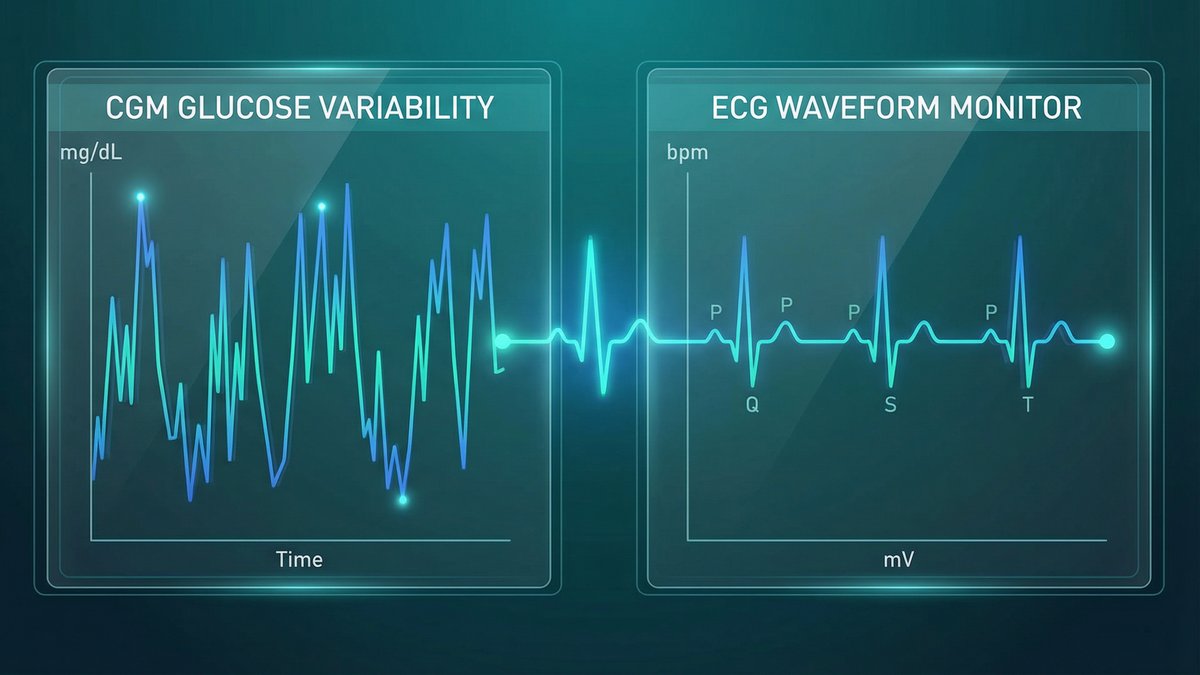
Continuous glucose monitors can reveal patterns that fingerstick checks may miss, including overnight highs, post-meal spikes, and time spent below range. That information can improve diabetes conversations, but it should not be oversold as a heart test.
Quick summary
CGM data can support risk reduction because glucose patterns are part of diabetes care. It cannot diagnose blocked arteries, heart failure, or stroke risk by itself.
Key takeaways
- Time in range, time below range, and glucose variability can guide diabetes decisions.
- CGM patterns should be interpreted with medicines, meals, sleep, activity, illness, and symptoms.
- Heart risk also depends on blood pressure, cholesterol, kidney disease, smoking, age, and family history.
- Chest pain, shortness of breath, fainting, or stroke symptoms need urgent care, not CGM interpretation.
What CGM can show
CGM can help identify repeated highs after certain meals, overnight lows, morning rises, and the effect of activity or missed doses. These patterns can make appointments more productive because the discussion is based on data rather than memory.
For people at low-blood-sugar risk, CGM can also show time below range. Avoiding severe hypoglycemia is an important safety goal.
What CGM cannot show
CGM does not measure cholesterol, blood pressure, plaque, heart rhythm, kidney filtration, or blood vessel narrowing. A smooth glucose graph does not rule out heart disease, and a messy graph does not prove heart disease.
The safest approach is to use CGM as one part of a broader cardiovascular risk review.
Questions to ask about your report
- What is my time in range and time below range?
- Are highs linked to meals, missed doses, illness, stress, or sleep?
- Do I need medicine adjustment or just pattern awareness?
- How do my blood pressure, cholesterol, and kidney tests look?
- Do any symptoms suggest I need heart evaluation?
Practical takeaway
Use CGM to improve diabetes decisions, but keep heart risk assessment broad. Glucose data is helpful information, not a cardiology diagnosis.
Safety note
This article is not a substitute for medical care. Seek urgent care for chest pain, stroke symptoms, fainting, severe low blood sugar, or symptoms that feel unsafe.
What to ask your care team
- What does this mean for my diabetes, heart, kidney, medicine, or monitoring plan?
- Which symptoms, readings, or side effects should prompt urgent care?
- Do any tests, prescriptions, follow-up visits, or safety instructions need review?
Related reading
Source summary
- Continuous Glucose Monitoring, National Institute of Diabetes and Digestive and Kidney Diseases. Patient guidance. Accessed June 3, 2026. Source
- Diabetes Testing, Centers for Disease Control and Prevention. Patient guidance. Accessed June 3, 2026. Source
- Diabetes and Your Heart, Centers for Disease Control and Prevention. Patient guidance. Accessed June 3, 2026. Source
- Standards of Care in Diabetes 2026, American Diabetes Association. Guideline overview. Accessed June 3, 2026. Source