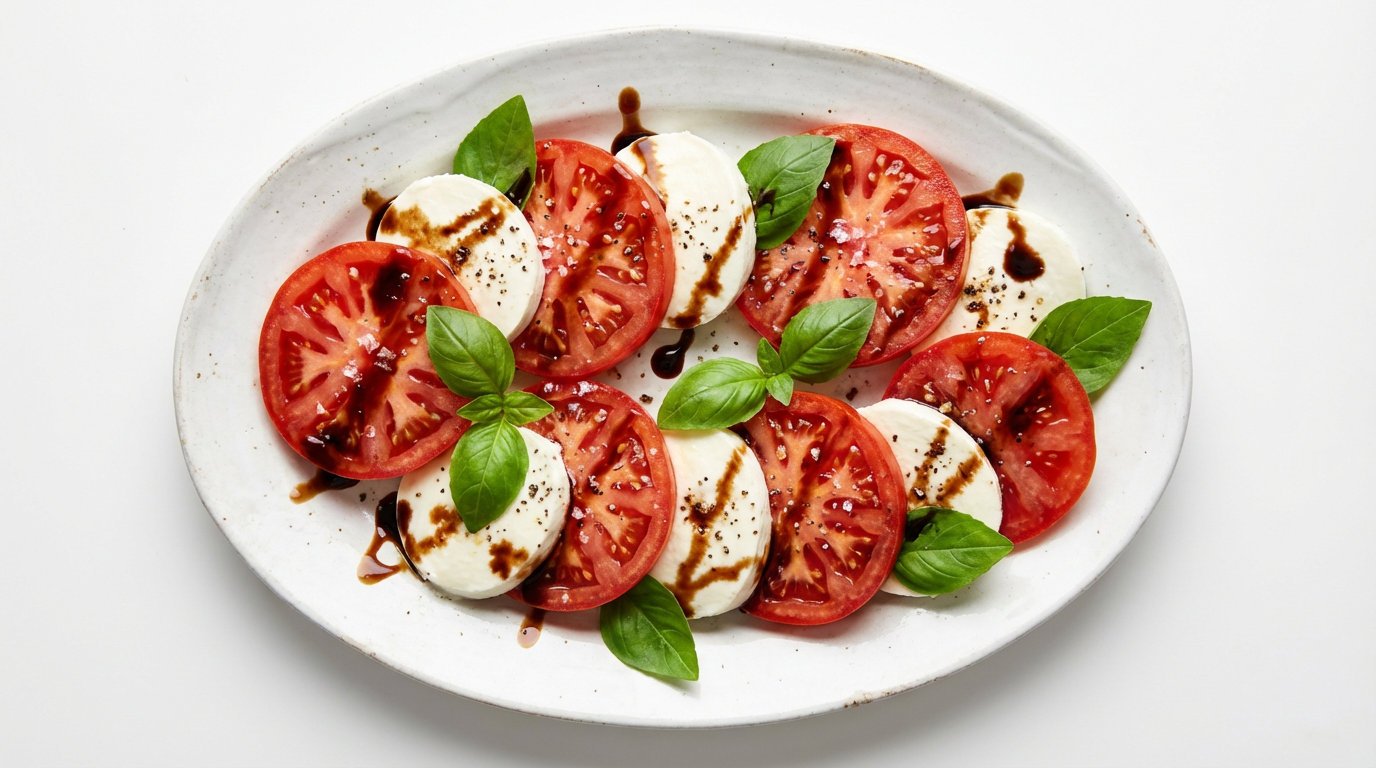
Caprese salad is simple: tomatoes, mozzarella, basil, olive oil, and balsamic. It can be a fresh side or light meal, but the glaze and cheese portions still matter.
Quick summary
Balsamic glaze may contain added sugar or be reduced until concentrated. Mozzarella adds protein and fat, and it can add sodium depending on the product.
Key takeaways
- Tomatoes are non-starchy vegetables.
- Mozzarella adds protein, fat, and sodium.
- Balsamic glaze can be sweeter than plain vinegar.
- A salad may need extra protein or fiber if it is the whole meal.
Ingredients
- Tomatoes.
- Fresh mozzarella.
- Fresh basil.
- Olive oil.
- Plain balsamic vinegar or a small drizzle of glaze.
- Black pepper.
- Optional greens, cucumber, or grilled chicken.
How to make it
- Slice tomatoes and mozzarella.
- Layer with basil.
- Drizzle lightly with olive oil and vinegar or a small amount of glaze.
- Add pepper.
- Serve as a side or add protein if making it a meal.
Diabetes-friendly serving notes
Read labels on balsamic glaze for added sugar.
Use a light drizzle instead of coating the salad.
Add greens or cucumber for more volume.
Add grilled chicken, beans, or fish if the salad needs to become a full meal.
If serving with bread or crackers, count them separately.
Practical takeaway
Caprese can be a beautiful plate without turning the glaze into the main ingredient.
Safety note
This article is not a substitute for medical care. Ask for individualized advice if you need sodium restriction, have kidney disease, have dairy allergy, or need precise carbohydrate counting for insulin.
What to ask your care team
- Is balsamic glaze different from vinegar for my meal plan?
- Should I limit cheese or sodium?
- What protein should I add if this is lunch?
Related reading
Source summary
- Diabetes Plate Method, American Diabetes Association. Patient nutrition guidance. Accessed June 5, 2026. Source
- Diabetes Meal Planning, Centers for Disease Control and Prevention. Patient nutrition guidance. Accessed June 5, 2026. Source
- Healthy Living With Diabetes, National Institute of Diabetes and Digestive and Kidney Diseases. Patient guidance. Accessed June 5, 2026. Source
- MyPlate, U.S. Department of Agriculture. Nutrition guidance. Accessed June 5, 2026. Source