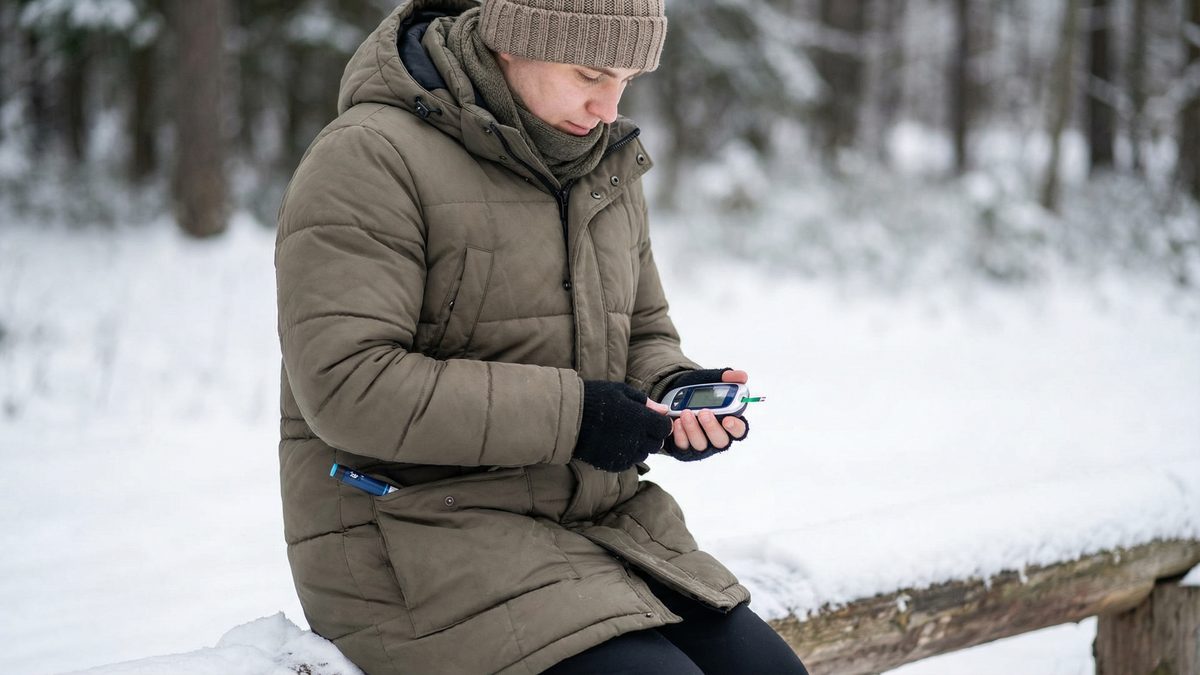
Cold weather can make diabetes routines harder. People may move less, eat differently, get sick more often, and expose insulin, meters, strips, pumps, or sensors to temperatures outside the recommended range.
Quick summary
Winter safety is not about perfection. It is about checking glucose patterns, protecting supplies, planning for illness, and staying active in ways that are realistic and safe.
Key takeaways
- Cold weather may affect blood sugar and activity routines.
- Diabetes supplies can be damaged by extreme cold or heat.
- Illness can raise blood sugar and may require a sick-day plan.
- If your written sick-day plan includes medicine changes, follow that plan and contact your care team if you are unsure.
What to plan before very cold days
Stored insulin is commonly kept refrigerated at 36 to 46 degrees F (2 to 8 degrees C). Avoid freezing insulin or exposing it to heat above 86 degrees F (30 degrees C). In-use insulin may be kept at room temperature for the time listed by the manufacturer.
- Keep meters, strips, insulin, pumps, and sensors close to room temperature when possible.
- Avoid leaving supplies in a parked car or outside bag.
- Have low-blood-sugar treatment available during winter walks or shoveling.
- Use indoor activity options if ice, snow, or darkness makes outdoor movement unsafe.
- Review sick-day instructions before colds, flu, or stomach illness hit.
When illness changes the plan
Illness can make blood sugar harder to manage because stress hormones can raise glucose. Reduced appetite can also increase low-blood-sugar risk for some people, especially if diabetes medicines continue but food intake drops.
Continue medicines as directed unless your written sick-day plan says otherwise. If you do not have a plan or are unsure, contact your care team before changing doses.
People with type 1 diabetes and some people with type 2 diabetes using insulin may need ketone checks during illness when glucose is above the level in their care plan. Ask whether you need ketone strips and when to use them.
A sick-day plan should be created with your care team before you get sick and should include specific instructions for fluids, glucose checks, ketone checks, medicines, and when to call.
Practical takeaway
Winter care works best when supplies, activity, illness, and glucose checks are planned before the storm or flu starts.
Safety note
This article is not a substitute for medical care. Seek urgent care for vomiting, dehydration, confusion, trouble breathing, severe low blood sugar, or high glucose with ketones if your care plan says to check them.
What to ask your care team
- What should I do with insulin or devices in freezing weather?
- Do I need ketone strips for sick days?
- How should I adjust activity when winter makes walking unsafe?
Source summary
- Managing Diabetes in Cold Weather, Centers for Disease Control and Prevention. Patient guidance. Accessed June 5, 2026. Source
- Managing Sick Days, Centers for Disease Control and Prevention. Patient guidance. Accessed June 5, 2026. Source
- Manage Blood Sugar, Centers for Disease Control and Prevention. Patient guidance. Accessed June 5, 2026. Source
- Information Regarding Insulin Storage and Switching Between Products in an Emergency, U.S. Food and Drug Administration. Safety information. Accessed June 5, 2026. Source