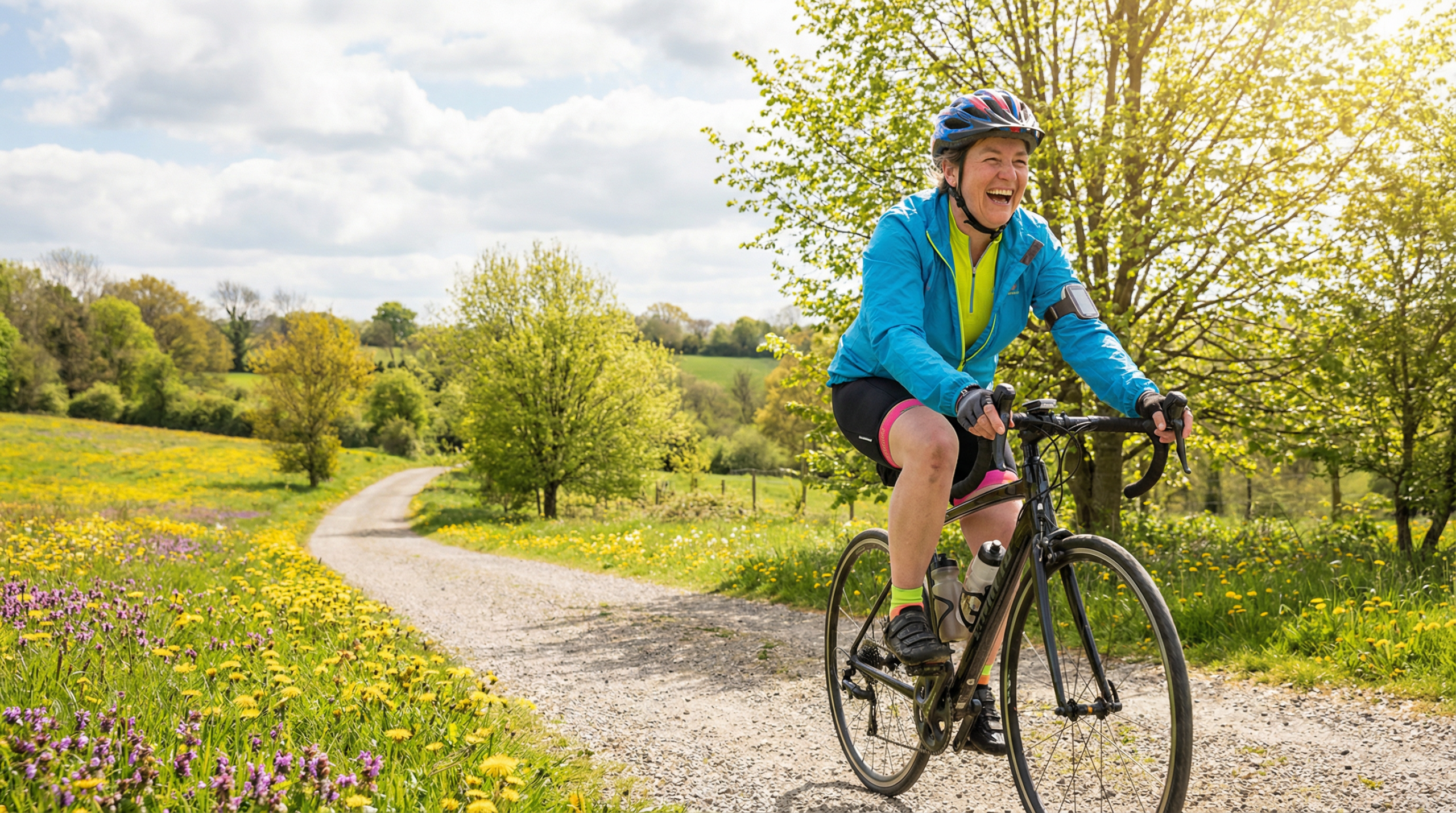
Cycling can be a useful and enjoyable form of physical activity for many people with diabetes. It can support fitness, heart health, insulin sensitivity, and mood.
Quick summary
The safety details matter. Glucose can fall during or after activity, and heat, long rides, foot pressure, dehydration, and traffic can add risk.
Key takeaways
- Check glucose as advised before longer or unfamiliar rides.
- Carry fast-acting carbohydrate and identification.
- Inspect feet and shoes, especially if neuropathy or circulation problems are present.
- Hydration, weather, route, and ride intensity all affect the plan.
Before a ride
- Know whether your medicines can cause low blood sugar.
- Carry glucose treatment, water, phone, ID, and basic supplies.
- Choose shoes and socks that reduce rubbing.
- Start with shorter routes if you are new to cycling.
- Tell someone your route if riding alone.
During and after cycling
Longer rides, hills, heat, or unexpected delays can change glucose needs. If you use insulin or medicines that can cause lows, ask your clinician how to plan checks, snacks, and dose adjustments.
Lows can happen after exercise, including later in the day or overnight. CGM can help show patterns, but symptoms should still be taken seriously.
Practical takeaway
Cycling is safest when it starts with a simple plan: check, carry treatment, hydrate, protect feet, and build distance gradually.
Safety note
This article is not a substitute for medical care. Stop riding and seek help for severe low blood sugar, chest pain, fainting, severe shortness of breath, heat illness, or injury.
What to ask your care team
- Could my medicines cause lows during cycling?
- How should I adjust snacks or insulin for longer rides?
- Do my feet, eyes, heart, or nerves require exercise limits?
Related reading
Source summary
- Physical Activity and Diabetes, Centers for Disease Control and Prevention. Patient guidance. Accessed June 5, 2026. Source
- Low Blood Sugar, Centers for Disease Control and Prevention. Patient guidance. Accessed June 5, 2026. Source
- Managing Diabetes, National Institute of Diabetes and Digestive and Kidney Diseases. Patient guidance. Accessed June 5, 2026. Source
- Continuous Glucose Monitoring, National Institute of Diabetes and Digestive and Kidney Diseases. Patient guidance. Accessed June 5, 2026. Source