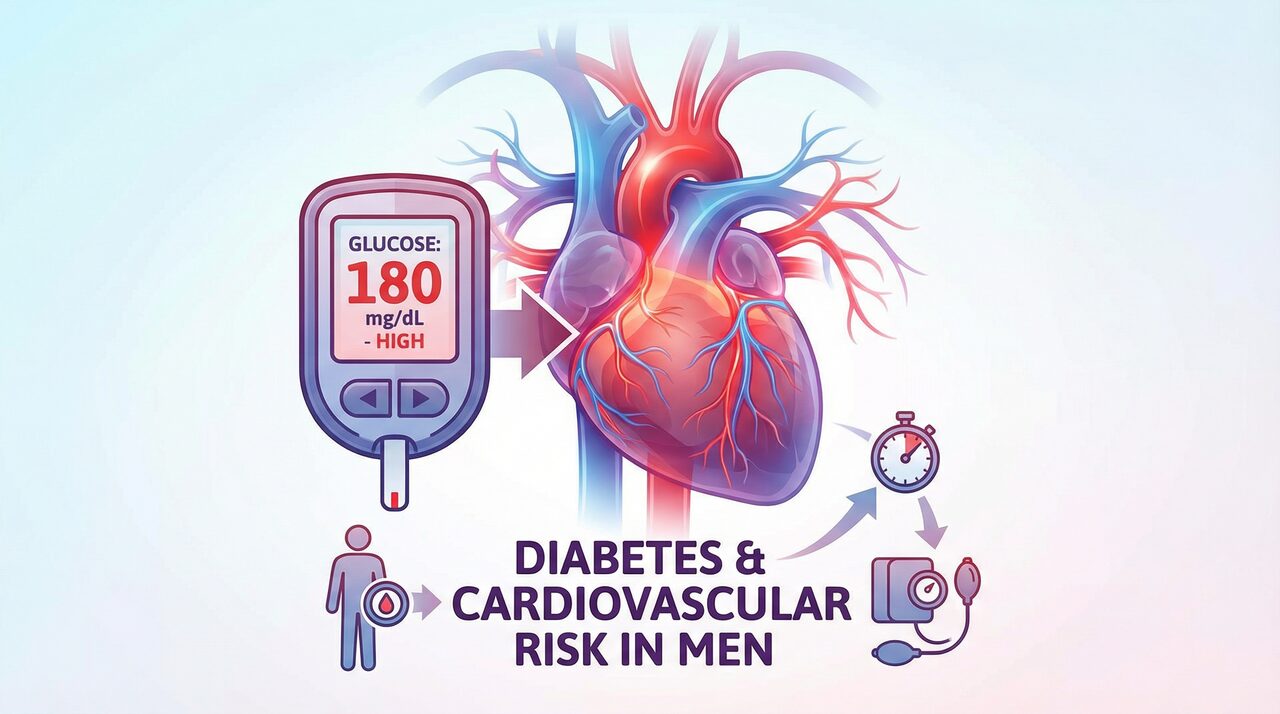
Fatty liver disease is often found on routine blood work or imaging, but it should not be treated as only a liver issue. For many people with type 2 diabetes, obesity, high blood pressure, or abnormal cholesterol, it is a clue to wider metabolic and heart risk.
Quick summary
NIDDK notes that fatty liver disease is more common in people with type 2 diabetes and obesity. The American Heart Association has also highlighted the connection between fatty liver disease and cardiovascular risk. The practical message is not panic. It is to ask whether liver findings should trigger a broader heart, kidney, cholesterol, blood pressure, and diabetes risk review.
Key takeaways
- Fatty liver disease is now often discussed using newer terms such as MASLD and MASH, but many patient resources still use NAFLD and NASH.
- NIDDK says cardiovascular disease is the most common cause of death in people with NAFLD.
- A normal day-to-day feeling does not rule out fatty liver disease or early fibrosis.
- The most useful next step is usually a structured risk review, not an unproven supplement or crash diet.
What the terms mean
NAFLD means fat has built up in the liver in a pattern not mainly explained by heavy alcohol use. NASH is the form with inflammation and liver injury. Many professional groups now use MASLD for metabolic dysfunction-associated steatotic liver disease and MASH for the inflammatory form. If your report uses the older words, the key question is still the same: is there liver fat, inflammation, scarring, or a linked metabolic risk that needs follow-up?
Why the heart matters
Fatty liver disease often travels with insulin resistance, type 2 diabetes, high blood pressure, high triglycerides, low HDL cholesterol, sleep apnea, and excess weight around the waist. Those same conditions can raise risk for heart attack, stroke, heart failure, and kidney disease. That is why a fatty liver result can be a useful early warning sign. It may point to a need for a more complete cardiovascular and metabolic review.
What a careful review may include
Your clinician may review A1C, fasting lipids, blood pressure, weight pattern, medicines, alcohol use, family history, kidney tests, and liver blood tests. Some people need noninvasive fibrosis assessment, such as a calculated fibrosis score or liver stiffness test. The goal is to identify people who may have advanced scarring and people who would benefit from stronger management of diabetes, cholesterol, blood pressure, weight, and sleep apnea.
What not to take from the headline
Fatty liver disease does not mean that heart disease is certain, and it does not mean everyone needs the same medicine or diet. It also does not mean the liver finding should be ignored because you feel well. Avoid detox claims, rapid weight-loss promises, and supplement marketing that claims to cleanse the liver. Source-based care focuses on risk factors, fibrosis assessment when appropriate, and sustainable habits that fit the person’s medical situation.
What to ask your care team
- Do my liver tests or scan suggest NAFLD, MASLD, NASH, MASH, or possible fibrosis?
- Should I have a fibrosis score, liver stiffness test, or referral to a liver specialist?
- How do my A1C, blood pressure, LDL cholesterol, triglycerides, and kidney tests affect my heart risk?
- Are any of my medicines, alcohol intake, sleep apnea, or weight goals relevant to the liver finding?
Practical takeaway
Treat fatty liver disease as a reason to review the whole metabolic picture, especially heart risk, rather than as a stand-alone liver label.
Safety note
Seek urgent care for yellowing of the skin or eyes, confusion, vomiting blood, black stools, severe abdominal swelling, severe chest pain, stroke symptoms, or severe shortness of breath. This information is general education and is not a substitute for medical care.
Source summary
- NIDDK: Definition and facts for NAFLD and NASH. Explains fatty liver terms, diabetes links, complications, and cardiovascular disease context. Source
- AHA Professional Heart Daily: NAFLD and cardiovascular risk. American Heart Association scientific statement overview on fatty liver disease and cardiovascular risk. Source
- AASLD: MASLD clinical assessment and management. Professional guidance hub for metabolic dysfunction-associated steatotic liver disease. Source
- NIDDK: Fatty liver disease and type 2 diabetes. Clinical discussion of fatty liver disease as an underdiagnosed issue in type 2 diabetes care. Source