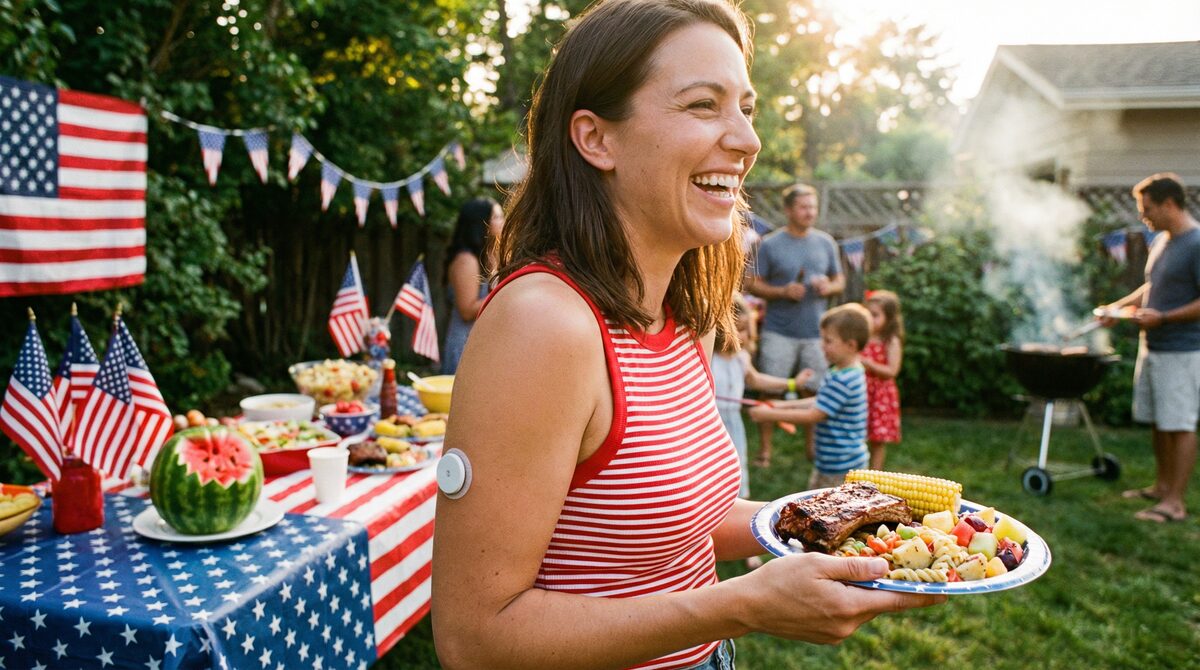
The Fourth of July often combines several diabetes variables in one day: barbecue food, desserts, alcohol, heat, outdoor activity, travel, fireworks, and late nights. A safer plan starts before the first plate is filled.
Quick summary
CDC holiday guidance recommends planning food choices, checking blood sugar, and being careful with alcohol. CDC heat guidance adds that dehydration and heat-damaged supplies can affect diabetes management.
Key takeaways
- Choose the carb foods you value most and portion them intentionally.
- Alcohol can raise or lower glucose depending on the drink, food, timing, and medicines.
- Heat can worsen dehydration and can damage diabetes medicines, meters, pumps, sensors, and strips.
- Fireworks and outdoor events call for foot protection, supply protection, and a low-glucose plan.
Before the barbecue
Check the event timing, weather, and likely food. Pack glucose treatment, water, medicines, and supplies. Do not leave insulin, oral diabetes medicine, a meter, pump, CGM supplies, or test strips in a hot car. If you use medicines that can cause lows, ask your care team how to handle a delayed meal or extra activity.
At the table
Barbecue meals can include several carb foods at once: buns, potato salad, corn, baked beans, chips, fruit, desserts, and sweet drinks. Use a planned approach. Choose one or two carb foods you most want, add protein and vegetables if available, and avoid turning the day into all-or-nothing eating.
Alcohol and late nights
NIDDK notes that alcohol can make glucose drop too low for people using insulin or certain diabetes medicines, including sulfonylureas, and advises eating food when drinking and checking glucose afterward. Food does not remove the risk. Late nights can also make it harder to notice lows, especially if symptoms overlap with alcohol effects or fatigue.
Fireworks, feet, and heat
Food, alcohol, and heat are the main focus of this holiday plan, but fireworks add a separate injury risk. Wear shoes outside, including at beaches, parks, and pools. CDC heat guidance specifically advises people with diabetes not to go barefoot. If fireworks are nearby, keep a safe distance and protect children.
What to ask your care team
- What is my plan for delayed meals or alcohol?
- How should I store insulin and diabetes supplies outdoors?
- Should I check glucose more often during heat, activity, or late-night events?
- What symptoms mean I should stop the event and get medical help?
Practical takeaway
A safer Fourth of July diabetes plan covers food portions, alcohol caution, heat protection, glucose checks, footwear, and emergency supplies.
Safety note
Seek urgent care for severe low glucose, confusion, fainting, heat stroke symptoms, burns on the face, hands, feet, or genitals, eye injury, ketones, repeated vomiting, chest pain, severe dehydration, or high glucose with vomiting, ketones, dehydration, confusion, or trouble breathing. This information is general education and is not a substitute for medical care.
Source summary
- CDC: Healthy eating and the holidays. Diabetes holiday guidance on planning, portion choices, alcohol, and glucose checks. Source
- CDC: Diabetes meal planning. Explains the plate method, carbohydrate counting, portions, and individualized meal planning. Source
- CDC: Choosing healthy carbs. Explains choosing and portioning carbohydrate foods, including whole fruit and fiber-containing carbs. Source
- CDC: Managing diabetes in the heat. Explains dehydration, glucose checks, heat illness, foot safety, and protecting medicines and devices. Source
- CDC: Managing insulin in an emergency. Explains keeping insulin away from direct heat and sunlight and monitoring glucose if storage is uncertain. Source
- CDC: Low blood sugar. Explains low-glucose symptoms, severe lows, alcohol, activity, and hypoglycemia unawareness. Source