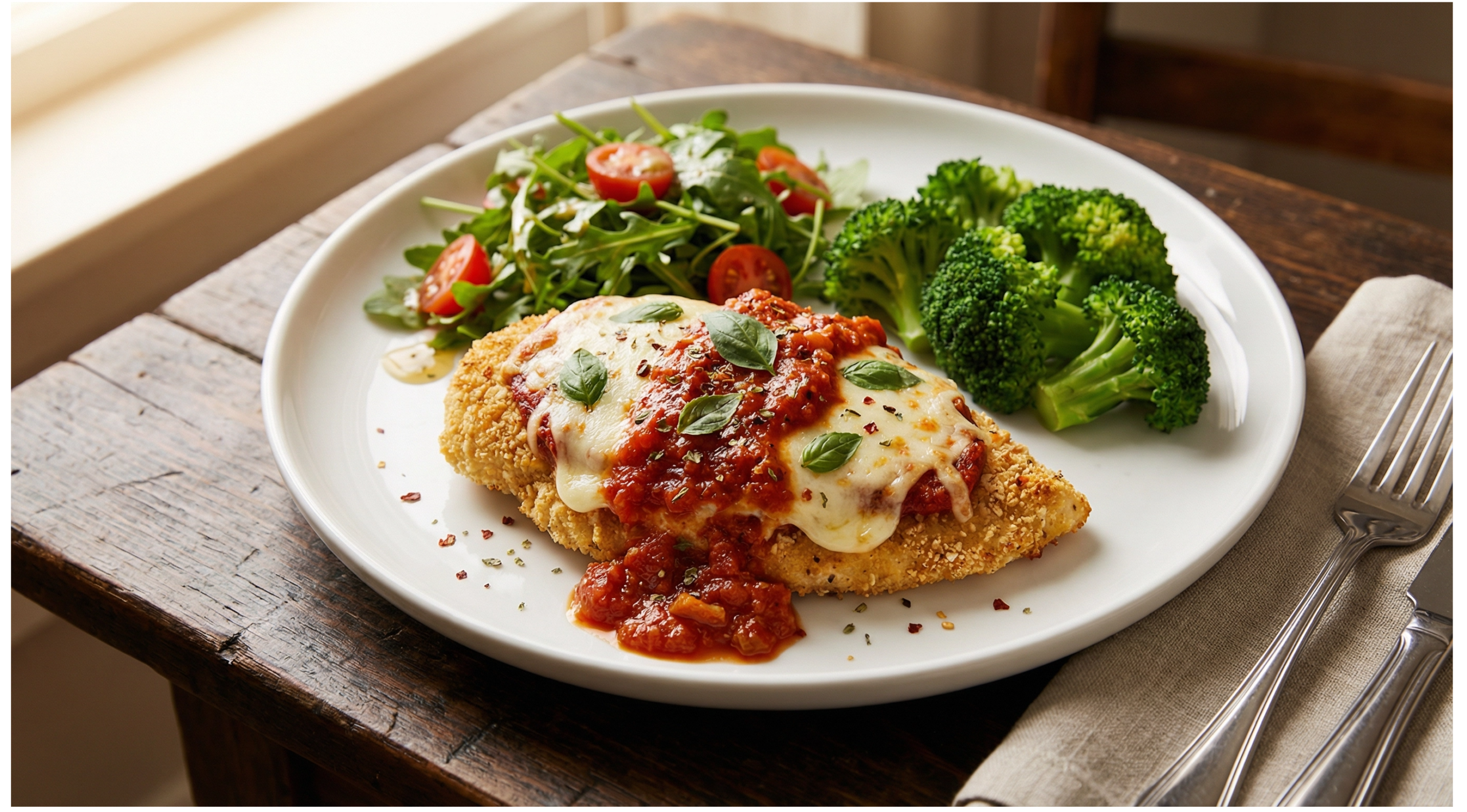
Chicken parmesan can be comfort food without turning into an all-or-nothing diabetes decision. The biggest levers are breading, sauce, cheese, portion size, sodium, and what else is on the plate.
Quick summary
CDC meal guidance supports balanced plates and carb awareness. A lower-carb chicken parmesan can reduce breading or pasta, but it still needs sodium awareness, food safety, and enough vegetables or planned carbs to fit the person’s care plan.
Key takeaways
- Low-carb breading swaps do not make the dish unlimited.
- Jarred sauces, cheese, and processed toppings can add sodium.
- Chicken should be cooked safely and kept separate from ready-to-eat foods before cooking.
- Kidney disease may change protein, sodium, potassium, and phosphorus advice.
Choose where the carbs belong
Some people prefer a smaller amount of traditional breading and a vegetable side. Others use almond flour, parmesan, or crushed nuts, but those swaps add fat, calories, and allergens. Pasta can still fit if the portion is planned. The goal is not to erase comfort food. It is to make the whole plate intentional.
Sauce and sodium matter
Tomato sauce can be nutritious, but jarred sauces may be high in sodium or added sugar. Cheese adds sodium and saturated fat. Use smaller amounts of stronger-flavored cheese, lower-sodium sauce, herbs, garlic, and vegetables when that fits your plan.
Food safety with chicken
CDC food safety guidance says to clean, separate, cook, and chill. Keep raw chicken and its juices away from salad, cooked vegetables, or utensils used for serving. Refrigerate leftovers promptly and reheat safely.
Kidney and heart caveats
Chicken parmesan can be high in protein, sodium, potassium from tomato sauce, and phosphorus depending on ingredients. People with kidney disease, heart failure, or blood pressure concerns should ask for individualized guidance instead of relying on a recipe label.
What to ask your care team
- How much breading, sauce, pasta, or side carbohydrate fits my plan?
- Is sodium from sauce and cheese an issue for my blood pressure?
- Do kidney concerns change tomato, cheese, protein, or portion choices?
- How should I store and reheat leftovers safely?
Practical takeaway
Chicken parmesan can be made more diabetes-aware by planning the carb portion, reducing sodium where possible, adding vegetables, and handling chicken safely.
Safety note
Seek urgent care for severe low glucose, confusion, allergic reaction symptoms, food poisoning symptoms with fever or dehydration, ketones, or high glucose with vomiting, ketones, dehydration, confusion, or trouble breathing. This information is general education and is not a substitute for medical care.
Source summary
- CDC: Diabetes meal planning. Explains the plate method, carb counting, portions, and individualized meal planning. Source
- CDC: Choosing healthy carbs. Explains carbohydrate quality, whole grains, fruit, fiber, and pairing carbs with protein, fat, or fiber. Source
- NIDDK: Healthy living with diabetes. Patient guidance on meals, snacks, activity, medicines, alcohol, sleep, and individualized care. Source
- CDC: Diabetes and kidney disease food. Explains why chronic kidney disease may change sodium, potassium, phosphorus, protein, and fluid advice. Source
- CDC: Preventing food poisoning. Food safety guidance built around clean, separate, cook, and chill. Source
- AHA: Sodium and salt. Explains sodium, blood pressure, and ways to reduce sodium in a heart-health pattern. Source