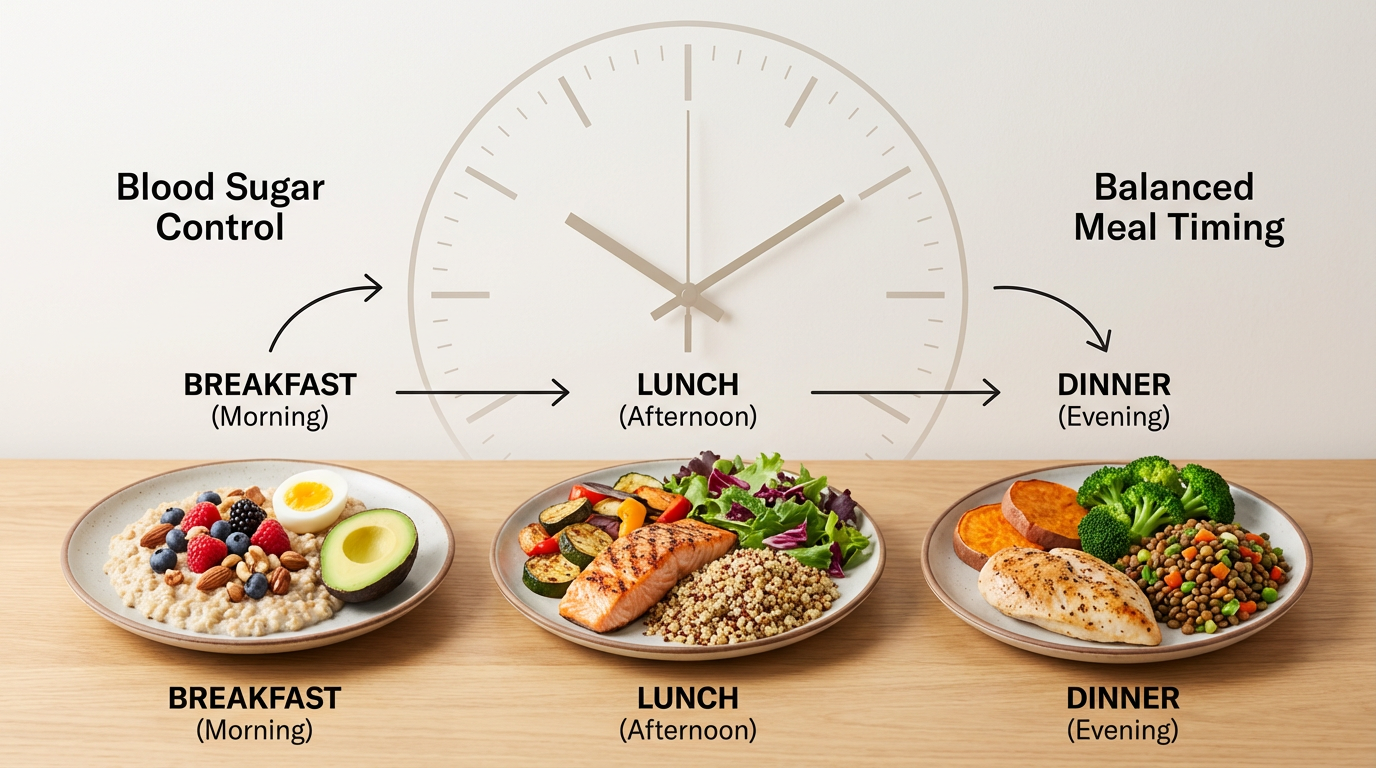
Meal timing can affect blood sugar, appetite, and medication routines, but it is only one part of the picture. What you eat, how much you eat, activity, sleep, stress, and medicines also matter.
Quick summary
For some people, consistent meal timing helps reduce large glucose swings. If you use insulin or sulfonylureas, meal timing changes can also change low-blood-sugar risk, so plan changes with your care team.
Key takeaways
- There is no single best meal schedule for everyone with diabetes.
- Very irregular eating or frequent skipped meals can make glucose harder to manage.
- Balanced meals with fiber and protein may help post-meal glucose.
- Glucose checks or CGM data can show your personal pattern.
Patterns to look for
- High morning glucose after late-night eating.
- Post-meal spikes after refined carbohydrate-heavy meals.
- Low blood sugar when meals are delayed.
- Evening hunger after under-eating earlier.
- Exercise timing and medicine timing around meals.
Small adjustments
Try changing one variable at a time, such as breakfast protein, a short walk after dinner, or a more consistent lunch time. These are examples, not universal prescriptions.
If you use insulin, sulfonylureas, or an insulin pump, coordinate meal timing changes with your clinician. A safety plan may include dose review, more monitoring, 15 grams of fast-acting carbohydrate nearby if your plan recommends it, glucagon when prescribed for severe lows when you cannot swallow, and a contact plan for repeated lows.
Practical takeaway
Use meal timing as a pattern tool, not a strict rule. Your safest schedule is the one that fits your medicine, life, and glucose data.
Safety note
This article is not a substitute for medical care. Ask your care team before fasting, skipping meals, delaying meals, or making major carbohydrate changes if you use insulin, sulfonylureas, or other medicines that can cause low blood sugar.
What to ask your care team
- Could my medicine timing make skipped meals unsafe?
- What should I do if meal timing changes cause lows or highs?
- Should we use glucose logs or CGM data before changing my routine?
Related reading
Source summary
- Healthy Living With Diabetes, National Institute of Diabetes and Digestive and Kidney Diseases. Patient guidance. Accessed June 5, 2026. Source
- Diabetes Testing, Centers for Disease Control and Prevention. Patient guidance. Accessed June 5, 2026. Source
- Insulin Resistance and Prediabetes, National Institute of Diabetes and Digestive and Kidney Diseases. Patient guidance. Accessed June 5, 2026. Source
- Low Blood Sugar, Centers for Disease Control and Prevention. Patient guidance. Accessed June 5, 2026. Source