High sodium intake is one of the most modifiable cardiovascular risk factors — and one of the most commonly overlooked in diabetes management. Most people consume far more sodium than they realise, primarily from processed foods rather than the salt shaker. Reducing sodium does not mean eating bland food. With the right techniques, you can protect your blood pressure and your heart without sacrificing flavour.
Why Sodium Matters in Diabetes
Hypertension affects approximately 70% of people with type 2 diabetes and is a major driver of cardiovascular disease, stroke, and diabetic kidney disease. Sodium raises blood pressure by increasing fluid retention and vascular resistance. In people with diabetes, this effect is amplified by insulin resistance, which impairs the kidney’s ability to excrete sodium efficiently.
Current guidelines recommend that people with diabetes consume no more than 2,300 mg of sodium per day (approximately 1 teaspoon of salt). Many people consume 3,400 mg or more. The majority of this excess comes not from cooking at home but from processed, packaged, and restaurant foods.
The Hidden Sodium in Everyday Foods
| Food | Typical Sodium Content | % of Daily Limit |
|---|---|---|
| Tinned soup (1 serving) | 800–1,200 mg | 35–52% |
| Bread (2 slices) | 300–400 mg | 13–17% |
| Soy sauce (1 tbsp) | 900–1,000 mg | 39–43% |
| Ready meal (1 portion) | 1,000–2,000 mg | 43–87% |
| Cheese (30g) | 150–300 mg | 7–13% |
Flavour-Building Techniques That Replace Salt
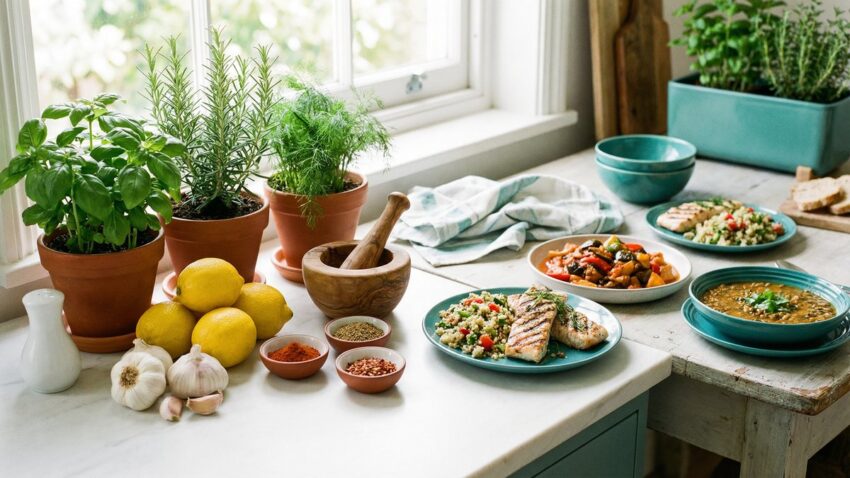
- Acids: Lemon juice, lime juice, and vinegar brighten flavours and reduce the perception of saltiness
- Herbs: Fresh basil, coriander, parsley, and chives add complexity without sodium
- Spices: Cumin, smoked paprika, turmeric, and black pepper add depth and warmth
- Aromatics: Garlic, ginger, shallots, and chilli build a flavour base that makes salt less necessary
- Umami: Mushrooms, tomato paste, nutritional yeast, and miso (in small amounts) add savoury depth
- Toasting: Toasting nuts, spices, and seeds intensifies their flavour significantly
Reducing sodium is one of the most effective non-pharmacological interventions for blood pressure in diabetes. The key is shifting from processed foods to home-cooked meals, reading food labels carefully, and building flavour through herbs, spices, acids, and aromatics rather than salt. Your taste buds adapt within 2–4 weeks — foods that once tasted normal will start to taste overly salty, making the transition self-reinforcing.
 English
  Urdu
Urdu