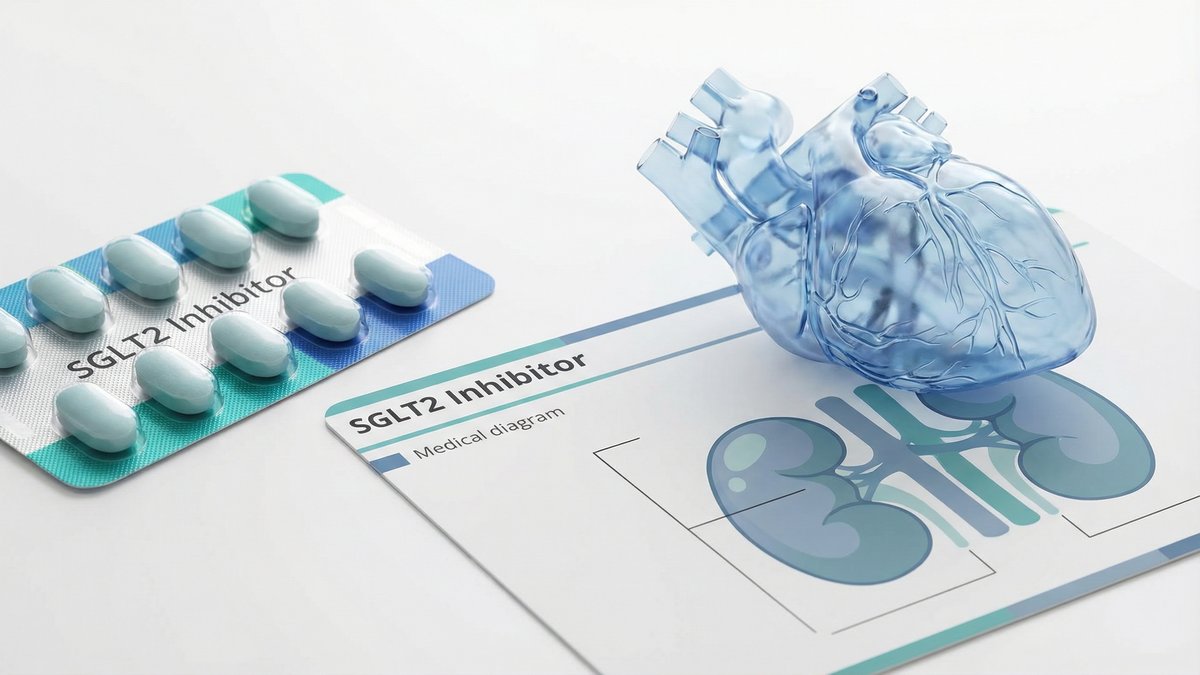
SGLT2 inhibitors were first used to lower glucose in type 2 diabetes, but research has shown important heart and kidney benefits for selected people. They are now often discussed for chronic kidney disease and heart failure risk, not just A1c.
Quick summary
These medicines can be valuable, but the safety plan matters. Sick-day rules, dehydration risk, genital infections, ketoacidosis symptoms, and kidney monitoring should be clear before starting.
Key takeaways
- Benefits may include slower kidney disease progression and lower heart failure hospitalization risk in selected groups.
- They are not suitable for everyone and are not used the same way in every type of diabetes.
- Rare ketoacidosis can happen even when glucose is not extremely high.
- Vomiting, fasting, surgery, severe illness, and dehydration need special instructions.
Why they matter beyond glucose
Large trials in chronic kidney disease showed that dapagliflozin and empagliflozin reduced important kidney outcomes in appropriate patients. Benefits are thought to involve kidney and heart physiology as well as glucose effects.
The best candidate depends on diagnosis, eGFR, albuminuria, heart failure history, diabetes type, other medicines, and infection or ketoacidosis risk.
Safety questions
- What is my eGFR and urine albumin result?
- When should I hold this medicine for illness, fasting, procedures, or surgery?
- What ketoacidosis symptoms should I watch for?
- Could this interact with insulin, diuretics, blood pressure medicine, or low-carbohydrate dieting?
- What genital or urinary symptoms should prompt a call?
Do not miss the basics
SGLT2 inhibitors do not replace blood pressure care, cholesterol treatment, smoking cessation, kidney testing, or nutrition and activity work. They are one tool in a larger heart and kidney plan.
Practical takeaway
For the right person, an SGLT2 inhibitor can be more than a glucose medicine. It should come with a written safety plan.
Safety note
This article is not a substitute for medical care. Do not start or stop an SGLT2 inhibitor without medical guidance. Seek urgent care for ketoacidosis symptoms, severe dehydration, fainting, serious infection, or rapid worsening illness.
What to ask your care team
- What does this mean for my diabetes, heart, kidney, medicine, or monitoring plan?
- Which symptoms, readings, or side effects should prompt urgent care?
- Do any tests, prescriptions, follow-up visits, or safety instructions need review?
Related reading
Source summary
- Dapagliflozin in Patients with Chronic Kidney Disease, New England Journal of Medicine via PubMed. Randomized trial. Accessed June 3, 2026. Source
- Empagliflozin in Patients with Chronic Kidney Disease, New England Journal of Medicine via PubMed. Randomized trial. Accessed June 3, 2026. Source
- FARXIGA Prescribing Information, DailyMed, National Library of Medicine. FDA label source. Accessed June 3, 2026. Source
- Standards of Care in Diabetes 2026, American Diabetes Association. Guideline overview. Accessed June 3, 2026. Source