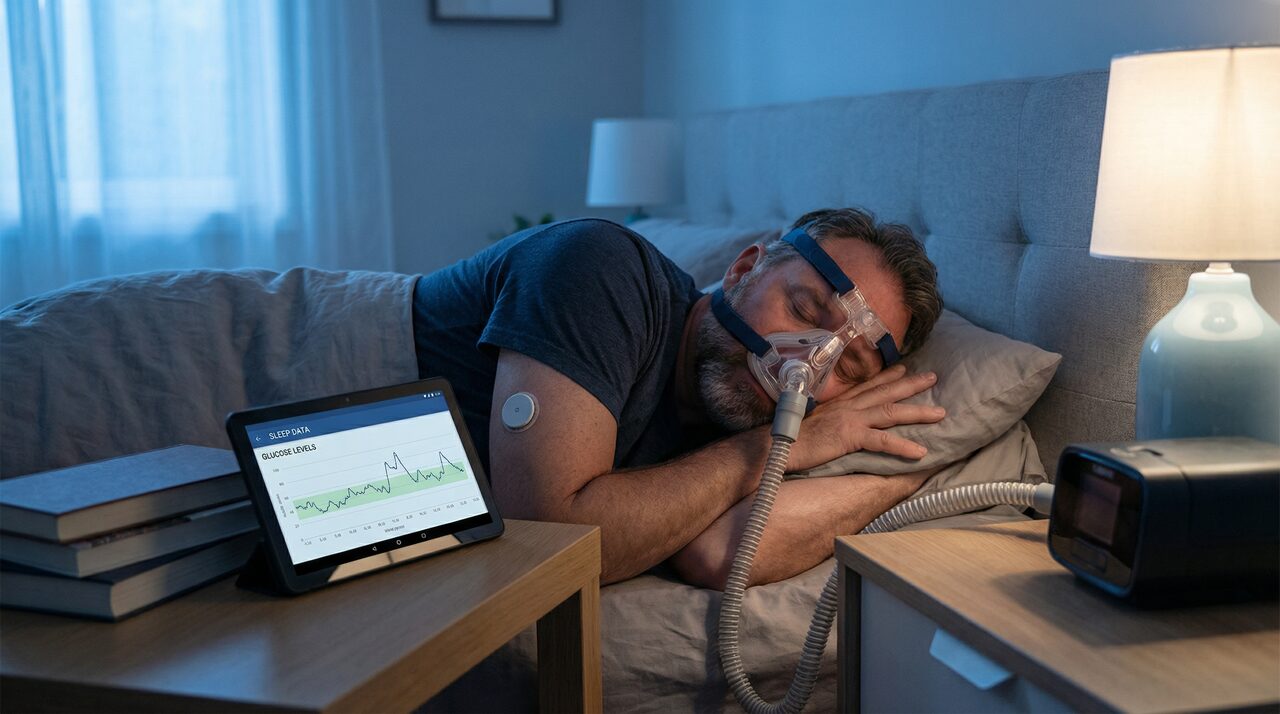
Sleep apnea happens when breathing repeatedly pauses or becomes shallow during sleep. It is more common in men and is associated with high blood pressure, heart disease, stroke risk, and type 2 diabetes.
Quick summary
Sleep apnea does not always look like dramatic snoring. Some people mainly notice morning headaches, daytime sleepiness, poor concentration, mood changes, or resistant blood pressure.
Key takeaways
- Loud snoring, witnessed pauses, choking, or gasping can be clues.
- Daytime sleepiness and morning headaches also matter.
- Sleep apnea may make diabetes routines harder, but it is not a diabetes diagnosis by itself.
- Diagnosis requires clinical evaluation and sleep testing, not guesswork.
Why diabetes care should ask about sleep
Poor sleep can affect appetite, energy, activity, mood, medication routines, and glucose patterns. Sleep apnea can also overlap with obesity, heart disease, high blood pressure, and low testosterone symptoms.
Treating sleep apnea may improve sleep quality and can support overall health, but it should not be presented as a diabetes cure or a guaranteed way to improve glucose control.
Symptoms to mention
- Loud snoring or pauses noticed by another person.
- Waking up choking or gasping.
- Morning headaches or dry mouth.
- Severe daytime sleepiness or dozing while driving.
- Difficult-to-control blood pressure, fatigue, or mood changes.
Practical takeaway
If sleep feels unrefreshing and diabetes is hard to manage, ask whether sleep apnea screening is appropriate.
Safety note
This article is not a substitute for medical care. Seek urgent care for severe sleepiness while driving, chest pain, stroke symptoms, severe shortness of breath, confusion, or symptoms that feel unsafe.
What to ask your care team
- Do my symptoms fit sleep apnea?
- Should I have a sleep study?
- Could sleep apnea affect my blood pressure, heart risk, or diabetes routine?
Related reading
Source summary
- Sleep Apnea Symptoms, National Heart, Lung, and Blood Institute. Patient guidance. Accessed June 5, 2026. Source
- Sleep Apnea Causes and Risk Factors, National Heart, Lung, and Blood Institute. Patient guidance. Accessed June 5, 2026. Source
- Sleep Apnea Living With, National Heart, Lung, and Blood Institute. Patient guidance. Accessed June 5, 2026. Source
- Diabetes and Men, Centers for Disease Control and Prevention. Patient guidance. Accessed June 5, 2026. Source