
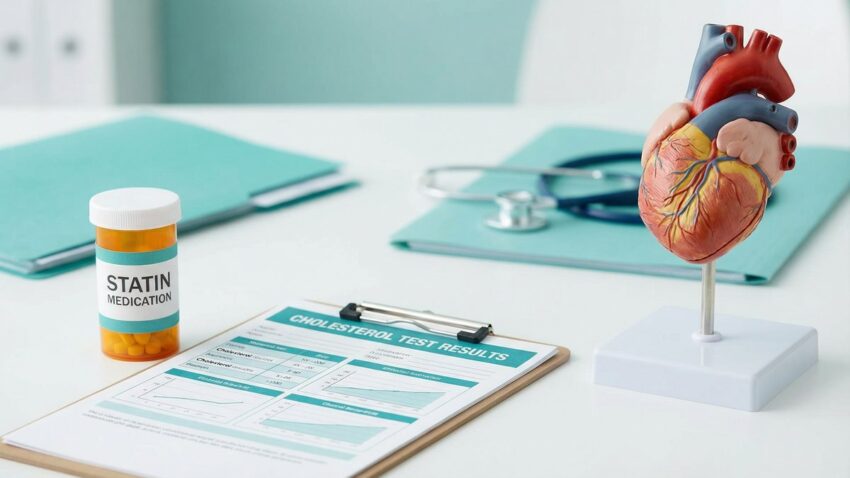
Statins are among the most prescribed medications in the world, and for people with diabetes, they are a cornerstone of cardiovascular risk reduction. Yet they are also among the most misunderstood — surrounded by myths about muscle damage, memory loss, and a supposed link to worsening diabetes. This guide cuts through the noise with evidence-based clarity.
Why People with Diabetes Are Recommended Statins
Diabetes is an independent cardiovascular risk factor. People with type 2 diabetes have a 2–4 times higher risk of heart attack and stroke compared to people without diabetes. This elevated risk is driven by the combination of insulin resistance, dyslipidaemia (high triglycerides, low HDL, small dense LDL particles), hypertension, and chronic low-grade inflammation.
Statins work by inhibiting HMG-CoA reductase, the enzyme responsible for cholesterol synthesis in the liver. This reduces LDL cholesterol (the primary driver of atherosclerotic plaque formation) and has additional pleiotropic effects including anti-inflammatory and plaque-stabilising properties.
The Evidence: How Much Do Statins Reduce Cardiovascular Risk?
The evidence for statins in people with diabetes is compelling. The Cholesterol Treatment Trialists’ Collaboration meta-analysis of over 170,000 participants found that each 1 mmol/L reduction in LDL cholesterol with statin therapy reduces major cardiovascular events by approximately 21%. In people with diabetes, the absolute risk reduction is even greater because their baseline risk is higher.
Do Statins Cause Diabetes?
This is the most frequently asked question about statins in people who already have diabetes. The answer is nuanced. Statin therapy is associated with a modest increase in the risk of new-onset type 2 diabetes in people who do not yet have the condition — approximately a 10–12% relative increase in risk. However, this must be weighed against the substantial cardiovascular benefit.
For people who already have diabetes, statins do not meaningfully worsen blood sugar control. The modest increase in HbA1c (approximately 0.1–0.3%) seen in some studies is clinically insignificant compared to the substantial cardiovascular protection they provide. Do not stop your statin without discussing it with your doctor.
Statin Comparison: Which One Is Right for You?
| Statin | Intensity | LDL Reduction | Notes |
|---|---|---|---|
| Rosuvastatin 20–40mg | High | 50–60% | Preferred for high CVD risk; once daily |
| Atorvastatin 40–80mg | High | 45–55% | Most widely prescribed; once daily |
| Simvastatin 20–40mg | Moderate | 35–45% | More drug interactions; evening dosing |
| Pravastatin 40mg | Moderate | 30–40% | Fewer drug interactions; good for elderly |
For most people with diabetes aged over 40, or with any additional cardiovascular risk factor, statin therapy is recommended by all major guidelines. The cardiovascular benefits substantially outweigh the risks. If you experience muscle aches or other side effects, speak to your doctor — switching to a different statin or adjusting the dose often resolves the problem. Never stop your statin without medical advice.
 English
  Urdu
Urdu