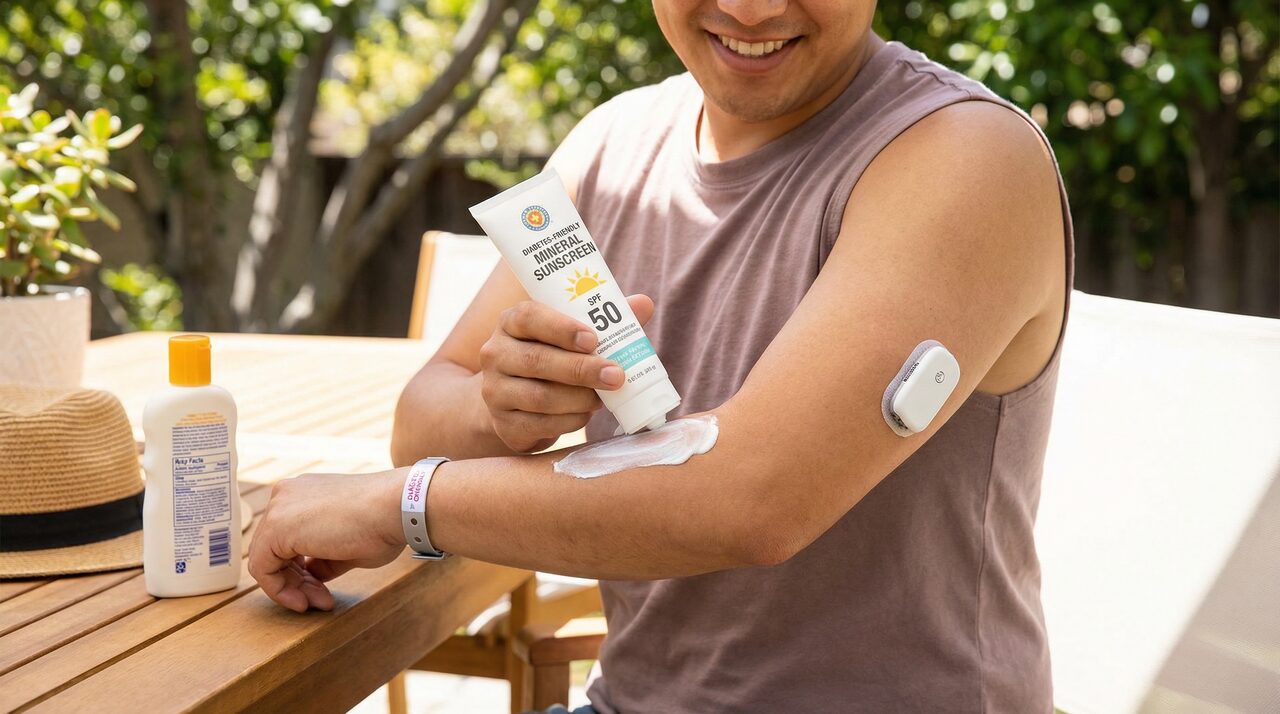
Sunscreen is not a diabetes treatment, but sun protection can still matter for diabetes care. Sunburn, heat, dehydration, damaged supplies, and some medicines can all make an outdoor day harder to manage.
Quick summary
FDA advises broad-spectrum sunscreen with SPF 15 or higher, reapplication at least every two hours, and other sun-protection measures. Sunscreen is general sun protection, not diabetes treatment. CDC heat guidance also notes that sunburn may raise blood sugar and that diabetes supplies should be protected from heat.
Key takeaways
- Use sunscreen with shade, clothing, hats, and sunglasses rather than relying on sunscreen alone.
- FDA says sunscreen should be reapplied at least every two hours and more often when swimming or sweating.
- Some medicines can increase sun sensitivity, so labels and clinician advice matter.
- Sunburn, dehydration, heat, and hot supplies can all interfere with diabetes routines.
Use sunscreen correctly
FDA recommends applying sunscreen before sun exposure, using enough to cover exposed skin, and reapplying at least every two hours. Choose broad-spectrum protection and check the label for SPF, water resistance, expiration, and directions. There is no such thing as waterproof sunscreen, so swimming and sweating require extra attention.
Do not forget diabetes-specific details
CDC heat guidance says sunburn can raise blood sugar, but that effect is not predictable for every person. Heat can also increase dehydration risk and damage diabetes equipment. Keep insulin, oral diabetes medicines, meters, pumps, sensors, and test strips away from direct sunlight and hot cars. Keep glucose treatment and water with you.
Medicines and sun sensitivity
FDA explains that some medicines can make skin more sensitive to the sun. This may include certain prescription and nonprescription drugs, but the risk depends on the medicine and the person. Read labels and ask a pharmacist or clinician whether any of your medicines require extra sun precautions.
Feet and skin checks
Outdoor days can mean sandals, hot pavement, beach surfaces, pool decks, and small cuts. CDC heat guidance advises people with diabetes not to go barefoot, even at the beach or pool. Check skin and feet after outdoor activities, especially if you have neuropathy, circulation problems, or a history of slow wound healing.
What to ask your care team
- Do any of my medicines increase sun sensitivity?
- How should I protect insulin, devices, and test strips during outdoor activities?
- Do neuropathy, circulation problems, or prior foot wounds change my footwear plan?
- What should I do if I get sunburned and glucose rises?
Practical takeaway
For diabetes, sun safety means sunscreen plus shade, clothing, hydration, shoe protection, medicine awareness, and keeping diabetes supplies out of heat.
Safety note
Seek urgent care for heat stroke symptoms, severe sunburn with widespread blistering or fever, confusion, fainting, severe dehydration, infected wounds, ketones, severe low glucose, or high glucose with vomiting, ketones, dehydration, confusion, or trouble breathing. This information is general education and is not a substitute for medical care.
Source summary
- FDA: Sunscreen and sun protection. Consumer guidance on broad-spectrum sunscreen, SPF, reapplication, storage, expiration, and sun protection. Source
- FDA: The sun and your medicine. Explains that some medicines can increase sensitivity to sunlight and that labels and clinician advice matter. Source
- CDC: Skin cancer prevention. Public-health guidance on shade, clothing, hats, sunglasses, and sunscreen to reduce ultraviolet exposure. Source
- CDC: Managing diabetes in the heat. Explains dehydration, glucose checks, heat illness, foot safety, and protecting medicines and devices. Source