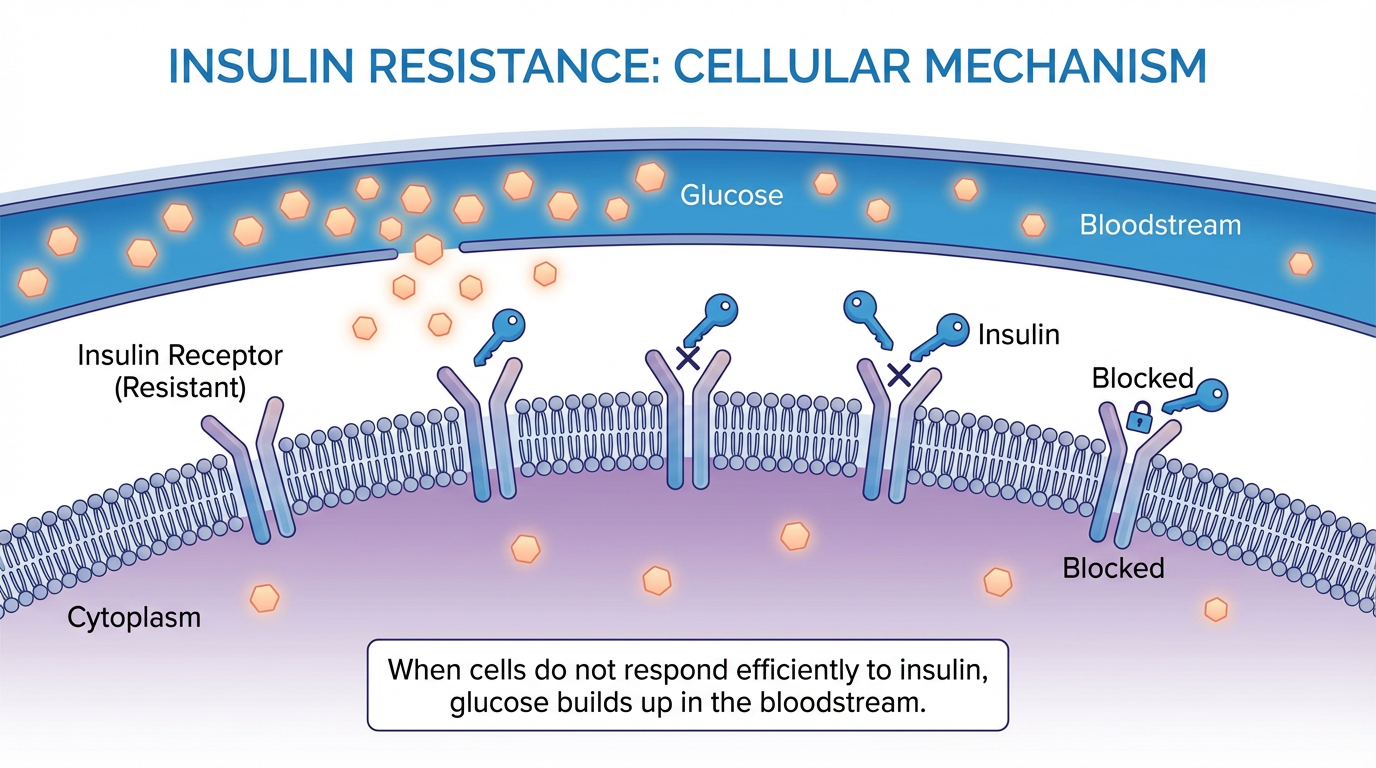
Insulin resistance means the body has more difficulty responding to insulin. The pancreas may make extra insulin for a while, but blood sugar can rise when the body cannot keep up.
Quick summary
Many people do not feel insulin resistance directly. It may show up through prediabetes, type 2 diabetes, fatty liver disease, high triglycerides, low HDL cholesterol, high blood pressure, or waist-related risk.
Key takeaways
- Insulin resistance can develop for years before diabetes is diagnosed.
- There may be no obvious symptoms.
- A1C, fasting glucose, and sometimes an oral glucose tolerance test help show glucose risk.
- Food quality, physical activity, sleep, weight changes, and medicines can all be part of care.
What can raise risk
- Family history of type 2 diabetes.
- Higher waist-related risk or weight gain.
- Less regular physical activity.
- History of gestational diabetes or PCOS.
- Sleep problems, stress, some medicines, fatty liver disease, and metabolic syndrome.
What can help
Helpful steps are usually practical rather than dramatic: more movement, fewer sugary drinks, more fiber-rich foods, strength training if safe, better sleep routines, and modest weight loss when appropriate.
Some people also benefit from medicines such as metformin or GLP-1 based medicines, depending on diagnosis, risk, cost, and medical history. Medicine is not a failure; it can be part of safe prevention or treatment.
Practical takeaway
Think of insulin resistance as a risk signal. The next step is to measure the right markers and choose changes that can last.
Safety note
This article is not a substitute for medical care. Ask before major diet, fasting, supplement, or exercise changes if you have diabetes or use medicines that can cause low blood sugar.
What to ask your care team
- Which of my risk factors can I change first?
- Should we repeat A1C, fasting glucose, lipids, or blood pressure?
- Would a diabetes prevention program or medication discussion help?
Source summary
- Insulin Resistance and Prediabetes, National Institute of Diabetes and Digestive and Kidney Diseases. Patient guidance. Accessed June 5, 2026. Source
- Prediabetes and Type 2 Diabetes Prevention, Centers for Disease Control and Prevention. Patient guidance. Accessed June 5, 2026. Source
- Diabetes Testing, Centers for Disease Control and Prevention. Patient guidance. Accessed June 5, 2026. Source
- Metabolic Syndrome, National Heart, Lung, and Blood Institute. Patient guidance. Accessed June 5, 2026. Source