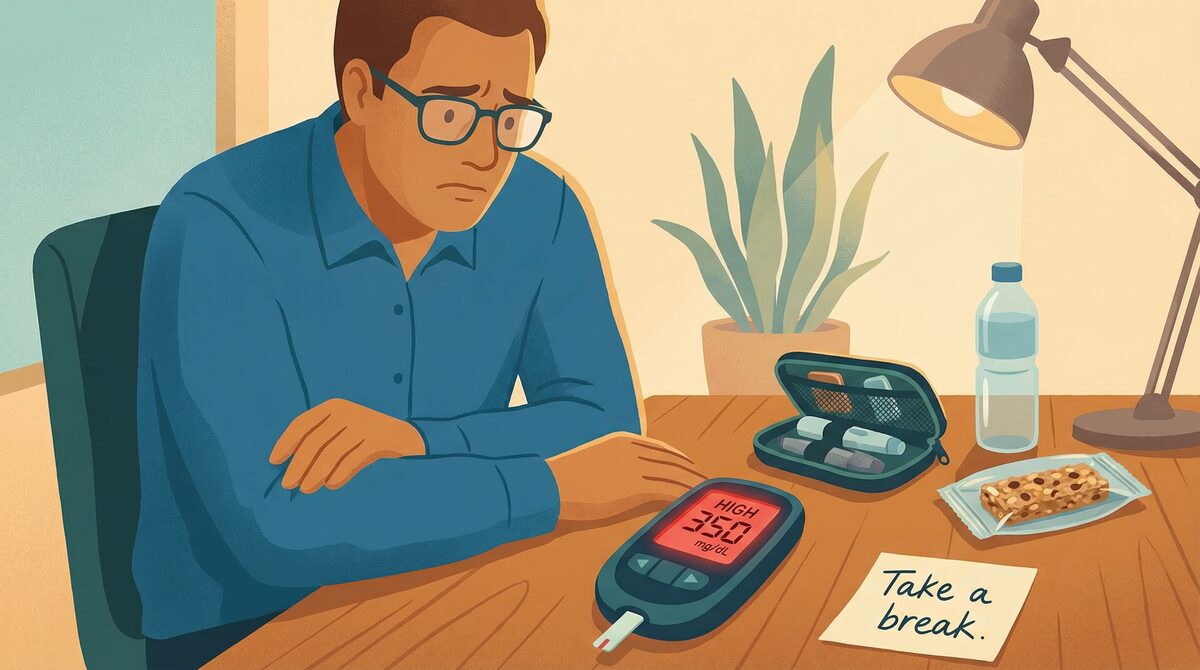
Work stress can disrupt diabetes care through skipped meals, missed medicines, poor sleep, long sitting, shift work, travel, fear of stigma, or lack of breaks.
Quick summary
The goal is not to control every workday. The goal is to protect the few routines that keep diabetes care safer when work is messy.
Key takeaways
- Stress can affect glucose and self-care routines.
- Anxiety symptoms can feel similar to low blood sugar.
- People using insulin or medicines that cause lows may need work-specific low treatment plans.
- Privacy and accommodations may matter for some people.
Protect the basics
- Keep fast-acting carbohydrate accessible if you are at risk for lows.
- Have a realistic meal or snack backup.
- Keep supplies where they are allowed and easy to reach.
- Set reminders for medicines or checks if helpful.
- Plan what to say if you need a break for diabetes care.
When to ask for help
If work stress is causing repeated missed doses, unsafe lows, severe highs, panic, depression, or avoidance of care, bring it up with your health care team. You may need a simpler plan, documentation for accommodations, or mental health support.
Shift workers should ask about sleep, meal timing, and medicine timing rather than copying a daytime schedule.
Practical takeaway
A safer work plan is built around backups, not perfection.
Safety note
This article is not a substitute for medical care. Seek urgent care for severe low blood sugar, chest pain, fainting, self-harm thoughts, DKA symptoms, or symptoms that feel unsafe.
What to ask your care team
- What diabetes tasks are hardest during work?
- Do I need a written low-blood-sugar plan for work?
- Would accommodations or schedule changes help safety?
Related reading
Source summary
- Diabetes and Mental Health, Centers for Disease Control and Prevention. Patient guidance. Accessed June 5, 2026. Source
- 10 Tips for Coping With Diabetes Distress, Centers for Disease Control and Prevention. Patient guidance. Accessed June 5, 2026. Source
- Healthy Living With Diabetes, National Institute of Diabetes and Digestive and Kidney Diseases. Patient guidance. Accessed June 5, 2026. Source
- Low Blood Sugar, Centers for Disease Control and Prevention. Patient guidance. Accessed June 5, 2026. Source