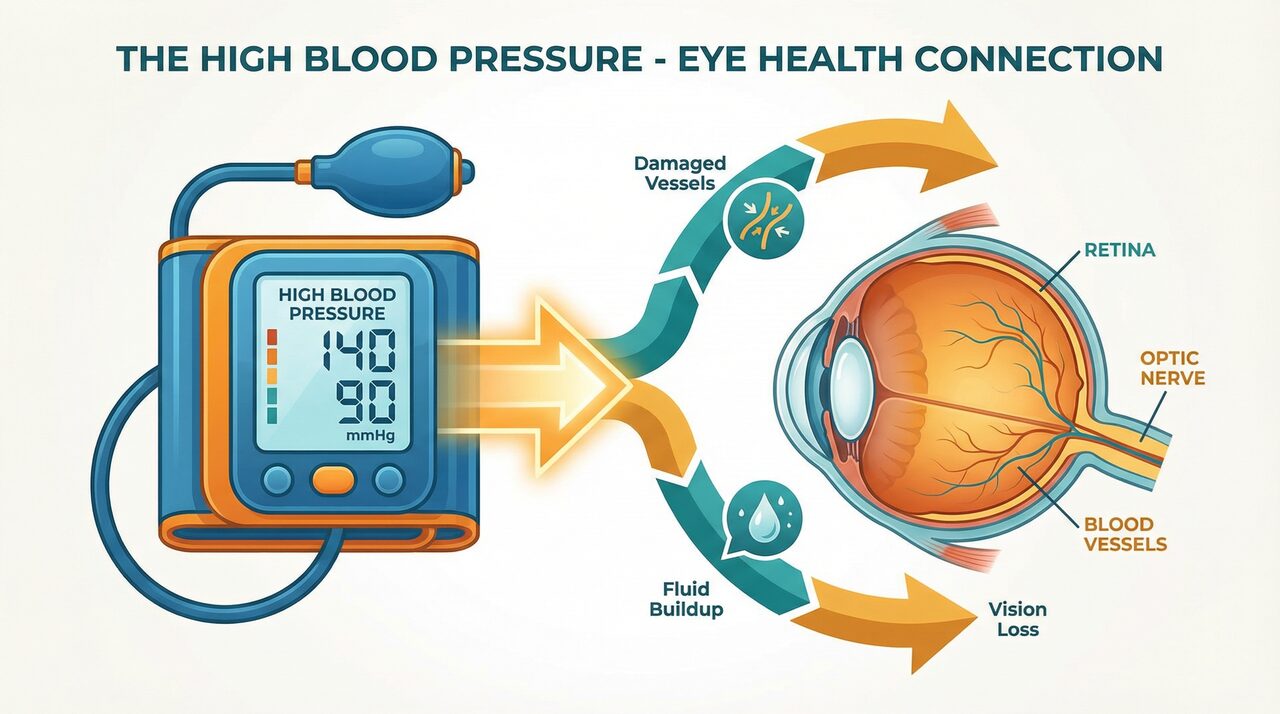
High blood pressure is often silent, but the eyes may show the damage of long-term pressure on small blood vessels. For people with diabetes, blood pressure, glucose, cholesterol, kidney health, and eye screening are closely connected.
Quick summary
CDC says high blood pressure usually has no warning signs, and NEI says diabetic retinopathy may not cause symptoms at first. That combination makes regular blood pressure checks and regular dilated eye exams especially important for people with diabetes.
Key takeaways
- CDC defines high blood pressure as consistently at or above 130/80 mm Hg, using ACC and AHA categories.
- NEI says diabetic retinopathy can begin without symptoms and is checked with a dilated eye exam.
- High blood pressure and high cholesterol along with diabetes increase risk for diabetic retinopathy.
- Sudden vision loss, stroke symptoms, chest pain, or very high blood pressure with severe symptoms needs emergency care.
Why blood pressure matters to the eyes
Blood vessels in the retina are small and delicate. Diabetes can damage these vessels over time, and high blood pressure can add more stress. NEI explains that diabetic retinopathy affects blood vessels in the retina and can cause vision loss or blindness. It also notes that controlling blood pressure and cholesterol can help lower the risk of vision loss.
High blood pressure can be silent
CDC explains that high blood pressure usually has no signs or symptoms, so measuring it is the only way to know. A single high reading does not always mean a diagnosis, but repeated high readings should be reviewed. Home readings can be useful when taken with a validated cuff and correct technique, but they should be interpreted with the care team.
Eye exams catch problems early
Diabetic retinopathy may have no early symptoms. NEI recommends comprehensive dilated eye exams for people with diabetes, and CDC eye-health guidance emphasizes the diabetes ABCs: A1C, blood pressure, cholesterol, and smoking cessation. If retinopathy or macular edema is found, early treatment can help prevent worsening vision loss.
What symptoms should never wait
Blurred vision can happen for many reasons, including glucose changes, dry eye, cataracts, retinopathy, high blood pressure, and neurologic emergencies. Sudden vision loss, a curtain over vision, new severe eye pain, sudden neurologic symptoms, or severe headache with very high blood pressure should be treated urgently. Do not wait for a routine eye appointment if symptoms are sudden or severe.
What to ask your care team
- What is my blood pressure goal, and should I check it at home?
- When is my next dilated eye exam, and do I have any retinopathy or macular edema?
- How do my A1C, blood pressure, cholesterol, kidney function, and smoking status affect my eye risk?
- Which vision or blood pressure symptoms mean I should seek urgent care?
Practical takeaway
For people with diabetes, protecting vision is not only about glucose. Blood pressure, cholesterol, kidney health, smoking, and regular dilated eye exams all matter.
Safety note
Seek urgent care for sudden vision loss, new weakness or numbness, trouble speaking, severe chest pain, severe shortness of breath, fainting, severe eye pain, or very high blood pressure with severe headache, confusion, or neurologic symptoms. This information is general education and is not a substitute for medical care.
Source summary
- CDC: About high blood pressure. Defines high blood pressure and explains that it can affect eyes, heart, kidneys, and brain. Source
- NEI: Diabetic retinopathy. Explains retinopathy symptoms, risk, eye exams, and the role of blood pressure and cholesterol. Source
- CDC: Vision loss and diabetes. Patient resource on diabetes-related eye disease, blood pressure, cholesterol, and eye exams. Source
- American Heart Association: High blood pressure and vision loss. Explains how uncontrolled high blood pressure can damage eye blood vessels. Source