The short answer
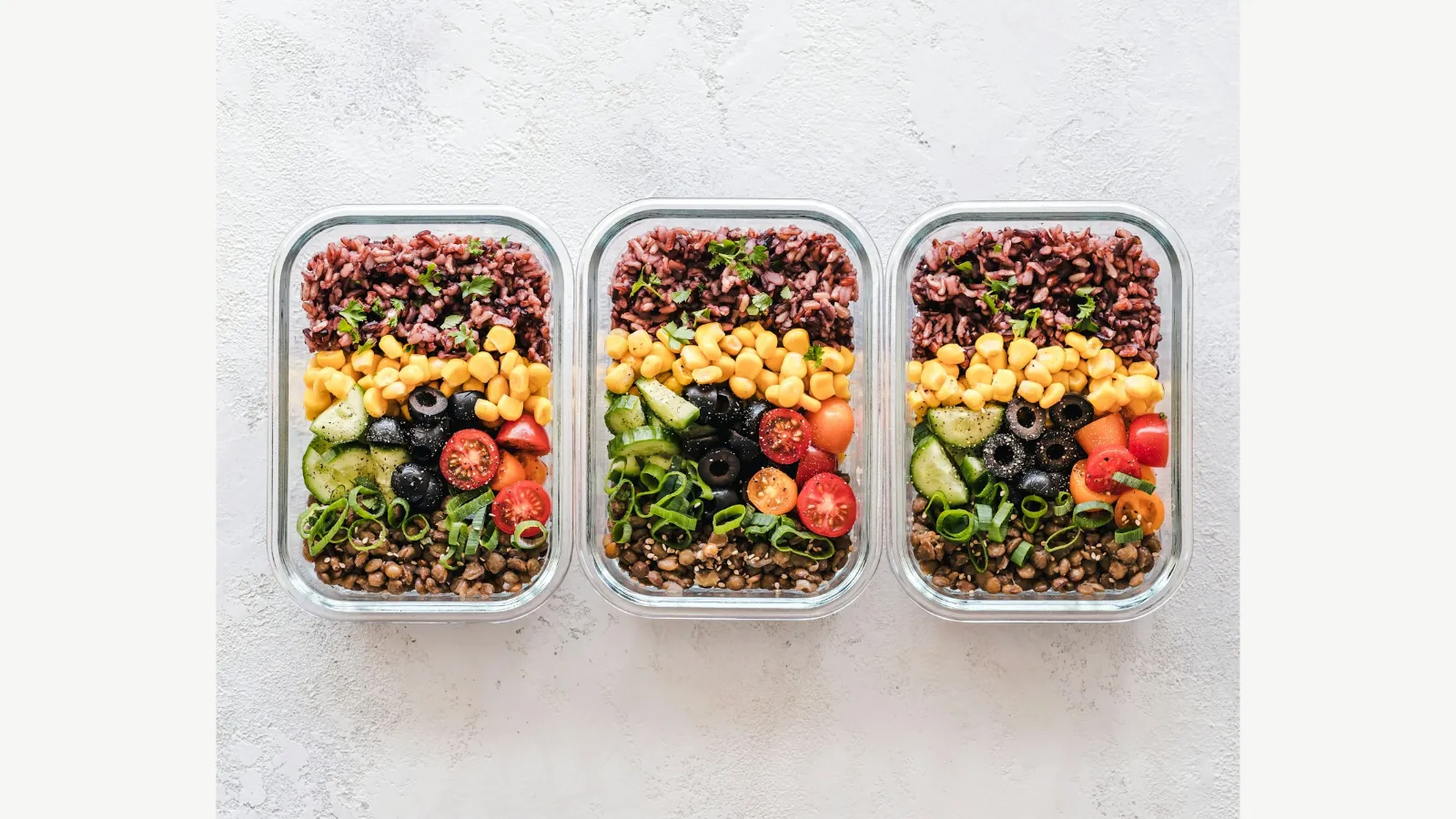
Spend about an hour cooking a few building blocks: a protein, a tray of vegetables, a low-GI carb and a sauce. Mix them into different dinners through the week.
Keep cooked leftovers in the fridge for up to 2 days, freeze the rest, and reheat until steaming hot. Portion carbs into separate boxes so they stay consistent.
Meal prep isn’t about eating the same box of chicken and rice five nights running. It’s about having building blocks ready so dinner takes ten minutes.
The four building blocks
| Block | Cook one or two of |
|---|---|
| Protein | Roast chicken thighs, baked salmon, hard-boiled eggs, a pot of lentils or chickpeas, turkey mince |
| Vegetables | A big tray of roasted peppers, courgette, onion and broccoli; washed salad leaves; chopped raw veg |
| Low-GI carb | Brown rice, bulgur wheat, barley, wholegrain pasta, new potatoes |
| Sauce | Tomato sauce, yoghurt and herb dressing, pesto, curry base |
A one-hour prep
- Oven on. Chicken or fish in one tray, vegetables in another.
- Rice, bulgur or lentils on the hob.
- Eggs boiling in a second pan.
- While it all cooks, make a sauce and wash salad.
- Cool everything quickly, then portion into boxes.
Seven dinners from one prep
| Day | Dinner |
|---|---|
| Mon | Chicken, roasted veg and bulgur with yoghurt dressing |
| Tue | Salmon, salad and new potatoes |
| Wed | Lentil and roasted veg soup (blend the leftovers) |
| Thu | Chicken and veg wholegrain wrap |
| Fri | From the freezer: chickpea and vegetable curry with a little rice |
| Sat | Veg and egg frittata, big salad |
| Sun | Fresh cook, or a second frozen portion |
Cook on Sunday, eat Monday and Tuesday from the fridge, and freeze portions for later in the week.
Portion the carbs
Put the carb in a separate small box, or measure it before you pack. That keeps your carbs steady from day to day, which helps if you take mealtime insulin or a sulfonylurea. See what a carb portion looks like.
Why low GI?
Brown rice, barley, bulgur, lentils and firm pasta raise glucose more slowly than white bread or sticky rice. Cooking and cooling starchy foods may lower their effect a little too. More in our GI guide.
Food safety basics
- Cool cooked food quickly, ideally within 1 to 2 hours, then refrigerate.
- Keep the fridge between 0 and 5°C.
- Eat fridge leftovers within 2 days. Freeze anything for later in the week.
- Defrost in the fridge, not on the worktop.
- Reheat until steaming hot all the way through, and only reheat once.
- Rice needs extra care: cool it fast, fridge it, and eat it within a day.
Make it fit your week
- No time on Sunday? Cook double on Monday and Wednesday instead.
- Cooking for one? Freeze in single portions.
- Family with different tastes? Keep the blocks plain and let everyone add their own sauce.
The bottom line
An hour of prep gives you a week of quick, balanced dinners. Build in vegetables and protein, portion the carbs, and keep food safe.
More: planning the week and the plate method.
Sources
- Food Standards Scotland. Cooking food.
- Centers for Disease Control and Prevention. Diabetes meal planning.
- American Diabetes Association. Standards of Care in Diabetes 2026, section 5: Facilitating positive health behaviors and well-being.
General public information, not personalised treatment advice. Children, pregnancy and complex health conditions need individual specialist advice. Don’t start, stop or change a medicine without speaking to your own healthcare team.