The short answer
There’s no single right number. Guidelines say carbs should be set for you, based on your medicines, activity, weight goals and what you enjoy eating.
Eating fewer carbs does improve blood sugar for many people with type 2 diabetes. But quality matters too, and if you take insulin, a sulfonylurea or an SGLT2 inhibitor, talk to your team before cutting right down.
It’s one of the most common diet questions. The honest answer is that it depends. Here’s how to work out what suits you.
Is there a recommended number?
No. US diabetes guidance says there’s no ideal split of carbs, protein and fat for everyone with diabetes. Your plan should fit your medicines, your goals and your food culture.
What the evidence does show: eating fewer carbs overall improves blood sugar for many people. And the carbs you do eat work better when they’re less processed and high in fibre.
What ranges do people use?
These are common working ranges, not official targets.
| Approach | Carbs a day | Roughly per meal | Notes |
|---|---|---|---|
| Moderate | 130 to 230 g | 45 to 60 g | Close to a typical diet, with better carb choices |
| Lower-carb | 50 to 130 g | 15 to 40 g | Often lowers HbA1c and helps weight loss in type 2 |
| Very low-carb (keto) | Under 50 g | Under 15 g | Needs medical support, especially on diabetes medicines |
The best range is the one you can stick to. A plan you drop after two weeks doesn’t help.
What does 15 g of carbs look like?
Approximate amounts. Check labels, as products vary.
| Food | About 15 g carbs |
|---|---|
| Bread | 1 medium slice |
| Cooked rice or pasta | 2 to 3 tablespoons (about 50 g) |
| Potato | 1 small (about 100 g) |
| Apple or orange | 1 small |
| Milk | 1 large glass (about 300 ml) |
| Cooked lentils or beans | About 4 tablespoons |
| Dates | 2 to 3 |
Which carbs are best?
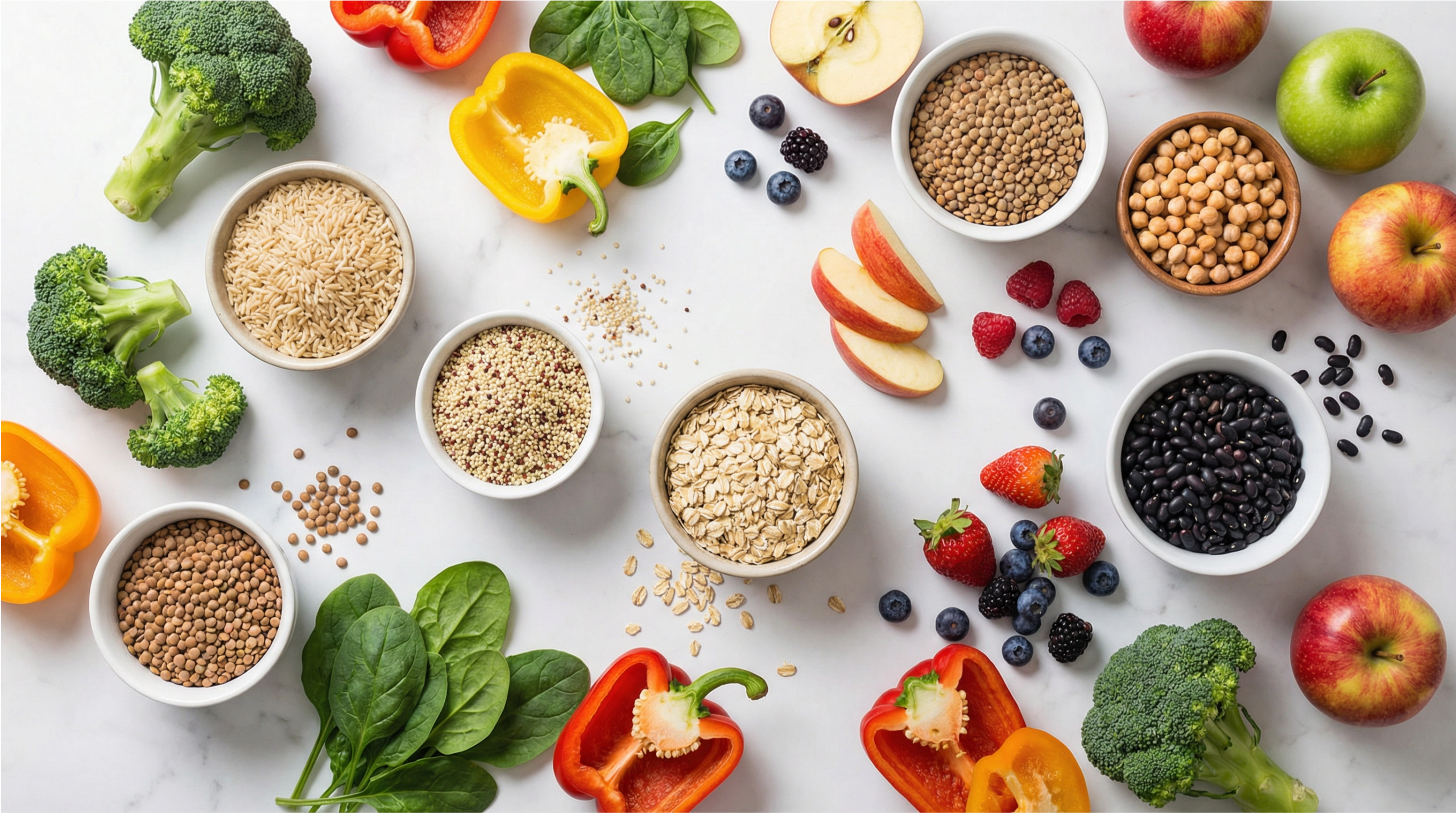
- Vegetables, beans, lentils and chickpeas.
- Whole grains like oats, barley, bulgur and brown rice.
- Whole fruit rather than juice.
- Plain yoghurt and milk.
Cut back on sugary drinks, white bread, pastries, sweets and refined cereals. These raise glucose fastest. More on this in our glycaemic index guide.
How do I find my own number?
- Write down what you eat for 3 days and add up the carbs. That’s your starting point.
- If your glucose is high, cut 20 to 30 g a day, mostly from drinks, bread and snacks.
- Check your glucose 2 hours after meals, or watch your sensor, to see which meals push it up.
- Review after 2 to 3 months with your HbA1c.
Keeping carbs fairly steady from day to day also makes glucose easier to predict.
Who needs care before cutting carbs?
- Insulin or a sulfonylurea (like gliclazide). Fewer carbs can cause hypos. Your doses may need lowering first.
- SGLT2 inhibitors (like dapagliflozin or empagliflozin). Very low-carb eating raises the risk of ketoacidosis.
- Pregnancy or breastfeeding. Very low-carb diets aren’t advised.
- Kidney disease. Lower-carb diets often mean more protein, which may not suit you.
- A history of disordered eating. Strict rules can be harmful.
What about exercise?
Activity uses glucose. If you take insulin or a sulfonylurea, you may need a small carb snack before or during longer exercise. If you don’t, you usually won’t need extra carbs for everyday activity.
The bottom line
There’s no magic number. Start from what you eat now, cut the low-quality carbs first, and adjust based on your readings. Your team can help you fit this around your medicines.
Next: the plate method, eating protein first and our diabetes diet guide.
Sources
- American Diabetes Association. Standards of Care in Diabetes 2026, section 5: Facilitating positive health behaviors and well-being.
- American Diabetes Association. Standards of Care in Diabetes 2026, section 6: Glycemic goals, hypoglycemia, and hyperglycemic crises.
- Atkinson FS, et al. Am J Clin Nutr 2021. International tables of glycemic index and glycemic load values 2021.
General public information, not personalised treatment advice. Children, pregnancy and complex health conditions need individual specialist advice. Don’t start, stop or change a medicine without speaking to your own healthcare team.