The short answer
Yes, in short studies. Eating protein and vegetables before the carbs in a meal lowered the after-meal glucose rise in people with type 2 diabetes and prediabetes.
It’s free, simple and doesn’t mean giving up foods. But the studies were small and short, and nobody has yet shown it lowers HbA1c long term on its own.
Same meal. Different order. Lower glucose spike. That’s the idea behind food order, or protein-first eating.
What is it?
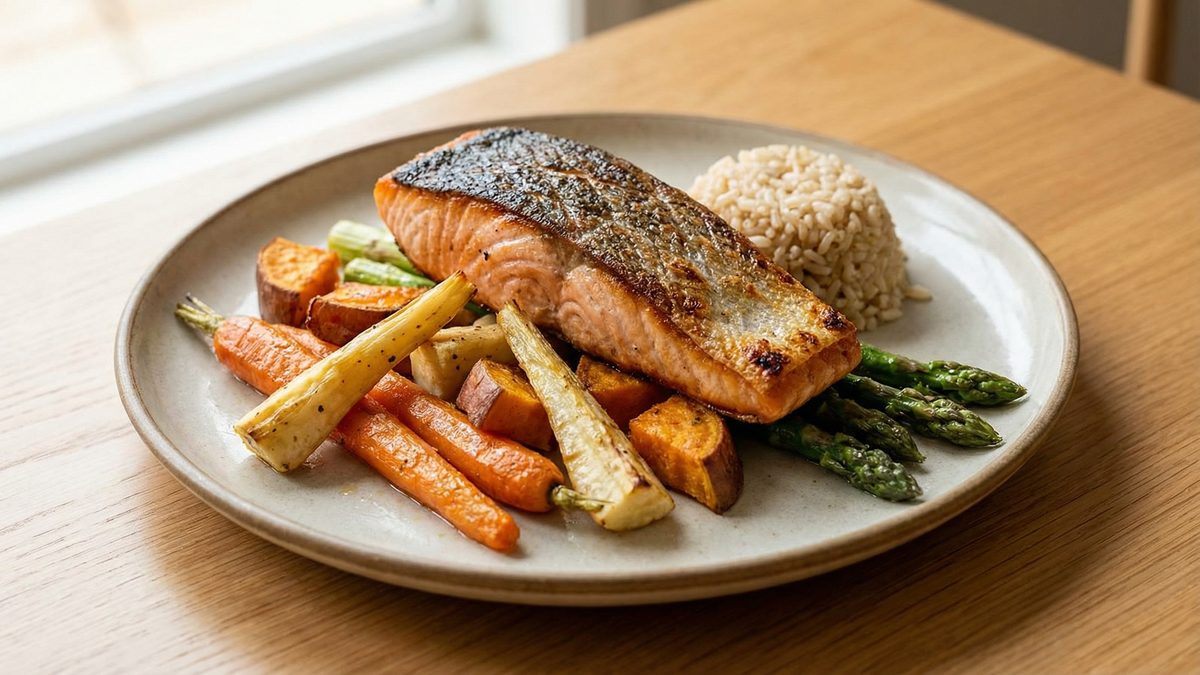
You eat the vegetables and protein on your plate first, and the starchy carbs (bread, rice, potatoes, juice) last. Nothing is cut out.
What did the studies find?
Type 2 diabetes. In a 2015 study, 11 adults with type 2 diabetes on metformin ate the same meal twice: chicken, salad and broccoli, plus bread and orange juice. When they ate the protein and vegetables first and the carbs 15 minutes later, glucose was about 29% lower at 30 minutes, 37% lower at 60 minutes and 17% lower at 2 hours. Insulin was lower too.
Prediabetes. A later study in 15 adults with prediabetes found glucose peaks were over 40% lower when protein and vegetables came first, and glucose was steadier.
Why might it work?
- Protein, fat and fibre slow how fast the stomach empties, so sugar from the carbs reaches the blood more slowly.
- Eating protein first boosts gut hormones like GLP-1, which help insulin work and make you feel full.
- You may simply eat fewer carbs because you’re fuller by the time you get to them.
How do I do it?
- Start with salad or vegetables.
- Then eat the meat, fish, eggs, tofu or beans.
- Finish with the rice, bread, potato or pasta.
- You don’t need a 15-minute gap. Just eat them in that order.
- Swap juice for water. If you have fruit, have it after the meal rather than on its own.
At breakfast, that might mean eggs or yoghurt before toast. In a rice dish, eat the curry and salad first, rice last.
What are the limits?
- The studies were small and measured single meals. We don’t yet know how much it lowers HbA1c over months.
- It helps the spike after a meal. It doesn’t replace cutting overall carbs if your glucose is high all day.
- If you take mealtime insulin, eating carbs later can shift when glucose rises. Talk to your team about the timing of your dose.
- If you’re prone to hypos, don’t delay carbs in a way that leaves you low.
How do I know if it’s working for me?
Try the same meal two ways on different days. Check your glucose before eating and 1 to 2 hours after, or watch your sensor graph. If the peak is lower, it’s worth keeping.
The bottom line
Protein and vegetables first, carbs last. It’s an easy habit with some good early evidence, and it works alongside everything else you’re doing.
Related: how much protein you need, the plate method and how many carbs a day.
Sources
- Shukla AP, et al. Diabetes Care 2015. Food order has a significant impact on postprandial glucose and insulin levels.
- Shukla AP, et al. Diabetes Obes Metab 2019. The impact of food order on postprandial glycaemic excursions in prediabetes.
- American Diabetes Association. Standards of Care in Diabetes 2026, section 5: Facilitating positive health behaviors and well-being.
General public information, not personalised treatment advice. Children, pregnancy and complex health conditions need individual specialist advice. Don’t start, stop or change a medicine without speaking to your own healthcare team.