The short answer
A diet built mostly on vegetables, beans, lentils, whole grains, nuts and fruit improves HbA1c and blood fats. In a review of six trials, vegetarian diets lowered HbA1c by about 0.4 points.
It doesn’t have to be all or nothing. Watch vitamin B12, especially if you take metformin, and keep an eye on carb portions.
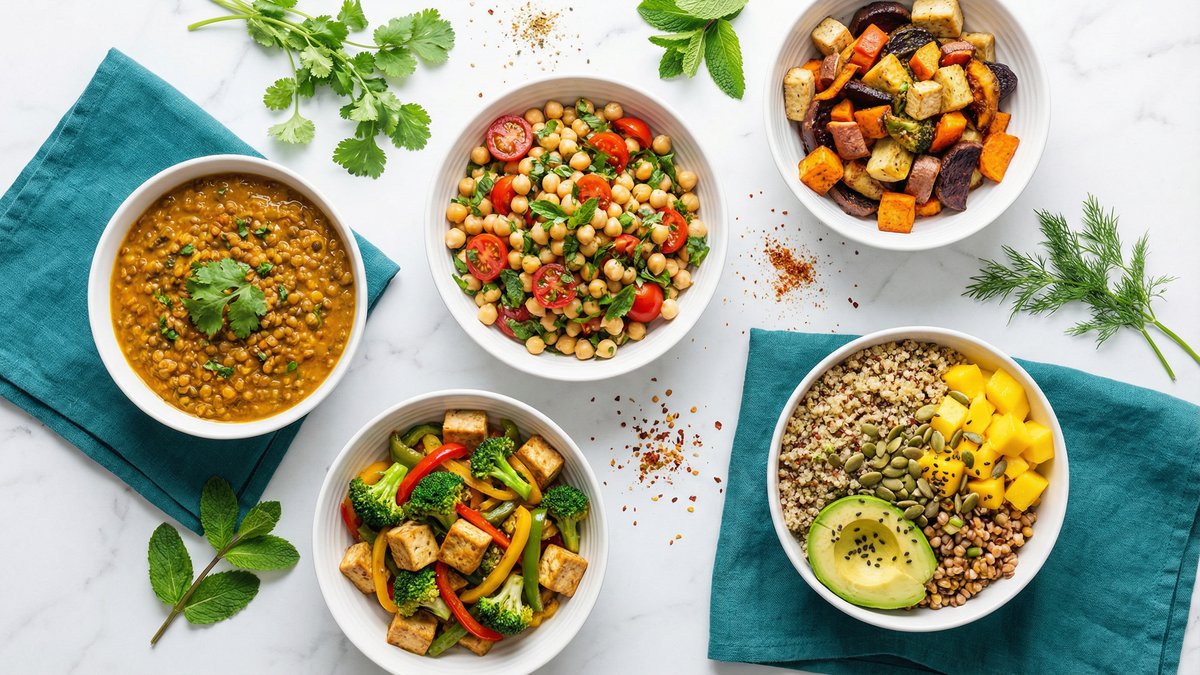
Plant-based doesn’t have to mean vegan. It means most of your plate comes from plants. For diabetes and the heart, the evidence is good, and you can go as far along the scale as suits you.
What counts as plant-based?
| Pattern | What it includes |
|---|---|
| Flexitarian or plant-forward | Mostly plants, with small amounts of meat, fish, eggs and dairy |
| Pescatarian | Plants plus fish, eggs and dairy |
| Vegetarian | Plants plus eggs and dairy |
| Vegan | Plants only |
The quality matters as much as the label. Chips, white bread, sugary drinks and biscuits are all plant-based. They’re not what the studies mean.
What’s the evidence?
- Blood sugar. A review of six trials found vegetarian diets lowered HbA1c by about 0.4 percentage points compared with other diets in people with type 2 diabetes. That’s similar to adding a tablet.
- Preventing diabetes. A review of 9 studies and over 300,000 people found those eating the most plant-based diets had a 23% lower risk of type 2 diabetes. With healthy plant foods specifically, it was 30% lower.
- The heart. US diabetes guidance recommends eating patterns that emphasise plant protein and fibre, and a Mediterranean or DASH pattern to improve blood fats and lower heart risk. Both are mostly plants.
The trials were small and short, and the big studies were observational. But the direction is consistent.
Why does it help?
- More fibre, which slows glucose absorption and lowers LDL cholesterol.
- Less saturated fat, which lowers LDL further.
- Fewer calories for the same volume, which helps weight.
- More potassium and less salt, which helps blood pressure, as long as processed foods stay low.
What does a day look like?
| Meal | Example |
|---|---|
| Breakfast | Porridge oats made with soya milk or milk, topped with berries, walnuts and ground flaxseed |
| Lunch | Lentil and vegetable soup, a slice of seeded wholegrain bread, a side salad with olive oil |
| Snack | An apple and a small handful of almonds, or hummus with carrot sticks |
| Dinner | Chickpea and spinach curry, a small portion of brown rice, a large serving of roasted cauliflower |
| If wanted | Plain yoghurt or unsweetened soya yoghurt |
Half the plate vegetables, a quarter protein from beans, lentils or tofu, a quarter whole grains. The same plate method, with a different protein.
Won’t the carbs push my glucose up?
They can, if portions drift. Beans, lentils and whole grains contain carbs, though they’re slow ones.
- Count beans and lentils as both protein and carbs.
- Keep rice, bread, pasta and potatoes to about a quarter of the plate.
- Go easy on fruit juice, dried fruit and sweetened plant milks.
- Check your glucose 2 hours after new meals to see how they suit you.
If you take insulin or a sulfonylurea, tell your team before a big change. As your diet improves, doses often need to come down to avoid hypos.
Which nutrients need watching?
| Nutrient | Why it matters | Where to get it |
|---|---|---|
| Vitamin B12 | Not found in plants. Metformin can lower it too. | Fortified foods or a supplement if vegan. Ask for a blood test. |
| Iron | Plant iron is absorbed less well | Lentils, beans, tofu, greens, with vitamin C at the same meal |
| Calcium | If you cut out dairy | Fortified plant milks, tofu set with calcium, greens |
| Iodine | If you cut out dairy and fish | Fortified plant milk, or a supplement |
| Omega-3 | If you don’t eat fish | Walnuts, flaxseed, chia, rapeseed oil |
| Protein | Especially if you’re older or losing weight | Beans, lentils, tofu, soya, nuts, plus eggs and dairy if you eat them |
Who should take extra care?
- Kidney disease. Beans, nuts and many vegetables are high in potassium and phosphate. Plant-based eating can still work, but plan it with a kidney dietitian.
- Pregnancy. B12, iron and iodine matter more. Get advice.
- Gastroparesis. Very high-fibre meals can make symptoms worse.
How do I start?
- Make one day a week meat-free.
- Swap half the mince in a recipe for lentils.
- Have beans or lentils three or four times a week.
- Change one snack to nuts or fruit.
- Read labels on meat substitutes. Many are high in salt.
The bottom line
More plants and fewer processed foods improve blood sugar and heart risk, whether or not you give up meat entirely. Keep portions of starchy foods sensible, sort out B12, and build up gradually.
More: the Mediterranean diet, how much protein you need and our diabetes diet guide.
Sources
- Yokoyama Y and colleagues. Vegetarian diets and glycemic control in diabetes: a systematic review and meta-analysis. Cardiovascular Diagnosis and Therapy, 2014.
- Qian F and colleagues. Association between plant-based dietary patterns and risk of type 2 diabetes. JAMA Internal Medicine, 2019.
- American Diabetes Association. Standards of Care in Diabetes 2026, section 5: Facilitating positive health behaviors and well-being.
- American Diabetes Association. Standards of Care in Diabetes 2026, section 10: Cardiovascular disease and risk management.
- American Diabetes Association. Standards of Care in Diabetes 2026, section 9: Pharmacologic approaches to glycemic treatment.
General public information, not personalised treatment advice. Children, pregnancy and complex health conditions need individual specialist advice. Don’t start, stop or change a medicine without speaking to your own healthcare team.