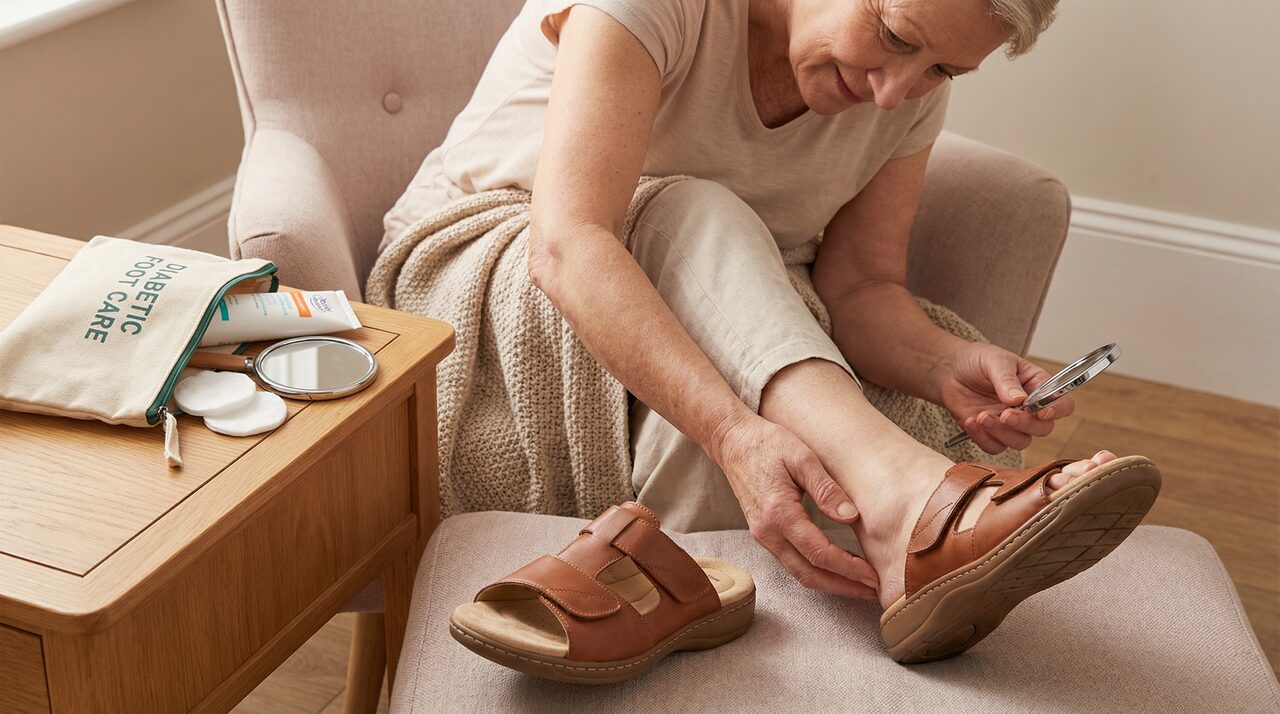
Summer often means more time outdoors, enjoying warm weather, beaches, and travel. For individuals living with diabetes, these seasonal changes bring unique considerations for foot health. Nerve damage (neuropathy) and poor circulation, common diabetes complications, can make feet more vulnerable to injury and infection. A small cut or blister, easily overlooked by someone without diabetes, can quickly become a serious problem. Understanding how to protect your feet during summer activities is crucial for preventing complications and enjoying the season safely.
Key takeaways
- Inspect your feet daily for cuts, blisters, burns, redness, or swelling, especially in hot weather.
- Avoid walking barefoot on hot sand, pavement, or pool decks, and choose supportive protective footwear.
- Have a plan for treating minor foot injuries promptly and know when to seek medical care.
Why this matters when you live with diabetes
These recommendations are based on common diabetes foot-care guidance from major organizations such as the American Diabetes Association, along with general CDC travel and heat precautions.
Diabetes can impact your feet in several ways. Neuropathy can reduce sensation, meaning you might not feel a cut, blister, or even a burn until it has progressed. Poor circulation can slow healing, making it harder for your body to fight off infections. In warm weather, these risks are amplified. Walking barefoot on hot surfaces can cause burns, and open-toed shoes like sandals offer less protection against punctures or scrapes. Dehydration, common in summer, can also affect overall health and blood sugar levels, indirectly impacting foot health.
What to do before you start
Preparation is key to a safe summer for your feet. Before you head out for a walk, a day at the beach, or a summer trip, take these proactive steps:
- Consult Your Doctor: Discuss your summer plans with your healthcare professional. They can offer personalized advice, especially if you plan to be more active or travel to different climates.
- Footwear Check: Inspect all your summer footwear, including sandals, for any rough edges, exposed stitching, or worn areas that could rub or irritate your feet. Ensure shoes fit well and provide adequate support.
- Pack Smart: If traveling, pack at least two pairs of comfortable, supportive shoes. Always include closed-toe shoes, even if you plan to wear sandals. Pack extra socks made of moisture-wicking material.
- Emergency Foot Kit: Assemble a small kit with antiseptic wipes, sterile bandages, medical tape, and first-aid supplies recommended by your clinician. This is essential for addressing minor cuts or blisters promptly.
Practical steps you can use this week
Integrate these habits into your daily routine to keep your feet healthy throughout the summer:
Daily Foot Checks: Your Summer Checklist
Make it a habit to inspect your feet every single day. Look for:
- Cuts, scrapes, or blisters
- Redness, swelling, or tenderness
- Ingrown toenails or calluses
- Changes in skin color or temperature
- Any signs of infection, such as pus or unusual odor
Use a mirror or ask for help if you have difficulty seeing the bottoms of your feet.
Sandal Safety and Footwear Choices
While sandals can be tempting in warm weather, choose wisely:
- Opt for Supportive Sandals: Select sandals with good arch support, cushioned soles, and secure straps. Avoid flip-flops or sandals with thin straps that offer little protection.
- Avoid Going Barefoot: This is perhaps the most critical rule. Whether at the beach, by the pool, or in your backyard, always wear shoes to protect your feet from hot surfaces, sharp objects, and unseen hazards.
- Protect from Heat: Hot pavement, sand, and even car floors can reach temperatures high enough to cause severe burns before you feel them. Always wear protective footwear outdoors.
Hydration and Skin Care
- Stay Hydrated: Drink plenty of water throughout the day, especially when active or in hot environments. Dehydration can affect blood sugar levels and overall health.
- Moisturize Regularly: Apply a good quality moisturizer to your feet daily to prevent dry, cracked skin, but avoid applying between your toes, which can encourage fungal growth.
- Sun Protection: Don’t forget sunscreen on your feet, especially if wearing open-toed shoes. Severe sunburn is physical stress and, for some people, may make glucose harder to manage.
Travel Documentation and Emergency Planning
If your summer plans include travel, especially by air, be prepared:
- Medical Documentation: Carry a letter from your doctor explaining your diabetes and listing all medications and supplies. This can be helpful for security screenings.
- Pack Smart for Flights: Always keep all diabetes medications, supplies, and a blood sugar monitor in your carry-on bag. Never put insulin in checked luggage, as extreme temperatures can damage it.
- Airport security: Inform airport security officers that you have diabetes and are carrying medical supplies. According to TSA policy for U.S. travel, medically necessary liquids, including insulin and juice for low blood sugar, may exceed 3.4 ounces in carry-on bags when declared at screening.
- Protect Supplies from Heat: Keep insulin and other medications in a cooler with gel packs, avoiding direct contact with ice. High temperatures can damage insulin, test strips, and monitoring devices.
- Move During Long Trips: On long flights or car rides, try to move around or stretch your legs when it is safe to do so. This can help circulation and may lower your chance of blood clots, especially if you have additional risk factors.
- Adjust for Time Zones: If traveling across time zones, discuss with your doctor how to adjust your medication schedule to avoid highs or lows.
When to call your healthcare professional
Even with the best precautions, problems can arise. Seek immediate medical attention if you notice any of the following:
- A cut, blister, or sore that doesn’t start to heal within a day or two
- Increased redness, swelling, warmth, or pain around a foot injury
- Pus or drainage from any wound on your foot
- Fever or chills accompanying a foot problem
- Any new numbness, tingling, or burning sensation in your feet
- A change in the color of your foot or toes
These could be signs of infection or a more serious complication that requires prompt treatment.
Questions to ask at your next visit
Prepare for your next appointment by asking your healthcare team these questions:
- “What specific foot care recommendations do you have for me during the summer months?”
- “Are there any particular types of footwear I should avoid or prioritize?”
- “How should I adjust my insulin or medication if I’m more active or traveling?”
- “What are the signs of a serious foot problem that warrant immediate attention?”
- “Can you recommend a podiatrist for regular foot check-ups?”
Medical note: This article is for education only and does not replace care from your healthcare professional. If you use insulin or medicines that can cause low blood glucose, are pregnant, have kidney disease, heart disease, vision problems, neuropathy, or other diabetes-related complications, discuss changes to food, activity, medicines, devices, or travel plans with your diabetes care team.